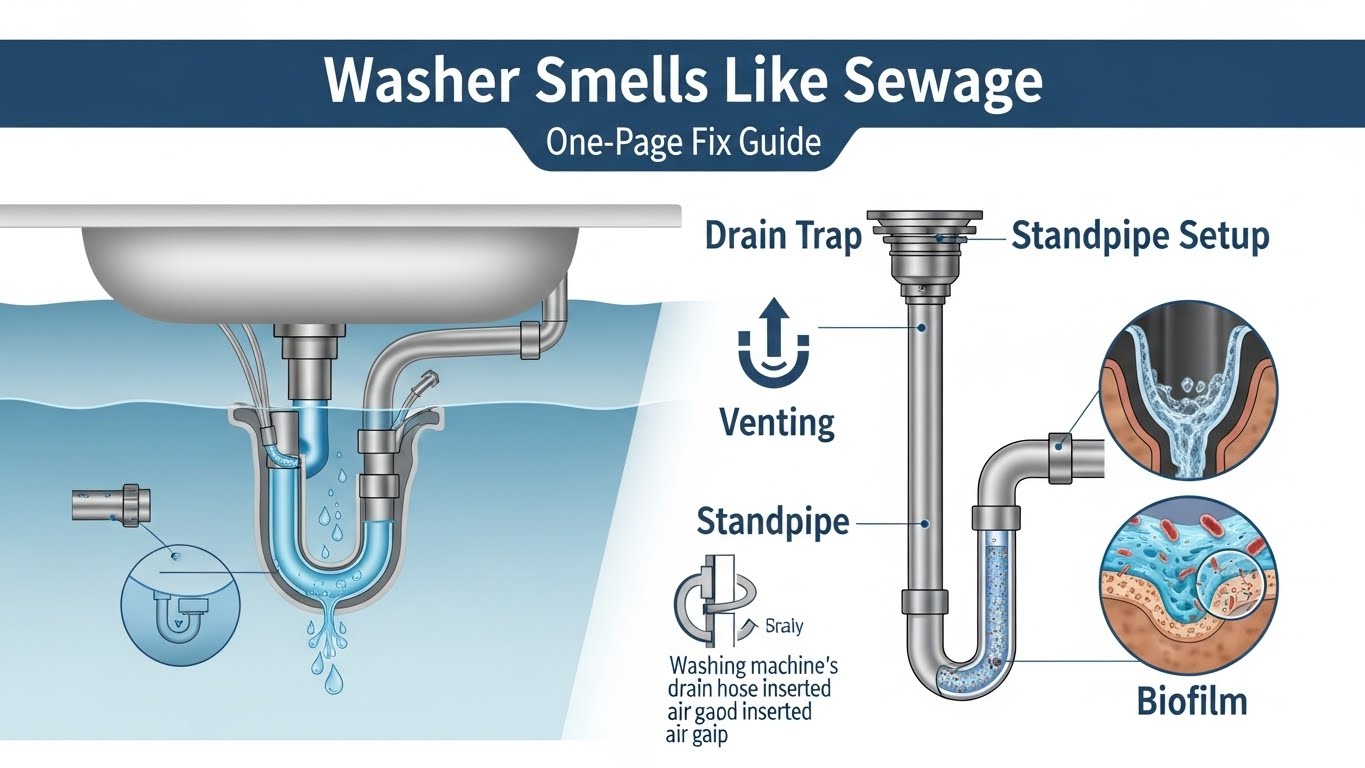
Washer smells like sewage? It’s almost never “just the washer.” It’s a drain-air pathway, biofilm, or both.
A true rotten-egg / sewer smell usually means sewer gas is getting past a plumbing barrier (trap/vent/standpipe setup). A musty / swampy / dirty-sock smell usually means biofilm is living in hidden wet zones (gasket folds, pump filter, dispenser channel, drain hose). The fastest fix starts with one question: where is the smell strongest?
Fast truth test Strongest at standpipe/floor drain → treat plumbing pathway first.
Strongest in drum/gasket → treat biofilm first.
Trap seal rule A functioning trap needs a water barrier. Typical code guidance: 2–4 in (50–100 mm) trap seal depth.
Why cleaning “doesn’t stick” If the air pathway stays open, odor returns even after a perfect tub-clean cycle.
What you’ll get on this page
- A 10-minute “Sniff & Isolate” protocol to separate sewer gas from washer biofilm.
- A 5-step fix sequence (no tools → cleaning → installation checks → stop line).
- A rebound-prevention routine (so it doesn’t come back next week).
⚠️ Safety first (sewer gas + appliances = no improvising)
- Ventilate immediately if odor is sudden/strong or causes headache, nausea, or eye/throat irritation.
- Don’t run the washer if drains gurgle, bubble, or water backs up—overflow can spread contaminated water.
- Stop DIY if you suspect vent problems, cracked pipes, or main line blockage (these are code + safety issues).
- Never use flame (matches/lighters) near a strong sewer odor.
Updated: 2026-01-19 • One-page diagnostic + fix • Built to stop repeat odor, not just mask it
Here’s the frustrating part: the washer can smell like “sewage,” but the machine may be innocent. A washing machine is basically a high-speed pump connected to plumbing. When it drains, it can create pressure changes that pull or push air through weak seals. If your P-trap water barrier is dry, siphoned, or compromised, sewer gas can travel into the room. At the same time, washers create warm, damp pockets where biofilm thrives—especially if you use too much detergent or frequently wash in cold water.
The goal is not “try random cleaners.” The goal is to prove which lane you’re in: (A) drain-air pathway, (B) biofilm, or (C) both—and then fix the right thing first.
The 10-minute “Sniff & Isolate” protocol (do this before cleaning)
How to run it
- Standpipe test: pull the washer slightly forward and smell near the standpipe opening (where the drain hose enters).
- Floor drain test: if you have a floor drain, smell near it at floor level (dry traps are common).
- Washer test: smell inside the drum, then around gasket folds (front-load) or rim (top-load), and the dispenser area.
- Timing clue: note if odor spikes during drain/spin or exists constantly even when the washer hasn’t run for days.
| What you find | Most likely source | Best first move |
|---|---|---|
| Strongest at standpipe | Plumbing pathway (trap/vent/hose geometry) | Restore trap seal + correct hose fit |
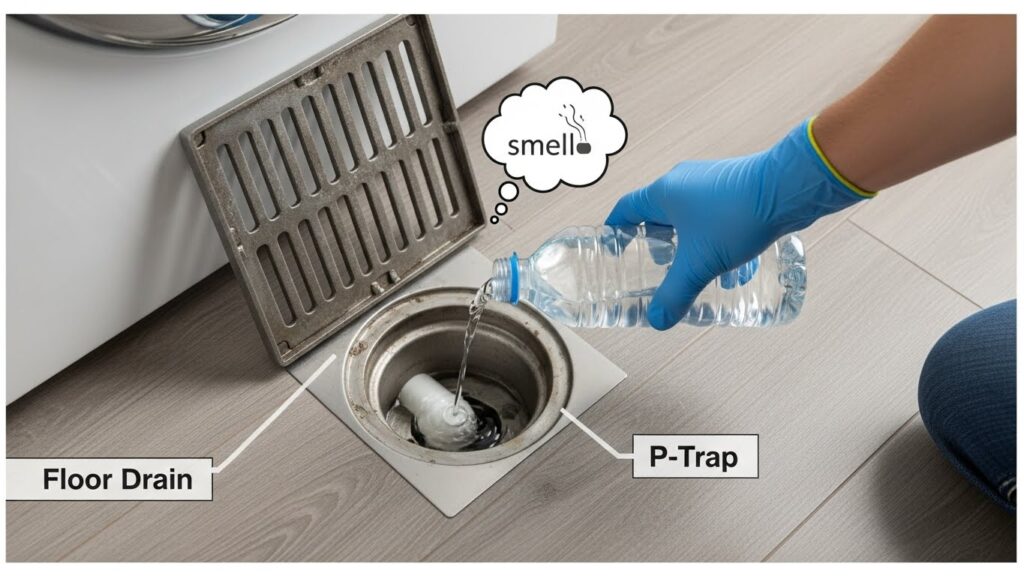
| Strongest at floor drain | Dry floor drain trap | Refill trap with water (fast win) |
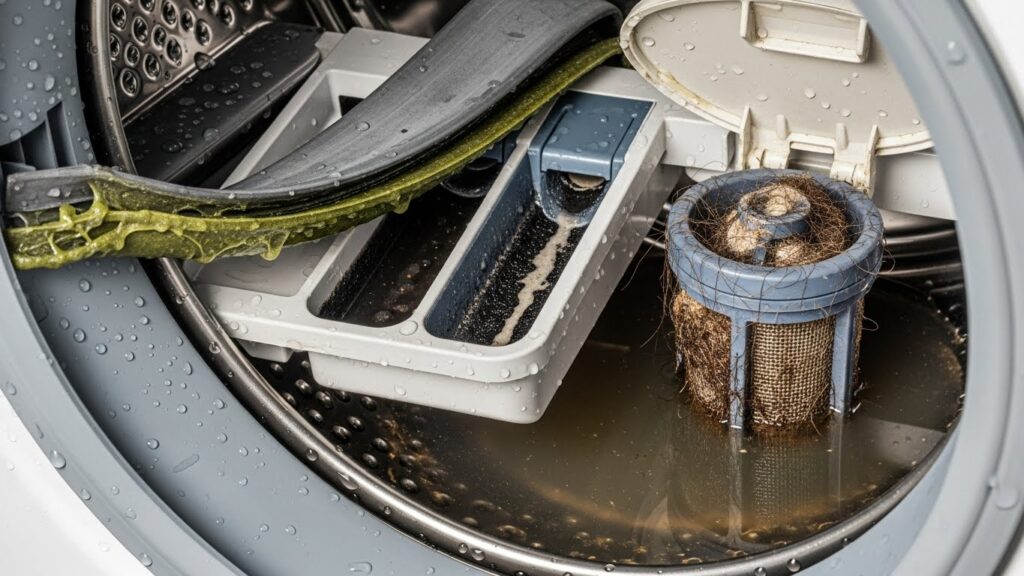
| Strong inside drum/gasket | Biofilm (hidden wet zones) | Deep clean gasket/dispenser/filter |
| Worse during drain | Pressure/siphoning/air gap issue | Fix hose depth + avoid airtight seal |
Why it happens: trap seals, pressure changes, and “siphoning”
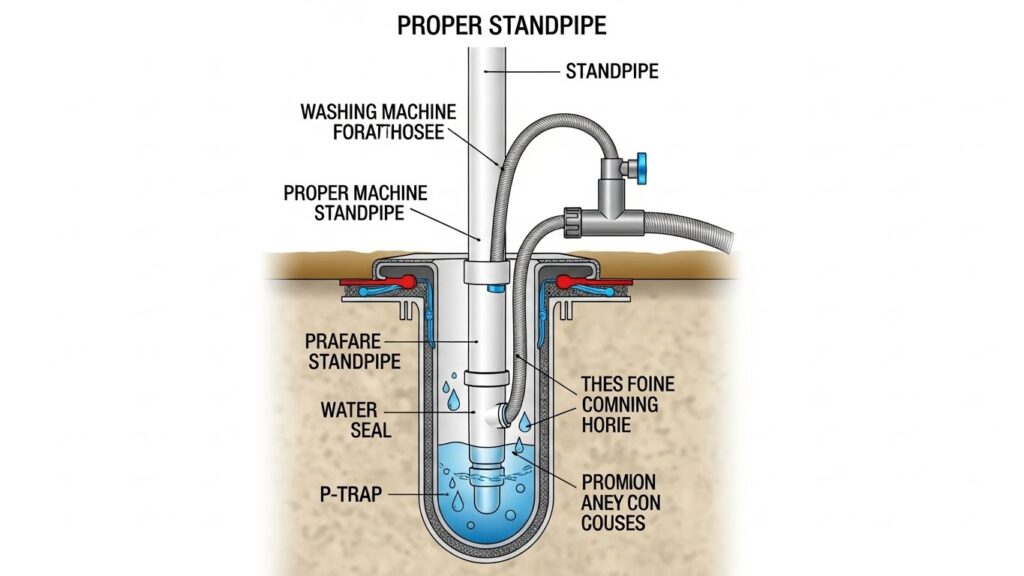
Your plumbing blocks sewer gas with a simple trick: a U-shaped trap holds water like a cork. When a washer dumps water fast, it can create a pressure swing that pulls trap water out (siphoning) if installation geometry is wrong (hose shoved too deep, airtight seal, or poor venting). Once the water barrier is gone, sewer gas has a clear pathway.
Plain-English model
Fixing odor long-term means closing the pathway first, then removing biofilm.
Also important: not every “sewer smell” is actual sewer gas. Biofilm can produce sulfur-like notes too—especially if lint + detergent residue + stagnant water sits in a pump filter area. That’s why the isolate test matters.
Priority Fix Protocol (5 steps, in the order that saves time)
- Step 1 — Identify the strongest smell point (map test):
Standpipe/floor drain strongest = pathway. Drum/gasket strongest = biofilm. If both hit hard, do pathway first. - Step 2 — Restore trap seals (fastest win):
Pour water into any rarely used floor drain. If you suspect the standpipe trap is dry, carefully add water as well. This rebuilds the water barrier that blocks sewer gas. - Step 3 — Correct drain hose fit (air gap + depth):
The hose should not be taped airtight, and it should not be shoved too deep. Aim for a secure “hooked” fit that allows air movement. Bad hose geometry can cause siphoning and odor pull. - Step 4 — Deep clean biofilm hotspots (not just the drum):
Front-load: gasket folds + dispenser channel + pump filter area. Top-load: rim underside + dispenser + drain hose odor zone. If your model has a pump filter/coin trap, treat it like a “sludge pocket” and clean it safely. - Step 5 — Decide if it’s a vent/structural issue (stop line):
If standpipe odor persists after trap restoration + hose correction, you may have venting problems or a drain configuration issue. That’s plumber territory (code + safety).
Diagnostic matrix (fast symptom → best first fix)
| Symptom | Best first move | Why it works | Common wrong move |
|---|---|---|---|
| Odor strongest at standpipe | Restore trap seal + correct hose fit | Blocks the air pathway | Running more tub-clean cycles |
| Odor strongest in gasket/drum | Deep clean hidden wet zones | Removes biofilm where it lives | Only wiping the visible drum |
| Odor spikes during drain/spin | Fix hose depth + avoid airtight seal | Reduces pressure-driven odor pull | Masking with fragrance products |
| Odor returns after cleaning | Treat pathway + biofilm (both lanes) | Stops the repeat loop | Buying random drain chemicals |
How to keep it from coming back (the rebound-prevention routine)
A lot of “sewage smell” complaints are really “moisture + residue + stagnant pockets” that regenerate quickly. Even after you fix the pathway, biofilm can rebound if the washer stays damp and soapy. The goal is to remove food sources and shorten wet time.
- Leave the door/lid ajar after washing (airflow reduces biofilm regrowth).
- Use the right detergent amount (too much feeds slime; modern machines often need less than people think).
- Run an occasional hot cycle (cold-only washing increases residue buildup over time).
- Wipe gasket folds (front-loaders) after heavy loads—this removes standing water and lint.
- Keep floor drains wet in rarely used laundry rooms (dry trap = open pathway).
Timing table (what to do first when you’re busy)
| Action | Time | Difficulty | Outcome |
|---|---|---|---|
| Sniff & Isolate protocol | 5–10 min | Easy | Proves which lane to fix first |
| Refill dry floor drain trap | 2–3 min | Easy | Can instantly reduce sewer odor |
| Fix hose depth/air gap | 5–10 min | Easy–Medium | Reduces siphoning + odor pull |
| Deep clean hotspots | 20–45 min | Medium | Removes rebound-causing biofilm |
Common mistakes (these make the smell return)
- Cleaning the drum only: odor often lives in gasket folds, dispenser channels, filters, and hoses.
- Sealing the pipe: taping the hose airtight can encourage siphoning and worsen the pathway problem.
- Using too much detergent: residue becomes food for bacteria and creates “swampy” smells.
- Ignoring the floor drain: a dry trap can stink up the whole room even if the washer is spotless.
- Overusing harsh chemicals: may damage parts and still won’t solve vent/trap configuration problems.
Serious cases (call a professional)
Call a plumber/qualified technician if: odor is strongest at the standpipe and persists after restoring trap seals and correcting hose fit, drains gurgle/bubble, water backs up, you suspect venting issues, or anyone develops headache/nausea/eye irritation around the odor. Vent problems and drain backups are not “trial-and-error” DIY territory.
FAQ
Is a sewage smell from the washer dangerous?
It can be. Sewer gas can contain irritants and flammable components. If the smell is intense or makes you feel unwell, ventilate and consult a professional.
Why does it smell worse during drain or spin?
Draining creates pressure changes. If a trap seal is weak or hose geometry encourages siphoning, that pressure can pull odors upward through the standpipe.
Does bleach fix sewage smell?
Bleach can reduce biofilm odors, but it won’t fix an open plumbing pathway. If the smell is sulfur/egg-like and strongest at the standpipe, plumbing comes first.
Can a floor drain cause the laundry room to smell like sewer?
Yes. A rarely used floor drain trap can dry out, letting odors enter the room. Refilling the trap is often a fast, high-impact fix.
Does leaving the washer door open help?
Often, yes. Airflow reduces trapped moisture, and biofilm thrives in damp closed environments. Leaving it ajar slows regrowth.
When is it a vent problem instead of a washer problem?
If odor is strongest at the standpipe and returns quickly after restoring trap seals and correcting hose fit, venting or drain configuration may be the real issue.
Why does this happen more in summer or when the room is dry?
Heat and low humidity can evaporate trap water faster. Warm conditions also accelerate bacterial growth, making odors more noticeable.
Internal Links
- https://homefixatlas.com/washer-smells-bad/ — Deep-clean routine for moldy/musty washer odors
- https://homefixatlas.com/washer-not-draining/ — Pump/filter checks that also prevent stagnant-water odor pockets
- https://homefixatlas.com/humidifier-mold-prevention — Moisture control habits that reduce “wet-room” smells long-term
References
- International Plumbing Code (IPC): Trap seal depth (Section 1002.4)
- OSHA: Hydrogen sulfide hazards (odor and exposure safety)
- GE Appliances: Drain height guidance (model-dependent)
Safety notice
This content is for informational purposes and focuses on safe, non-invasive checks. If the odor is intense, persistent, or linked to symptoms (headache, nausea, eye/throat irritation), ventilate the space and consult a qualified plumber or technician—especially for suspected venting or drain backup issues.
Update log: 2026-01-19 — Expanded to include the 10-minute isolate protocol, siphoning explanation, rebound-prevention routine, and deeper FAQ coverage.

I publish step-by-step troubleshooting guides for common home appliance issues (washer, dryer, refrigerator, HVAC basics).
Content is written for everyday homeowners and cross-checked with manufacturer manuals, safety guidance, and trusted public resources.
Posts include practical checks, clear stop-signs for safety, and guidance on when it’s better to call a qualified technician. Updates are logged whenever steps or recommendations change.
Safety note: If you smell gas, see burning, or suspect electrical hazards—stop immediately and contact a qualified professional.