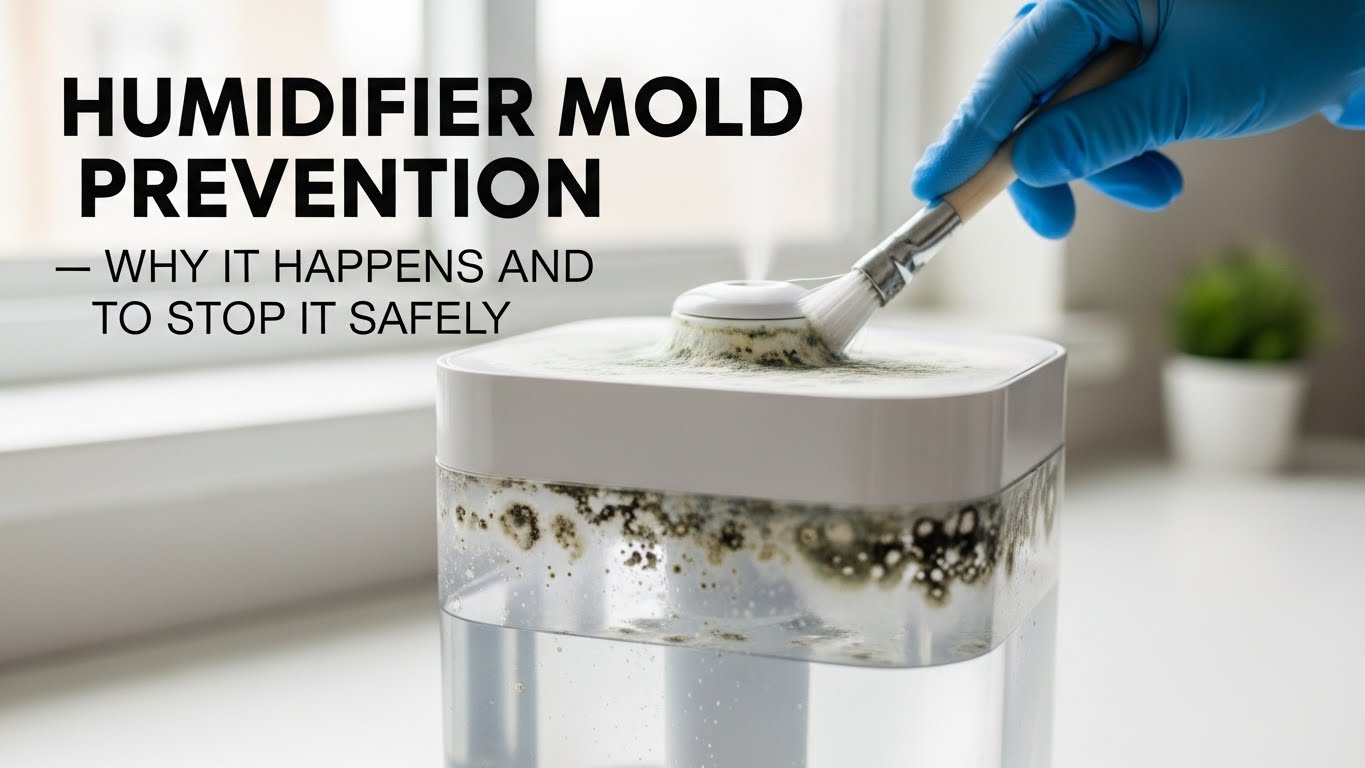
Why does mold grow inside humidifiers?
Mold grows in humidifiers when standing water, warm internal surfaces, and mineral residue create a perfect “sticky habitat.” The unit may look clean from the outside, but the base, mist chamber, and hidden airflow paths can stay damp long enough for microbes to build a protective film.
This guide shows the safest way to break that cycle: dry daily, descale weekly, and disinfect only when the manual allows.
Safety First: Always unplug the humidifier before cleaning. Never mix vinegar and bleach. Do not operate a humidifier with visible mold growth, strong musty odor, or slimy residue inside the base. If anyone in the home has asthma, allergies, or immune issues, be extra cautious and consider pausing humidifier use until the unit is fully sanitized.
Last Updated: January 10, 2026 | Technical Review: HomeFix Atlas | Note: Informational only (follow your model’s manual for approved cleaners)
Quick Standard: “Zero-Standing-Water” Rule (the real mold stopper)
- Empty the tank after use (yes, every time).
- Dry the tank and the base so nothing stays wet overnight.
- Descale weekly with white vinegar (removes the mineral “grip” that biofilm loves).
- Disinfect only if the manual allows it (some plastics and seals don’t like harsh chemicals).
Here’s the annoying truth: mold prevention isn’t mainly about “scrubbing harder.” It’s about removing the two things mold needs to keep coming back—moisture that lingers and mineral residue that helps it stick.
If you only deep-clean once in a while but leave water sitting overnight, the unit often regrows grime fast. On the other hand, if you get the daily dry habit right, weekly cleaning becomes easy and boring (the best kind of maintenance).
Table of Contents
- 1) Why humidifiers are unusually prone to mold
- 2) The daily routine that prevents mold better than “deep cleaning”
- 3) Weekly cleaning that actually reduces mold risk
- 4) Ultrasonic vs evaporative: which type is easier to keep clean?
- 5) Common mistakes that make mold come back
- 6) When replacement is safer than cleaning
- FAQ
- Related Guides
- References
- Important Safety & YMYL Notice
1) Why humidifiers are unusually prone to mold
Humidifiers are basically small water systems that repeatedly get wet, warm, and enclosed. That combination makes it easy for microbes to settle in, especially in the base and mist chamber where airflow is tight and surfaces stay damp.
Even if the tank looks “fine,” the base can hold thin residue you don’t notice right away. Over time, that residue becomes a sticky layer where mold and bacteria attach more easily. (This is why quick rinsing sometimes feels useless.)
2) The daily routine that prevents mold better than “deep cleaning”
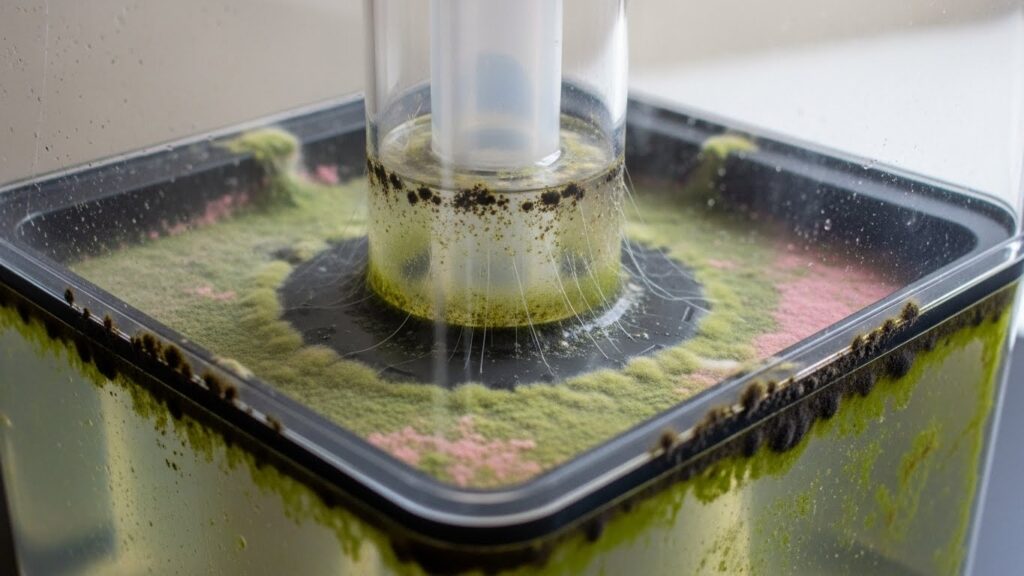
If you only do one thing, do this: don’t leave standing water inside the humidifier overnight. Most recurring mold problems are really “water left behind” problems.
- Empty the tank after use.
- Dump and wipe the base if you see pooled water or condensation.
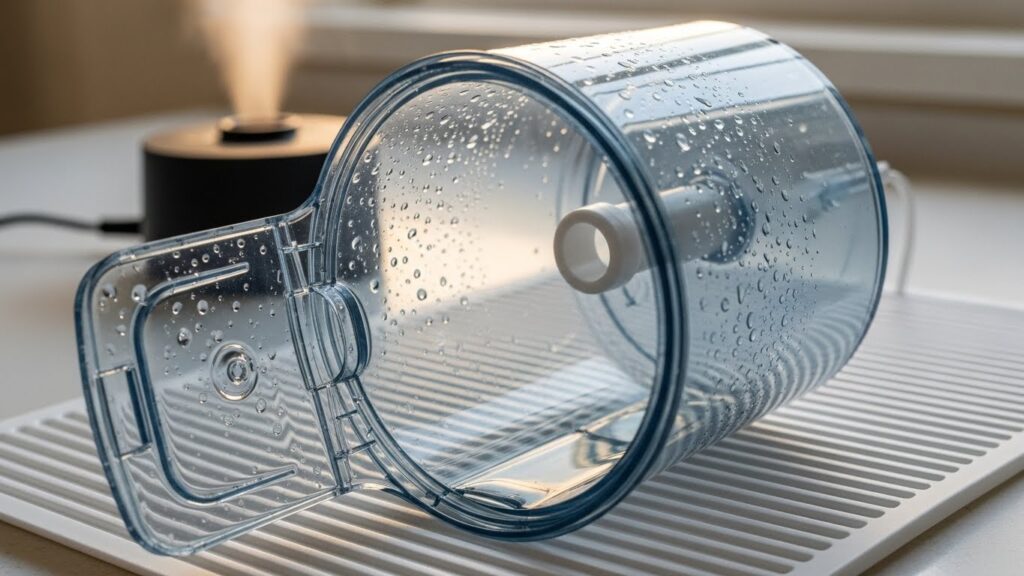
- Air-dry with the tank open (cap off if possible) so it dries fully.
- Quick wipe the mist outlet area if it feels damp or looks cloudy.
This isn’t about being “perfect.” It’s about breaking the pattern where the unit stays wet long enough for a film to build up.
3) Weekly cleaning that actually reduces mold risk
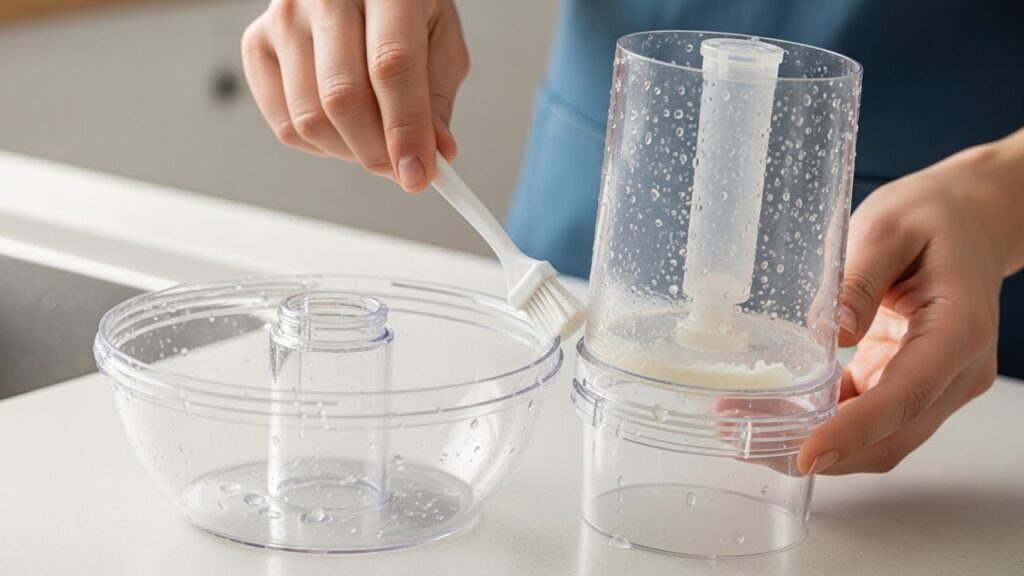
Weekly cleaning works best when you treat it as two separate jobs: (1) remove mineral scale and (2) reduce microbial load. Mineral scale is important because it gives biofilm something to cling to.
Step A: Descale with white vinegar (simple, effective, low drama)
Many manufacturers recommend white vinegar for removing mineral buildup. Fill the tank with a vinegar-water mix, let it soak, then gently swish. If the base has buildup, use a soft cloth or brush—no scraping tools.
Step B: Disinfect only if your manual allows it
Some humidifiers allow disinfecting agents (like hydrogen peroxide or a diluted disinfectant), while others warn against them because of plastics, seals, or coatings. If the manual approves a disinfecting step, do it exactly as directed and rinse thoroughly.
Important: Vinegar is great for scale and residue, but it is not the same as a disinfectant step. Don’t “upgrade” the chemistry on your own—follow the manufacturer guidance for what is safe for your specific unit.
Step C: Rinse well, then dry fully
The rinse is not optional. Residual cleaner + lingering moisture can irritate lungs and can also leave new residue behind. After rinsing, dry the tank and base, then air-dry with parts open.
4) Ultrasonic vs evaporative: which type is easier to keep clean?
The type of humidifier changes what you fight. Both can grow mold if you leave water sitting, but they behave differently in real life.
- Ultrasonic (cool mist): Often quieter, but it can create “white dust” with tap water. Because it turns water into fine mist, water quality and cleaning consistency matter a lot.
- Evaporative (wick filter): The wick can trap a lot of minerals and grime, but it also needs regular replacement. If the wick gets funky, the whole unit can smell musty even when the tank looks clean.
If you’ve had repeat mold issues, switching to distilled water (or demineralized water) often reduces residue. It won’t “sterilize” the unit, but it can make weekly cleaning easier because scale builds slower.
5) Common mistakes that make mold come back
- Storing the unit wet (tank closed, base damp, cap on tight)
- Only cleaning when mold becomes visible (by then, hidden paths may already be contaminated)
- Using tap water in ultrasonic units and letting mineral scale build up
- “Quick rinse” without drying (the rinse removes loose debris but leaves the damp habitat)
- Skipping wick/filter replacement on evaporative models
Mold coming back fast usually means one of two things: (1) water is staying inside between uses, or (2) residue buildup is giving microbes a sticky home base. Fix those and the problem usually calms down.
6) When replacement is safer than cleaning
Sometimes replacement is the safer move—not because cleaning is impossible, but because the unit design makes it hard to access internal tubing, seams, or mist pathways safely.
- Musty smell returns within days even with daily drying + weekly cleaning
- Visible slime or mold persists in areas you cannot reach
- Cracked tank or degraded seals that trap residue
- Anyone in the home gets consistent respiratory irritation when the unit runs
Health note (non-medical): If humidifier use lines up with persistent cough, fever, chest tightness, or shortness of breath, stop using the unit and consider medical advice—especially for kids, older adults, and anyone with asthma.
FAQ
Q1) Is mold in a humidifier dangerous?
It can be irritating, especially for people with asthma, allergies, or sensitivity to indoor air quality. The safest approach is to stop use when mold is visible and sanitize the unit before running it again.
Q2) Does boiling water prevent mold growth?
Not by itself. Boiling may reduce microbes temporarily, but mold returns if water remains stagnant inside the unit. Drying and routine cleaning matter more than “hotter water.”
Q3) Do I have to use distilled water?
Not always. But distilled (or demineralized) water can reduce mineral buildup and white dust, which often makes maintenance easier—especially with ultrasonic humidifiers.
Q4) My humidifier smells musty even after cleaning. Why?
Often it’s the base seams, mist path, or (for evaporative units) the wick/filter. If the odor returns quickly, it may be time to replace the filter or consider replacing the unit.
Related Guides on HomeFix Atlas
- Humidifier White Dust — Causes, Risks, and Safer Water Options
- Dehumidifier Not Collecting Water — Dew Point + Quick Diagnosis Checklist
- Portable AC Not Cooling — Airflow and Hose Fixes
- HomeFix Atlas — Appliance Troubleshooting Hub
References
- U.S. Environmental Protection Agency (EPA) — Use and Care of Home Humidifiers
- CDC — Household Humidifiers and Health (Indoor Air)
Important Safety & YMYL Notice
Important: This content is provided for general informational purposes only. Humidifiers are electrical appliances that can affect indoor air quality. Always follow the cleaning and disinfection instructions for your exact model. If mold persists, internal parts cannot be accessed safely, or symptoms occur during use, discontinue use and consult the manufacturer or a qualified professional.
Update Log:
– January 10, 2026: Rebuilt the guide around the “Zero-Standing-Water” rule, clarified safe cleaning order (descale → disinfect if allowed → rinse → dry), and added type-specific notes for ultrasonic vs evaporative units.

I publish step-by-step troubleshooting guides for common home appliance issues (washer, dryer, refrigerator, HVAC basics).
Content is written for everyday homeowners and cross-checked with manufacturer manuals, safety guidance, and trusted public resources.
Posts include practical checks, clear stop-signs for safety, and guidance on when it’s better to call a qualified technician. Updates are logged whenever steps or recommendations change.
Safety note: If you smell gas, see burning, or suspect electrical hazards—stop immediately and contact a qualified professional.