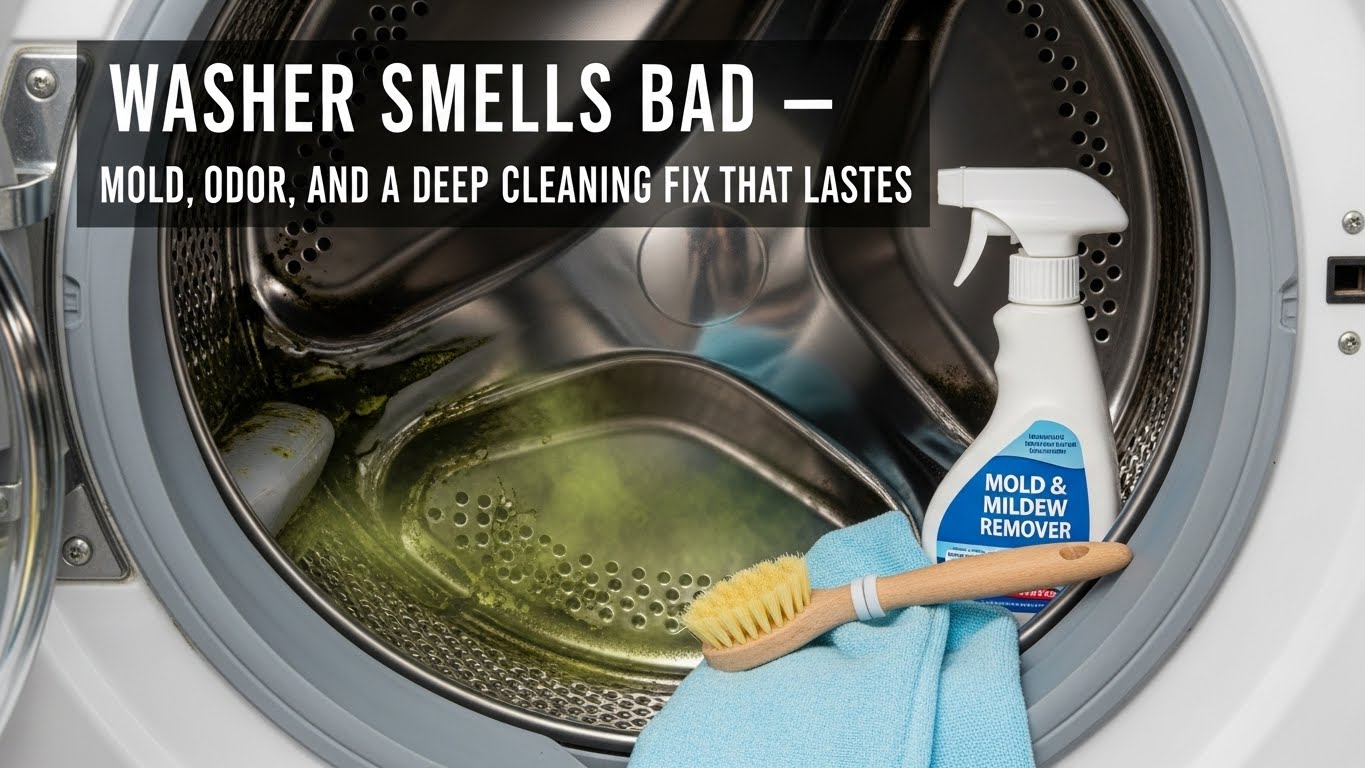
Why does my washer smell bad even after cleaning?
A washer that still smells after cleaning usually means moisture + detergent residue are feeding mold/bacteria in hidden areas (gasket, drawer, drain path). To remove the source (not just the smell), follow these 5 steps:
- Sanitize the Gasket: Peel back rubber folds and remove trapped slime/lint.
- Deep-Clean the Drawer: Remove the detergent drawer and scrub hidden mold and softener film.
- Clear the Drain Filter: Clean the “coin trap” to remove trapped organic debris.
- Run a Hot Clean Cycle: Use the washer’s Tub Clean/Sanitize or highest-temp empty cycle with a washer cleaner.
- Dry the Drum: Leave the door and drawer slightly open to prevent stagnant moisture.
A deep, step-by-step fix with photos is explained below.
⚠️ Safety First: Unplug the washer before deep cleaning or opening service access panels. CRITICAL: Never mix vinegar (acid) with chlorine bleach—it can create toxic gas. Ensure good ventilation, and keep chemicals away from children/pets.
Tools Needed
| Item | Purpose |
|---|---|
| Washer cleaner (preferred) or white vinegar (occasional use) | Breaking down odor-causing residue/biofilm |
| Baking soda | Neutralizing odors and lifting residue |
| Soft brush / old toothbrush | Scrubbing gaskets, seams, drawer corners |
| Microfiber cloths | Wiping + drying hidden surfaces |
Why Washing Machines Develop Odors
Last updated: January 2, 2026
A washer smells bad when moisture lingers after cycles and detergent/softener residue builds up. High-efficiency washers use less water, which improves efficiency but also makes regular maintenance essential. The tricky part is that the drum can look clean while the smell source hides in the gasket folds, detergent drawer housing, or the drain path.
Plain-English takeaway: Odors usually come from places you don’t see—not from the shiny drum surface.
Table of Contents
- 1) Most Common Sources of Washer Odors
- 2) Step-by-Step Deep Cleaning Protocol
- 3) Front-Load vs Top-Load Differences
- 4) How to Prevent Odors From Returning
- 5) FAQ
- 6) How This Guide Was Prepared
- 7) References
1) Most Common Sources of Washer Odors
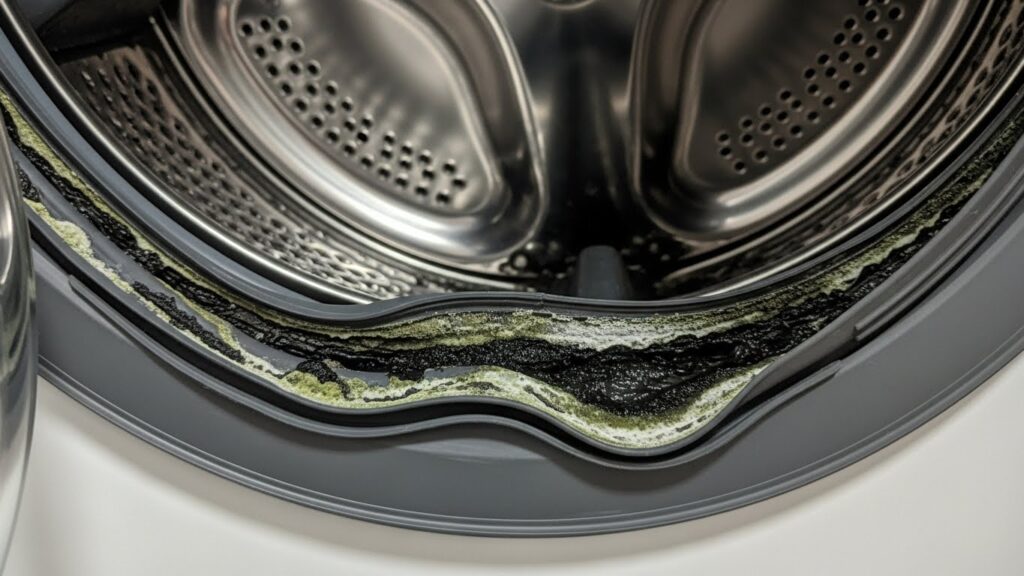
- Door gasket (front-load): Traps water, lint, and detergent residue in deep rubber folds.
- Detergent drawer + housing: Holds stagnant moisture and undissolved softener film.
- Drain filter / sump area (if accessible): Collects coins, hair, and organic debris that can rot over time.
- Mostly cold/low-temp washing: Leaves waxy buildup that bacteria can live on.
2) Step-by-Step Deep Cleaning Protocol
Step 1 — Clean the detergent drawer (and the hidden cavity)
Remove the drawer fully (many models have a release tab). Soak the drawer in warm water, scrub away residue, then dry completely. Don’t forget the drawer cavity inside the machine—wipe it thoroughly, because mold often grows where air never hits.
Step 2 — Scrub the door gasket (The “hidden mold” check)
Pull back the gasket folds and wipe out sludge/lint. Use a washer-safe cleaner or a diluted vinegar solution (occasional use). Dry the area fully when finished. Tip: For stubborn stains, place a cleaner-soaked paper towel into the fold for 20–30 minutes, then scrub gently.
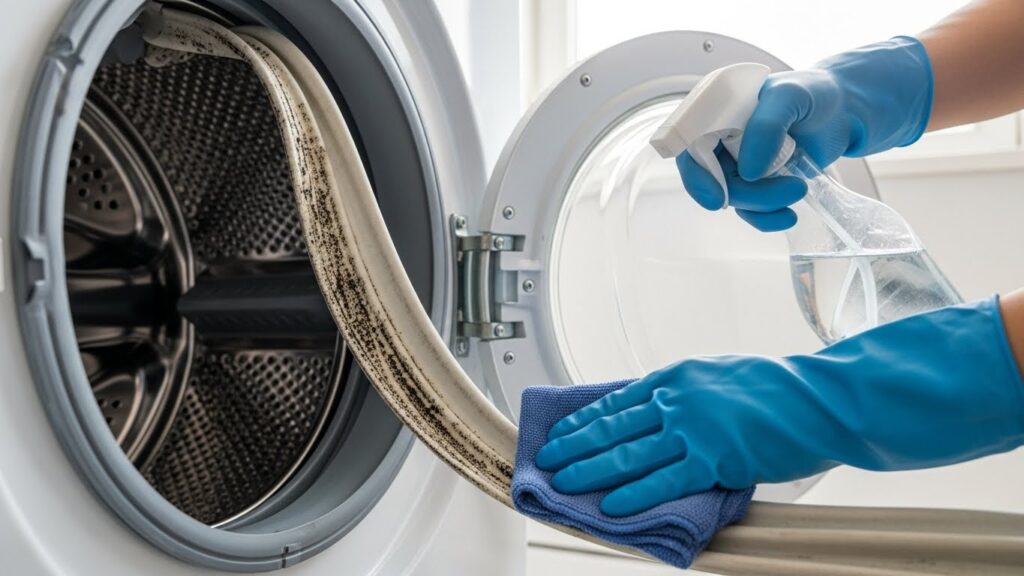
Step 3 — Run a hot maintenance cycle (Tub Clean / Sanitize)
Run an empty cycle using the washer’s Tub Clean/Sanitize option or the highest temperature setting available on your model. Use a washer cleaner (follow the product label and your owner’s manual). If the smell is strong, do a second hot rinse afterward to flush loosened debris.
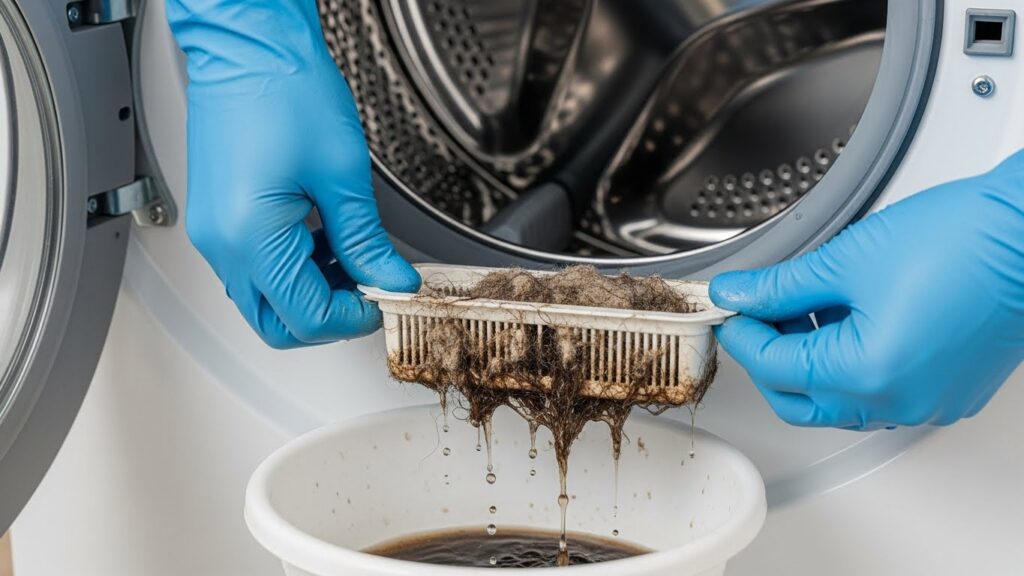
Step 4 — Clean the drain pump filter (coin trap), if user-accessible
If your washer has a small access door at the lower front, place towels/tray first, then open and clean the filter. Remove lint, hair, and sludge, rinse it, and reinstall it tightly. If your model requires major disassembly to reach the filter, skip this step and use a technician.
Stop point: If you see leaking, damaged wiring, or the filter area is not clearly user-serviceable, stop and contact a qualified technician.
3) Front-Load vs Top-Load Differences
- Front-load washers: Odors usually come from the gasket + drain system. They need more drying time between cycles.
- Top-load washers: Odors often build under the agitator or where residue collects between tubs. A hot clean cycle helps, but physical wiping still matters.
Design reality: Front-load washers seal tightly for efficiency—great for water use, but it traps humidity if the door stays closed.
4) How to Prevent Odors From Returning
- Leave airflow: Keep the door and detergent drawer slightly open after the last load (the “1-inch rule”).
- Use the right detergent amount: Too much HE detergent leaves a sticky film that holds bacteria.
- Monthly maintenance: Run Tub Clean about once a month (or every 30–40 loads).
- Quick wipe habit: Wipe the gasket and drawer edges dry—especially in humid seasons.
5) FAQ
Why does my washer smell worse after I clean it?
A cleaning cycle can loosen built-up residue without fully flushing it out. Run a second hot rinse, and make sure you cleaned the gasket folds and drawer housing—not just the drum.
Is vinegar safe for washing machines?
Used occasionally and diluted, many people use it for odor control. But frequent use can stress rubber parts over time, so it’s better as a monthly option—washer cleaners and the manufacturer’s Tub Clean method are usually the safer routine.
Can washer odors transfer to clothes?
Yes. If odor-causing residue remains in hidden areas, it can transfer during washing. Fixing the washer’s hygiene is the reliable long-term solution.
How often should I deep clean my washer?
Every 1–3 months depending on usage, humidity, and how often you wash in cold water.
Internal Links
Washer Not Draining
Washer Shaking or Vibrating
Best Washer Temperature Settings for Odor Prevention
6) How This Guide Was Prepared
This guide is based on common maintenance steps emphasized in major manufacturer documentation (e.g., Whirlpool, Samsung, LG), plus consumer appliance hygiene guidance. It prioritizes user-safe checks and avoids steps that require electrical testing or major disassembly.
7) References
https://www.epa.gov/watersense/home-maintenance
https://www.whirlpool.com/blog/washers-and-dryers/smells-in-front-load-washer.html
Professional Disclaimer: This article is for informational purposes only. Washing machine cleaning and servicing may involve electrical components, hot water, and moving parts. Always follow your manufacturer’s instructions, and contact a qualified technician if you’re unsure.

I publish step-by-step troubleshooting guides for common home appliance issues (washer, dryer, refrigerator, HVAC basics).
Content is written for everyday homeowners and cross-checked with manufacturer manuals, safety guidance, and trusted public resources.
Posts include practical checks, clear stop-signs for safety, and guidance on when it’s better to call a qualified technician. Updates are logged whenever steps or recommendations change.
Safety note: If you smell gas, see burning, or suspect electrical hazards—stop immediately and contact a qualified professional.