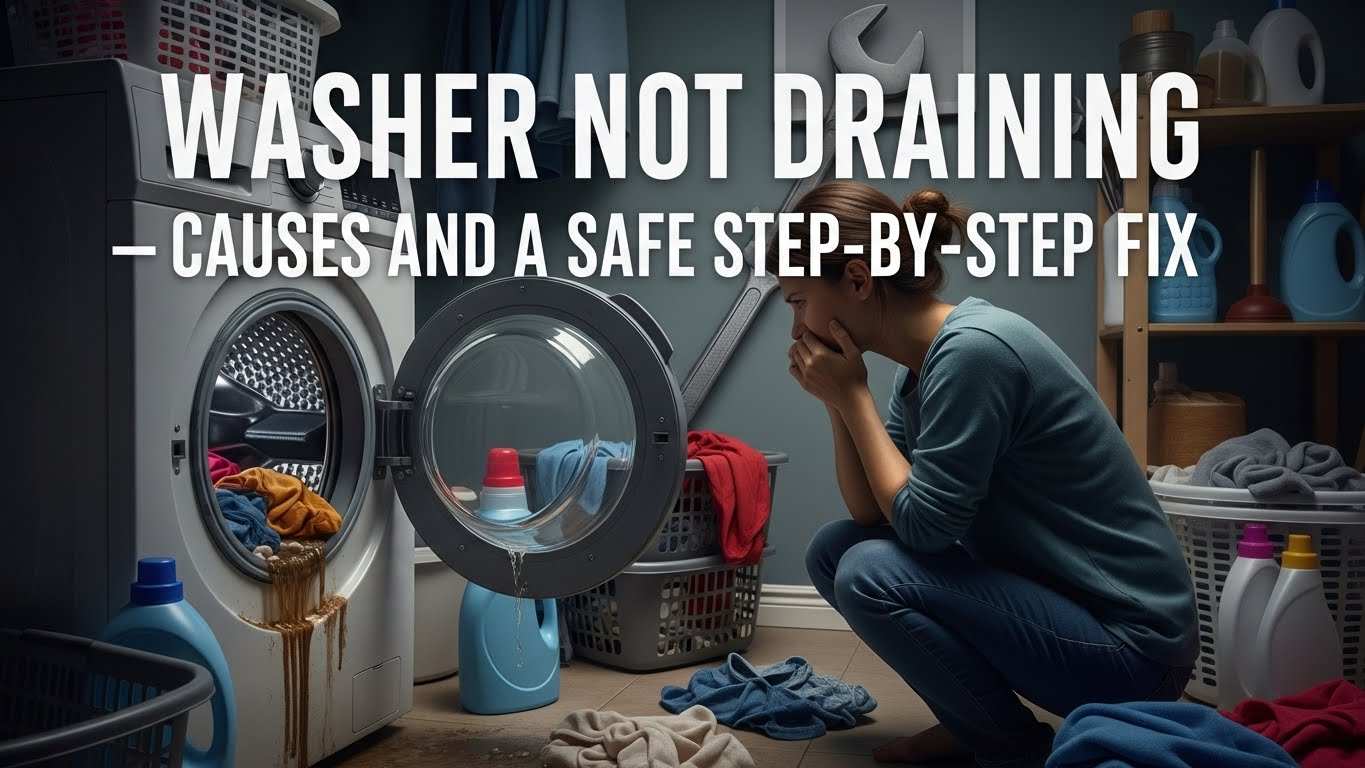
Why is my washer not draining?
A washer not draining is most often caused by a clogged drain filter (coin trap), a kinked / restricted drain hose, or excess suds that prevents proper draining. You can usually troubleshoot safely without replacing parts. Clear checks and fixes are explained below.
⚠️ Safety First: Unplug the washer before opening access panels or filters. Be prepared for water release. Work slowly and avoid touching wiring. Pro tip: If your washer has an emergency drain tube next to the filter, drain into a bowl first to avoid a floor flood.
Tools Needed
| Item | Purpose |
|---|---|
| Shallow pan / bowl + towels | Catching drain water safely |
| Flashlight | Seeing debris in filter/port |
| Soft brush (or old toothbrush) | Cleaning lint and residue |
How Drain Problems Show Up in Real Use
Last updated: January 3, 2026
A washer not draining doesn’t always stop mid-cycle. Some machines “finish” but leave standing water, while others refuse to spin because water is still inside. Most manufacturer-friendly troubleshooting sequences start with filter → hose path → suds control before suspecting a pump failure.
Quick triage (fast clues):
- Water left after cycle: filter/hose restriction is likely
- Won’t spin: safety lock due to water level
- Gurgling / slow drain sound: partial blockage at filter/pump path
- Door won’t unlock: water level still detected (drain issue is active)
Table of Contents
- 1) Most Common Reasons a Washer Won’t Drain
- 2) Step-by-Step Drain Fix Protocol
- 3) Front-Load vs Top-Load Differences
- 4) Preventing Future Drain Problems
- 5) FAQ
- 6) How This Guide Was Prepared
- 7) Important Safety Notice
- 8) References
1) Most Common Reasons a Washer Won’t Drain
- Clogged drain filter (coin trap): coins, lint, hair, fabric fibers
- Kinked / blocked drain hose: restricted path behind the washer
- Excess detergent (suds lock): heavy foam can interfere with draining/spinning
- Hose depth / air gap issue: hose pushed too far into standpipe (can cause siphon/backflow)
- Door/lid lock not detected: some models won’t drain/spin if lock feedback fails
2) Step-by-Step Drain Fix Protocol
Step 1 — Disconnect power and control the water
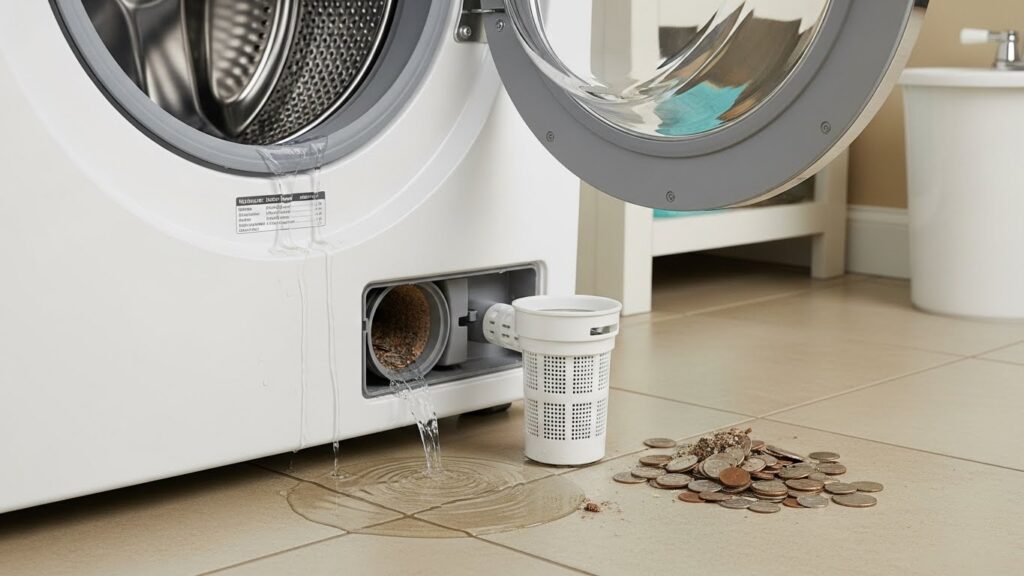
Unplug the washer. Place towels and a shallow pan/bowl at the filter access area. If your washer has an emergency drain hose, drain slowly into a bowl first. This keeps the floor dry and prevents a sudden surge when you open the filter.
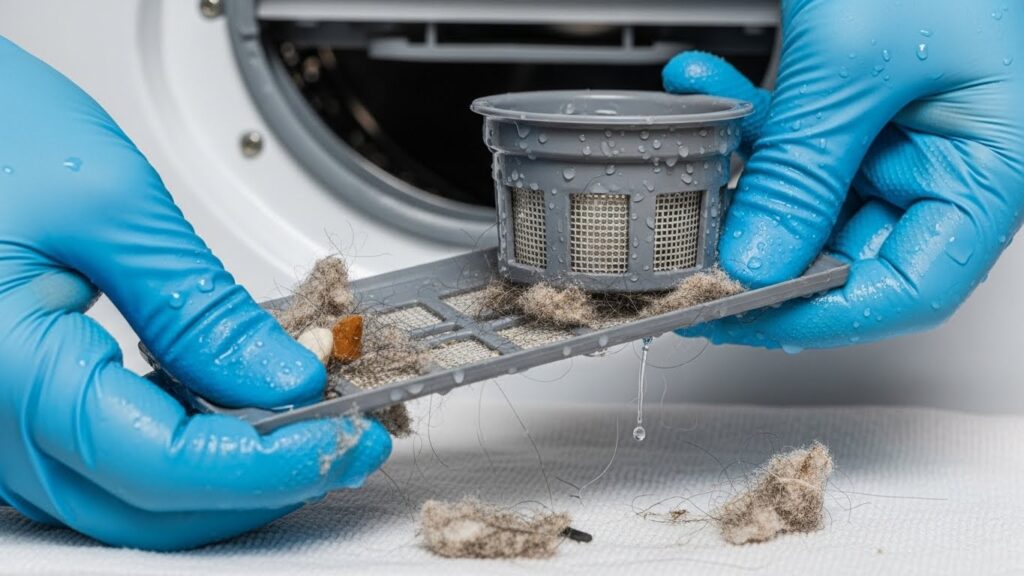
Step 2 — Clean the drain filter (Coin Trap)
Open the access panel and slowly remove the filter. Clear lint, hair, and foreign objects. Rinse the filter and reinstall it snugly. Extra check (safe): With the filter removed, use a flashlight to look into the port. If you see a small object lodged right at the opening, remove it gently—don’t force anything.
Step 3 — Check the drain hose path (kinks + standpipe depth)
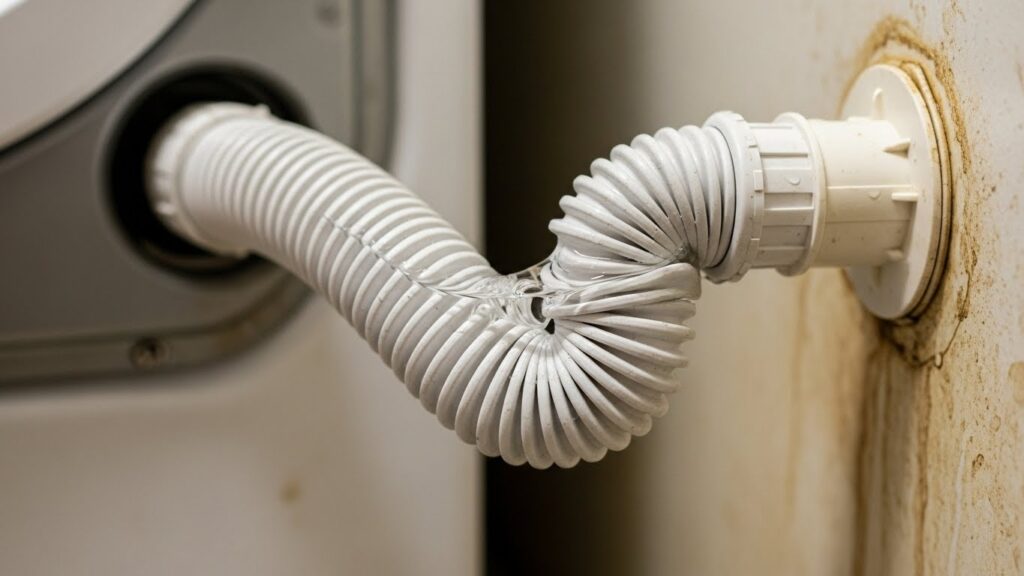
Inspect the hose behind the washer. Straighten any kinks and confirm it’s not crushed against the wall. Also check how far the hose is pushed into the standpipe: pushing it too deep can contribute to siphoning/backflow on some setups. Keep the hose secure but not sealed—an air gap helps prevent suction issues.
Step 4 — Reduce excess suds (Suds Lock)
If you see thick suds, run a rinse-and-spin (or drain/spin) with no detergent. Use HE detergent and avoid over-measuring. Suds-related drain symptoms often improve after one or two rinse cycles.
Step 5 — Test the drain function
Restore power and run a short drain/spin cycle. Confirm water exits freely and the tub is empty at the end. If the unit drains but slowly, re-check the filter seat and hose path once more.
Stop point: If the pump makes a loud grinding noise, the washer leaks around the filter housing, or draining doesn’t improve after filter + hose + suds checks, stop and contact a qualified appliance technician (internal pump/housing issues may be involved).
3) Front-Load vs Top-Load Differences
- Front-load washers: Drain filter clogs are very common (coin trap access is usually on the front).
- Top-load washers: Drain issues are often hose-related or caused by debris in the tub-to-pump path; some models lack a user-accessible filter.
Design note: Front-load machines rely heavily on filters to protect the pump, so routine filter cleaning matters.
4) Preventing Future Drain Problems
- Check pockets: coins and hair pins are common pump-path culprits.
- Mesh bags: wash small items (baby socks, lingerie) in mesh bags.
- Filter routine: clean the drain filter every 2–3 months (more often if you have pets).
- Detergent discipline: measure HE detergent carefully; more soap is not “more clean.”
- After moving the washer: re-check hose kinks and standpipe placement.
5) FAQ
Why does my washer finish the cycle but leave water?
Partial blockages can slow drainage without stopping the cycle completely. The washer may “time out” before fully emptying.
Can too much detergent cause draining problems?
Yes. Excess suds can interfere with the drain/spin logic and leave water behind. A rinse-and-spin with no detergent is a safe first response.
Is it safe to clean the drain filter myself?
Generally yes, if the washer is unplugged and you’re prepared for water. Work slowly and stop if you see cracks, leaks, or damaged parts.
When should I replace the drain pump?
Only after you’ve ruled out filters, hose restrictions, and suds issues. If you’re unsure, a technician can confirm safely without guesswork.
6) How This Guide Was Prepared
This guide prioritizes user-safe checks commonly emphasized in manufacturer support documentation: filter cleaning, hose routing/air gap basics, and safe drain procedures before deeper service work.
7) Important Safety & Information Notice
Professional Disclaimer: This article is provided for general informational purposes only. Washing machine servicing involves electrical components and water exposure. Always follow your manufacturer’s instructions. If you feel unsure at any point, stop and contact a qualified appliance technician.
8) References
- Whirlpool Product Help: Not Draining — Washer (air gap & standpipe depth guidance)
- Samsung Support: What to do when my washing machine does not fill up or drain (debris filter & emergency drain steps)
Related Guides on This Site
Best Washer Temperature Settings for Odor Prevention

I publish step-by-step troubleshooting guides for common home appliance issues (washer, dryer, refrigerator, HVAC basics).
Content is written for everyday homeowners and cross-checked with manufacturer manuals, safety guidance, and trusted public resources.
Posts include practical checks, clear stop-signs for safety, and guidance on when it’s better to call a qualified technician. Updates are logged whenever steps or recommendations change.
Safety note: If you smell gas, see burning, or suspect electrical hazards—stop immediately and contact a qualified professional.