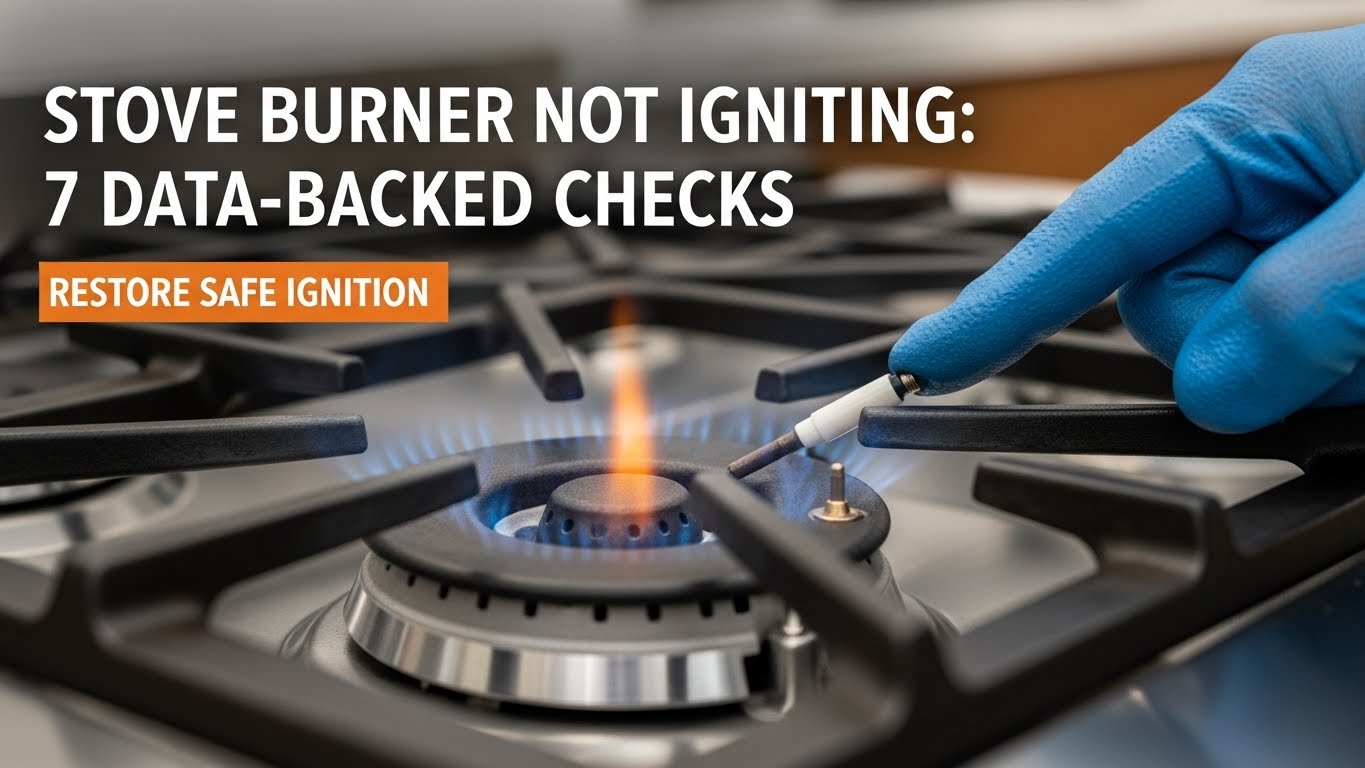
Why Stove Burner Not Igniting Happens (Clogged Ports, Igniter Moisture, and Gas Flow Issues)
Last updated: December 26, 2025
Stove burner not igniting problems are most commonly caused by clogged burner ports, moisture or residue on the igniter, or interrupted gas flow. Manufacturer service manuals consistently recommend cleaning and drying checks before replacing parts.
Quick answer: If you hear clicking but see no flame, start with burner cap alignment and igniter cleaning.
Table of Contents
- 1) Common Symptoms
- 2) What the Data and Manuals Show
- 3) Step-by-Step Safe Fix Protocol
- 4) Real Search Scenarios Explained
- 5) FAQ
- 6) Safety Disclaimer
- 7) References
1) Common Signs When a Stove Burner Won’t Ignite
- Clicking sound but no flame
- Delayed ignition (more than 2–3 seconds)
- Burner lights only after multiple attempts
- Gas smell without ignition
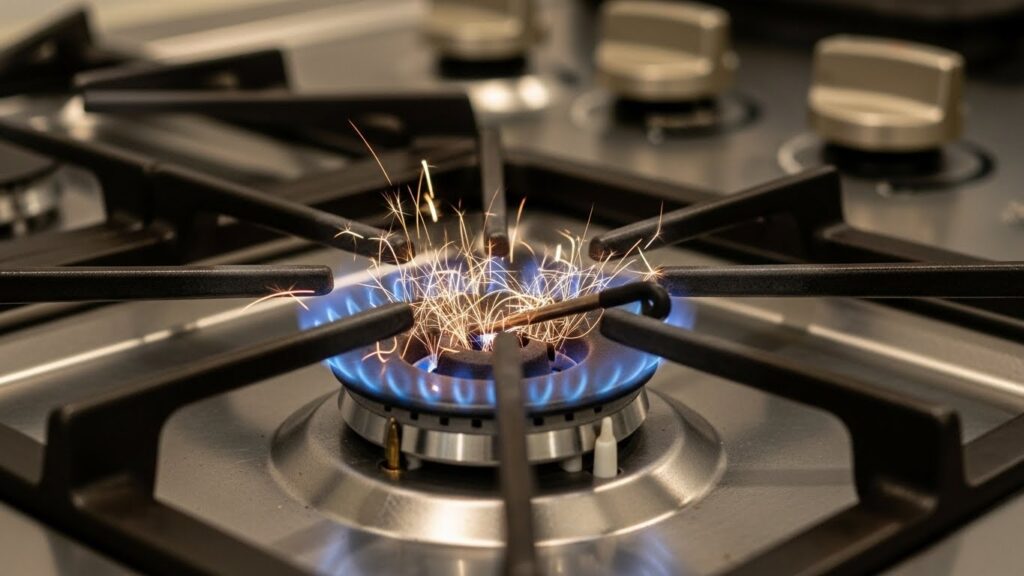
2) What the Data and Manufacturer Manuals Show
Across GE, Whirlpool, Samsung, LG, and Bosch gas range documentation, these patterns are consistent:
- Normal ignition time: Flame should appear within 1–2 seconds of clicking.
- Common blockage: Food spills clog burner ports, disrupting gas-air mixture.
- Cleaning frequency: Light cleaning after spills; deeper cleaning every 1–3 months.
Why this matters: Delayed ignition allows gas to accumulate, increasing flare-up risk.
3) Step-by-Step Safe Fix Protocol (Manual-Based Order)
Safety first: Turn off the burner and ventilate the area. If gas odor persists longer than 5 minutes, stop and ventilate fully.
Step 1 — Turn off gas and allow drying time
If the burner was recently cleaned or spilled on, moisture may prevent ignition. Allow 10–15 minutes for drying.
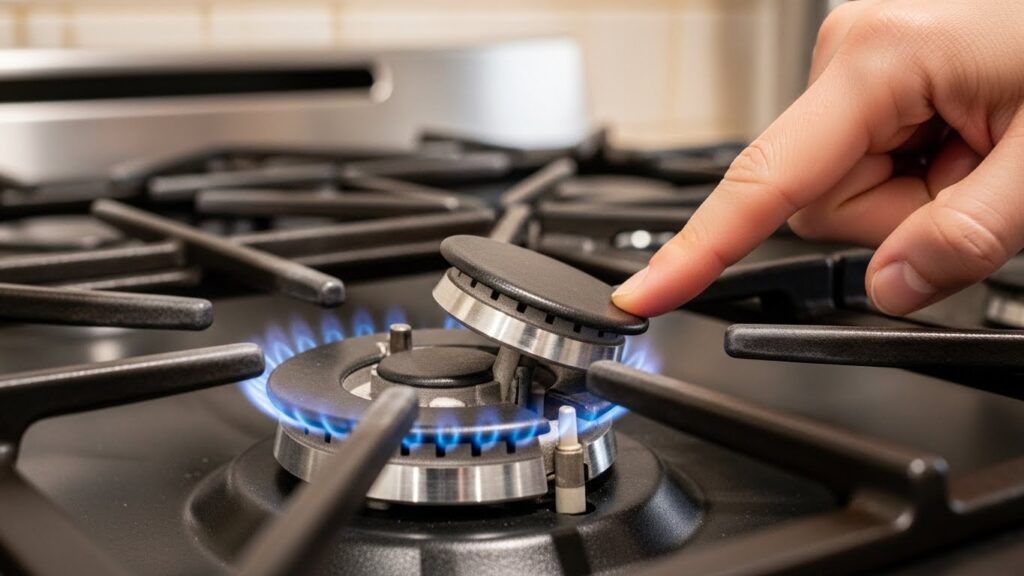
Step 2 — Check burner cap alignment
Caps must sit flat and centered. Misalignment prevents proper gas flow to the igniter.
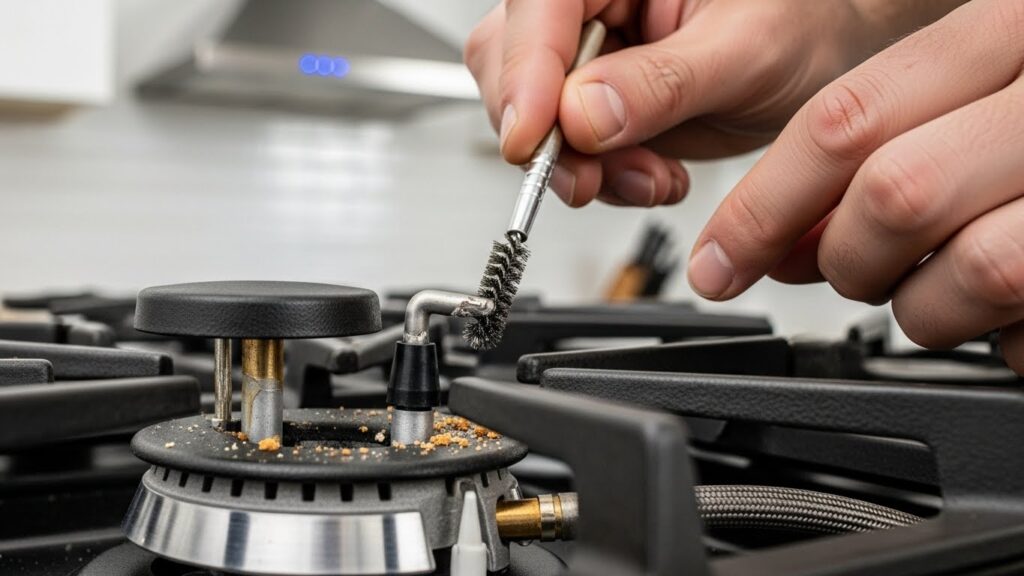
Step 3 — Clean burner ports
Use a soft brush or pin to clear clogged ports. Avoid enlarging holes.
Step 4 — Clean and dry the igniter
Gently wipe the igniter tip with a dry cloth or soft brush. Residue can weaken the spark.
Step 5 — Test ignition timing
After cleaning, the flame should appear within 1–2 seconds. Longer delays suggest gas flow or igniter wear issues.
Step 6 — Evaluate gas supply
If multiple burners fail, check the gas shutoff valve and supply.
Step 7 — Consider professional service
Persistent issues may indicate worn igniters or valve problems requiring a technician.
4) Real Search Scenarios Explained
“Stove burner clicks but won’t light”
Usually caused by dirty or wet igniters.
“Gas stove burner slow to ignite”
Often linked to clogged ports or cap misalignment.
“One burner not igniting others fine”
Points to localized blockage or igniter residue.
5) FAQ
Is delayed ignition dangerous?
Yes. Gas buildup can cause flare-ups if ignition is delayed.
Can water cause ignition problems?
Yes. Moisture interferes with spark generation.
How often should burner parts be cleaned?
Light cleaning after spills and deeper cleaning every 1–3 months.
Do electric stoves have similar issues?
Electric models do not use igniters but can have heating element failures.
When should I call a technician?
If cleaning does not restore normal ignition timing, professional service is recommended.
6) Safety Disclaimer
This guide is for general informational purposes only. If you smell gas continuously or feel unsafe, stop and contact a qualified technician.
7) References
Related Guides on This Site

I publish step-by-step troubleshooting guides for common home appliance issues (washer, dryer, refrigerator, HVAC basics).
Content is written for everyday homeowners and cross-checked with manufacturer manuals, safety guidance, and trusted public resources.
Posts include practical checks, clear stop-signs for safety, and guidance on when it’s better to call a qualified technician. Updates are logged whenever steps or recommendations change.
Safety note: If you smell gas, see burning, or suspect electrical hazards—stop immediately and contact a qualified professional.