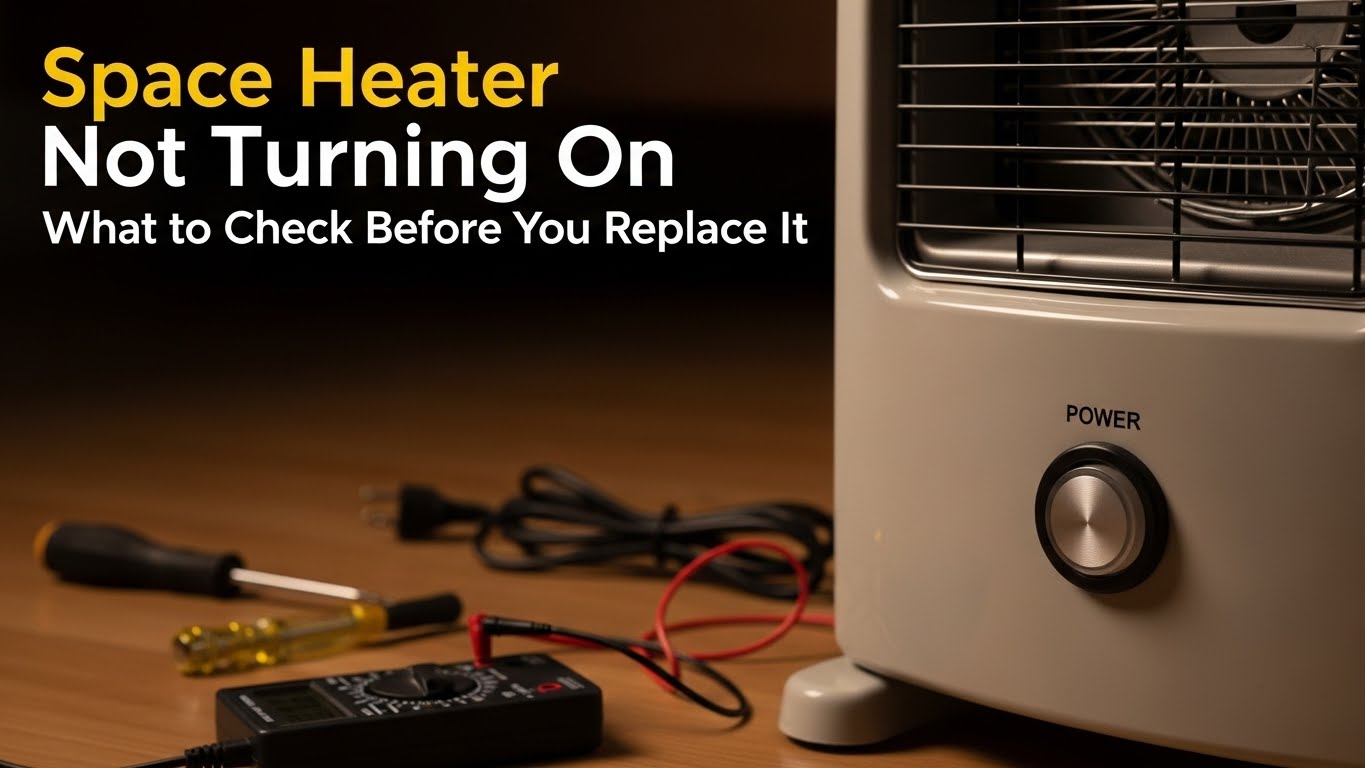
Why is my space heater not turning on?
In most cases, a space heater that won’t turn on is reacting to a safety shutdown (overheat protection or a tip-over switch), not a permanent failure. Start with a 20-minute unplug reset, confirm the outlet/GFCI, then restore airflow by removing dust. Follow the steps below in order.
Safety First: Unplug the heater and let it cool before inspection. Use a wall outlet only—avoid extension cords or power strips. Stop immediately if you smell burning plastic, see discoloration, or notice a melted plug.
Space heater not turning on: the 20-minute reset + safety lockout checks
Last Updated: January 6, 2026
Quick Standard (Do this in order)
- Confirm power: test the outlet with a lamp/charger (+ check GFCI reset).
- Hard reset: unplug for 20 minutes (thermal cutout needs cooldown time).
- Tip-over switch: place on a firm, level surface (carpet can “float” the sensor).
- Airflow recovery: remove dust from intake/exhaust vents (overheat lockout trigger).
- Red flags: melted plug, burning smell, repeated instant shutoff → stop and replace/tech.
Tools needed (basic + safe)
| Item | Purpose |
|---|---|
| Known working wall outlet | Eliminate “silent” outlet/GFCI/breaker issues |
| Vacuum / soft brush | Clear dust from vents (common overheat trigger) |
| Firm board (optional) | Stabilize tip-over switch if you only have carpet |
Table of contents
- 1) Why a space heater “refuses” to turn on
- 2) Step-by-step fixes (highest success order)
- 3) Tip-over switch issues (the carpet trap)
- 4) Dust/airflow lockout (the invisible shutdown)
- 5) When it’s unsafe to keep troubleshooting
- 6) Common mistakes that make it worse
- 7) FAQ
- 8) Related guides
- 9) References
1) Why a space heater “refuses” to turn on
A space heater not turning on is often a built-in safety decision. Most portable heaters include:
- Overheat protection: shuts off if internal temperature rises too fast (dust + blocked vents are common).
- Tip-over switch: breaks the circuit if the heater isn’t perfectly stable.
- Power/circuit limits: high wattage can trip GFCI outlets or breakers (sometimes “half-tripped”).
2) Step-by-step fixes (highest success order)
Step 1 — Verify the outlet (and GFCI) before blaming the heater
Plug a lamp/phone charger into the same outlet. If it’s dead, check nearby GFCI outlets (common in kitchens/bathrooms/garages) and reset them. If your heater is on a dedicated circuit, fully flip the breaker OFF then ON—some trips look “on” but aren’t.
Step 2 — Do the 20-minute “hard reset”
Thermal protection typically won’t reset instantly. Unplug the heater for at least 20 minutes. This cooldown is what allows the internal cutoff to return to normal.
Step 3 — Fix the tip-over switch (the carpet trap)
Move the heater to a firm, level surface. Plush carpet can prevent the safety switch from fully engaging, even if the heater looks upright. If you only have carpet, place a firm board underneath.
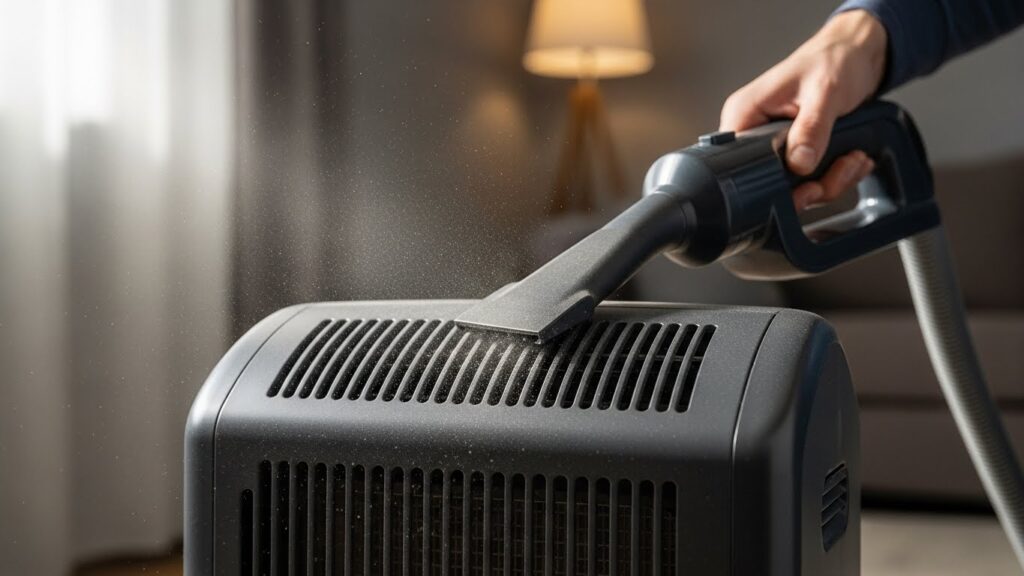
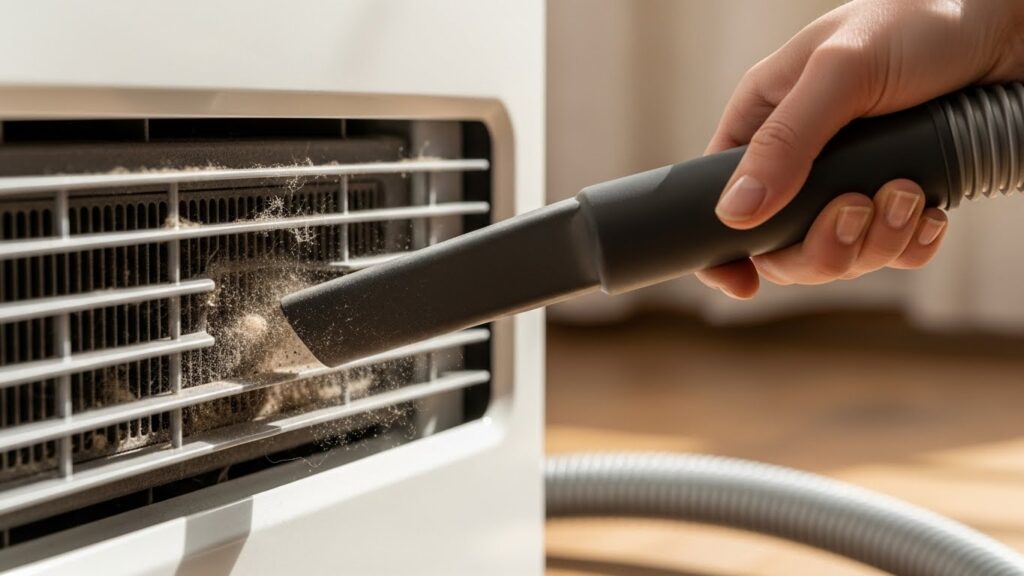
Step 4 — Restore airflow by removing dust
Dust works like insulation and can push internal temps past the cutoff point. Gently vacuum the intake/exhaust vents. Avoid pushing debris deeper into the unit—light passes are safer.
Step 5 — Plug directly into the wall (no extension cords)
Extension cords and power strips can create voltage drop and heat at the plug—this can prevent startup or trigger shutdowns. Use a wall outlet and keep the cord fully uncoiled.
Stop point: If the heater still shows no lights on a confirmed working outlet after a full cooldown, it may have a non-user-serviceable internal fault. Replacement is often safer than disassembly.
3) Tip-over switch issues (the carpet trap)
Many heaters use a simple “must-be-upright” switch. Small tilts, uneven floors, or thick rugs can break the circuit. If your heater turns on in one room but not another, flooring is a strong suspect.
- Test on hard floor first.
- Keep the heater away from rocking chairs or areas where it can be bumped.
- Don’t wedge objects under one side to “level it”—move it to a stable spot instead.
4) Dust/airflow lockout (the invisible shutdown)
If your heater starts, runs briefly, then stops—or refuses to restart until later—airflow restriction is a top cause. Dust buildup is especially common at the start of heating season.
- Make sure the heater has clear space around intake/exhaust.
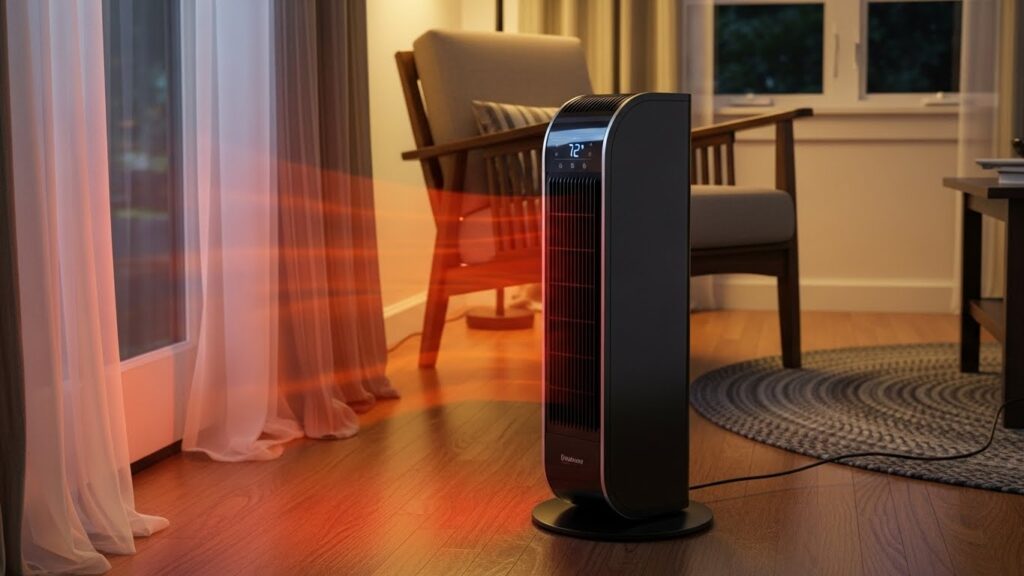
- Avoid placing it near curtains, bedding, or low furniture that blocks flow.
- If it repeatedly shuts off within seconds, treat it as a warning—not something to “spam restart.”
5) When it’s unsafe to keep troubleshooting
Stop troubleshooting and do not use the heater if you notice:
- Melted plug blades or a warm/hot plug during use
- Burning plastic smell, smoke, or visible discoloration
- Sparking at the outlet or intermittent power when wiggling the cord
- Immediate shutdowns even after cleaning + full cooldown
In these cases, replacement is usually safer than “one more try.”
6) Common mistakes that make it worse
- Restarting repeatedly without fixing airflow (overheat cutoffs will keep tripping)
- Running near curtains, bedding, or under desks where heat gets trapped
- Using extension cords/power strips (voltage drop + plug heating risk)
- Ignoring early warning signs (odor, discoloration, plug heat)
7) FAQ
Can a space heater stop working just from dust?
Yes. Dust restricts airflow and can trigger overheat protection. Cleaning vents + doing a full cooldown often restores normal operation.
Why does it work on “Low” but not on “High”?
High heat draws more current. Weak circuits, overloaded outlets, or voltage drop can cause shutdowns or prevent startup on “High.” Try a dedicated wall outlet and remove other high-wattage devices from the same circuit.
Do space heaters have internal fuses?
Some do, but many are not user-serviceable. If the heater shows no lights on a known good outlet after a full cooldown, replacing the unit may be safer.
Is it cheaper to repair or replace a portable heater?
For many portable models, replacement is more practical once internal electrical components fail—especially if safety features are involved.
8) Related guides
- Dryer Not Heating — Heating element, fuse, and vent checks
- Dryer Making Loud Noises — Sound-based diagnosis
- Washer Smells Bad — Biofilm and odor removal
- Washer Not Draining — Quick diagnostic steps
9) References
Professional Disclaimer: This article is for informational purposes only. Space heater troubleshooting involves electrical and fire hazards. If you are uncertain about any step or observe signs of electrical failure, stop using the heater and consult the manufacturer or a qualified technician.

I publish step-by-step troubleshooting guides for common home appliance issues (washer, dryer, refrigerator, HVAC basics).
Content is written for everyday homeowners and cross-checked with manufacturer manuals, safety guidance, and trusted public resources.
Posts include practical checks, clear stop-signs for safety, and guidance on when it’s better to call a qualified technician. Updates are logged whenever steps or recommendations change.
Safety note: If you smell gas, see burning, or suspect electrical hazards—stop immediately and contact a qualified professional.