Why a Refrigerator Is Leaking Water on the Floor (Drain, Gasket, and Condensation Problems)
Last updated: December 14, 2025
Refrigerator water leaking on floor issues are usually caused by a clogged defrost drain, a misaligned door gasket, or condensation problems rather than a serious internal failure. In most homes, the leak starts slowly and worsens over time if airflow and drainage are not corrected.
Fast answer: If you see water pooling under your fridge, check the defrost drain, door seals, and condensation sources before assuming a cracked water line.
Table of Contents
- 1) Common Leak Symptoms
- 2) Why Refrigerators Leak Water
- 3) Step-by-Step Fix Protocol
- 4) Real Search Scenarios Explained
- 5) FAQ
- 6) Safety Disclaimer
- 7) References
1) Common Signs of Refrigerator Water Leaking on the Floor
- Water pooling in front of or under the refrigerator
- Leaks appearing after defrost cycles
- Water collecting inside the fridge or crisper drawers
- Moisture buildup around the door edges
2) Why Refrigerators Leak Water
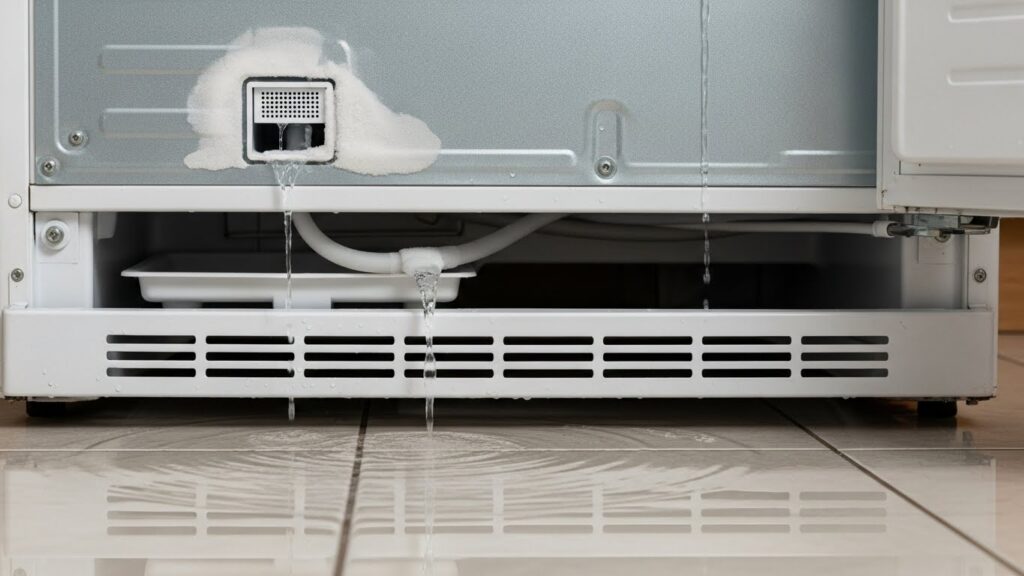
Across brands like LG, Samsung, Whirlpool, GE, and Bosch, the same causes appear repeatedly:
- Clogged defrost drain causing meltwater overflow
- Damaged or dirty door gasket allowing warm air and condensation
- Drain pan misalignment or cracks
- Ice maker or water dispenser line leaks
- High humidity or uneven airflow
Important: A refrigerator can leak water even when cooling performance appears normal.
3) Step-by-Step Fix Protocol (High-Probability First)
Safety note: Unplug the refrigerator before accessing internal panels or drain components. Shut off the water supply if inspecting water lines.
Step 1 — Inspect and clear the defrost drain
A clogged defrost drain is the most common reason for refrigerator water leaking on floor complaints. When meltwater cannot drain properly, it spills into the fridge interior or onto the floor.
- Locate the drain opening inside the freezer or refrigerator compartment
- Flush gently with warm water
- Remove visible debris with a soft tool
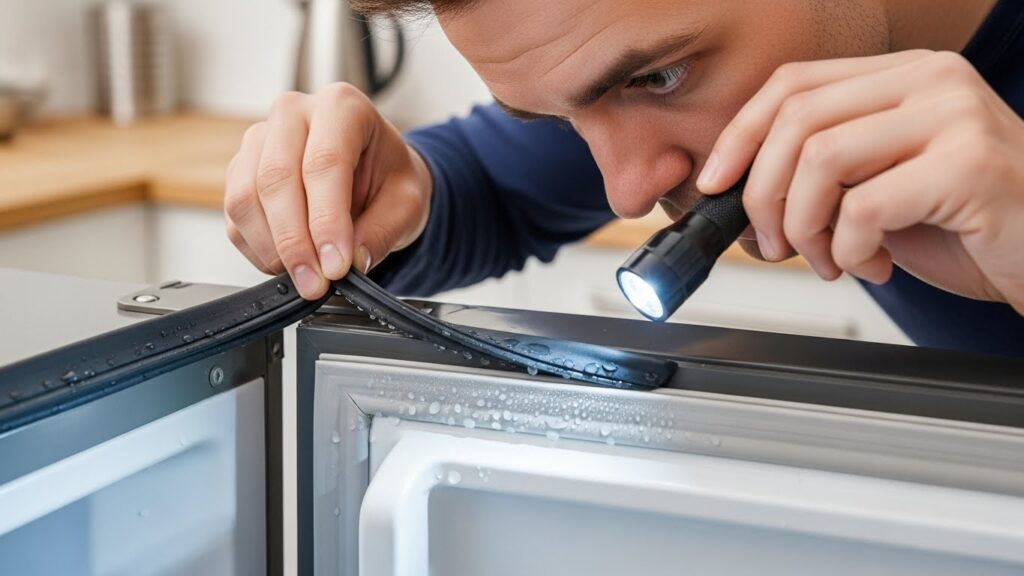
Step 2 — Check the door gasket seal
If the gasket does not seal tightly, warm air enters and creates condensation that eventually drips out. Clean the gasket and check for gaps or warping.
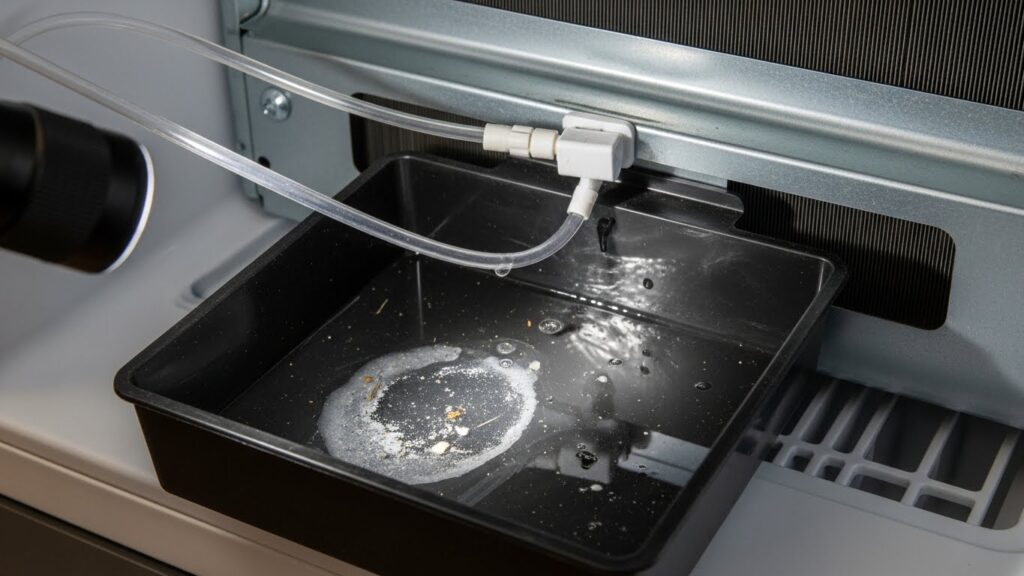
Step 3 — Inspect the drain pan
The drain pan collects defrost water beneath the refrigerator. If it is cracked, tilted, or overflowing, water can leak onto the floor.
Step 4 — Check ice maker and water dispenser lines
Leaks from water lines may appear only during ice making or dispensing. Inspect tubing connections and look for slow drips.
4) Real Search Scenarios Explained
“Water leaking under refrigerator after defrost”
This usually points to a clogged or frozen defrost drain that overflows during the defrost cycle.
“Refrigerator leaking water inside and outside”
Door gasket leaks combined with condensation often cause water to appear in multiple areas.
“Refrigerator leaking water near ice maker”
Check water line connections and the ice maker fill tube for slow leaks.
5) FAQ
Is refrigerator water leaking dangerous?
Standing water can damage flooring and increase slip risk. Electrical hazards are rare but leaks should be addressed promptly.
Can a clogged drain really cause floor leaks?
Yes. When defrost water cannot drain, it often overflows and exits the refrigerator base.
How often should the defrost drain be cleaned?
Periodic cleaning during routine maintenance helps prevent recurring leaks.
Do all refrigerator leaks mean a broken water line?
No. Drain and gasket issues are far more common than damaged water lines.
When should I call a technician?
If leaks persist after drain and gasket checks, professional inspection is recommended.
6) Safety Disclaimer
This guide is for general informational purposes only. If you are not comfortable working with electrical appliances or water connections, contact a qualified technician. Always disconnect power and water before inspection.
7) References
Related Guides on This Site
- Ice Maker Not Working: Water Line, Filter, and Temperature Checks
- Freezer Not Freezing Enough: Airflow and Frost Build-Up Fix
- Refrigerator Not Cooling: Step-by-Step Diagnostic Guide

I publish step-by-step troubleshooting guides for common home appliance issues (washer, dryer, refrigerator, HVAC basics).
Content is written for everyday homeowners and cross-checked with manufacturer manuals, safety guidance, and trusted public resources.
Posts include practical checks, clear stop-signs for safety, and guidance on when it’s better to call a qualified technician. Updates are logged whenever steps or recommendations change.
Safety note: If you smell gas, see burning, or suspect electrical hazards—stop immediately and contact a qualified professional.