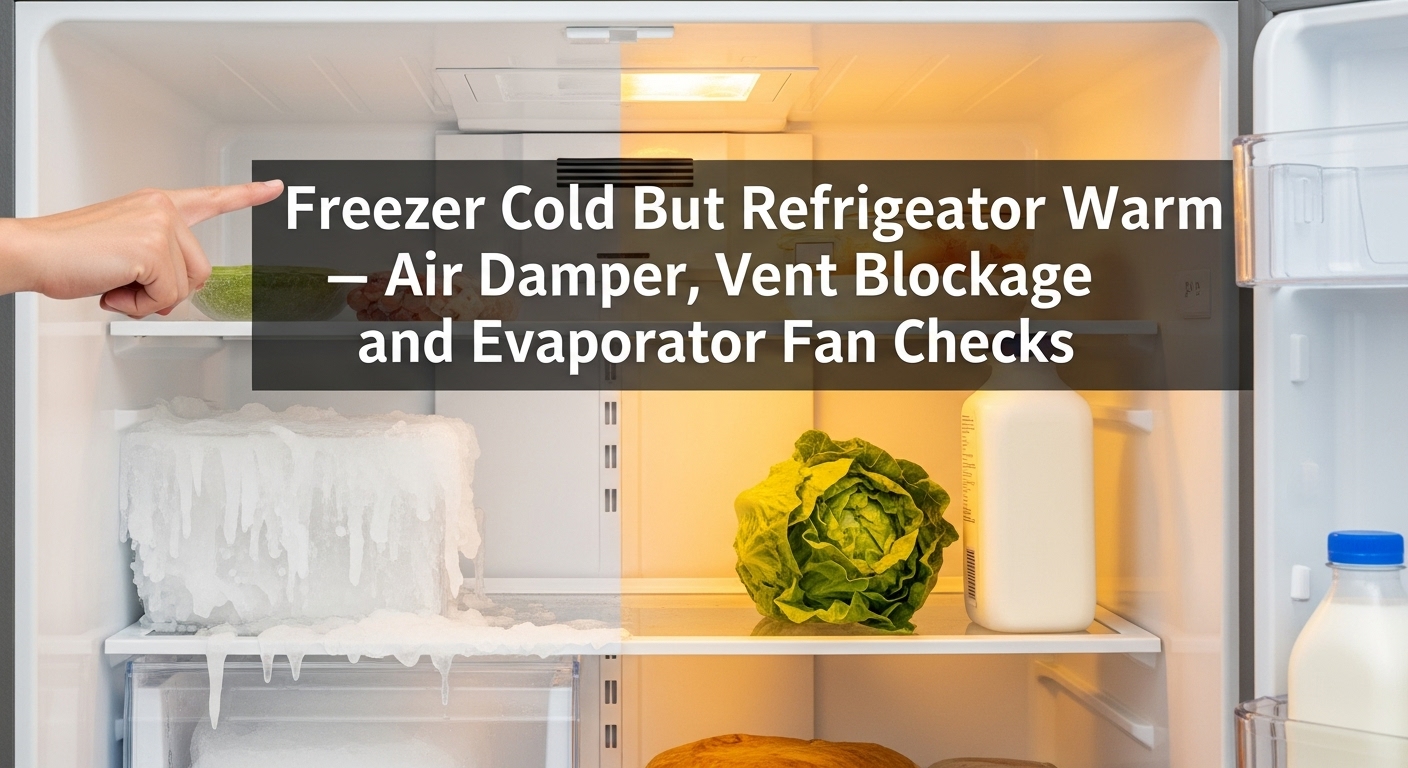
Freezer cold but refrigerator warm? In most cases the compressor is still doing its job — the fridge side simply isn’t getting enough cold air.
The “no-guessing” path is the same across brands: (1) clear vent blocks, (2) confirm the evaporator fan is actually moving air, (3) confirm the damper (air door) can open, then decide whether you’re dealing with ice restriction or a part failure. This order prevents the #1 time-waster: turning the dial colder and accidentally making icing worse.
Key number #1Fridge target: 40°F (4°C) or below.
Key number #2Freezer target: 0°F (-18°C).
Key number #3If you open panels: unplug first and wait 10–15 minutes.
2-minute reality check (before you go deeper)
- If the freezer is truly cold but the fridge is warm, you’re usually chasing airflow, not “refrigerant.”
- If the fridge side is warm only in the back/top, suspect vent blockage or a stuck damper.
- If you never hear the freezer fan during a cooling cycle, suspect an evaporator fan problem.
⚠️ Safety first (read before you poke around)
- Unplug the refrigerator before removing covers, moving panels, or reaching near fan areas.
- Watch sharp edges on metal panels and coil covers. Gloves help.
- Stop and get professional help if you smell burning, see melted plastic, hear loud electrical buzzing, or the outlet feels hot.
Updated: 2026-01-27 • One-page plan: vents → evaporator fan → damper door → frost/ice pattern → safer next steps
If your freezer is cold but the refrigerator compartment is warm, the compressor is usually still running — your fridge side just isn’t receiving cold air. Use the quick checks below to confirm a blocked vent, a damper stuck closed, an evaporator fan problem, or ice restricting the air channel—without forcing parts or guessing.
How the fridge side gets cold (simple explanation)
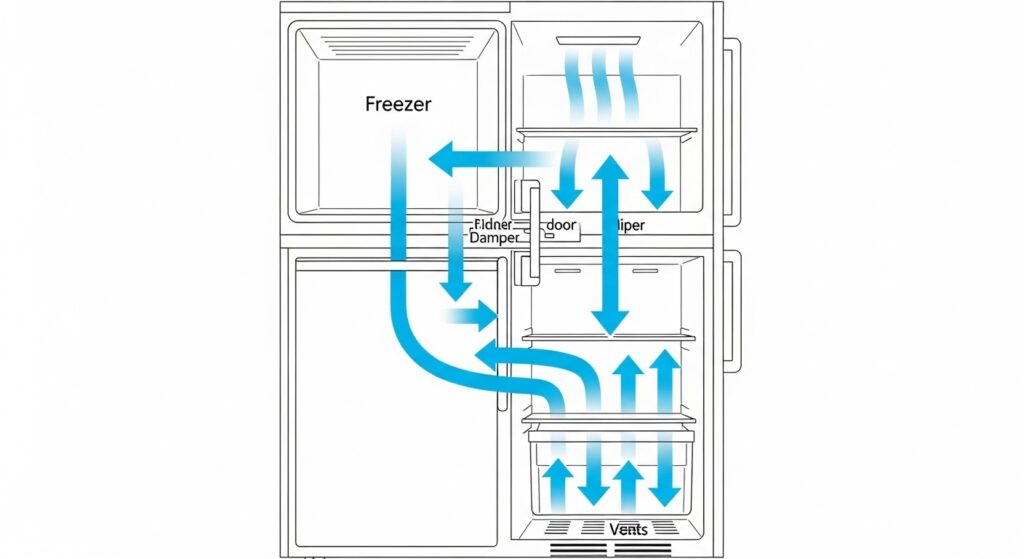
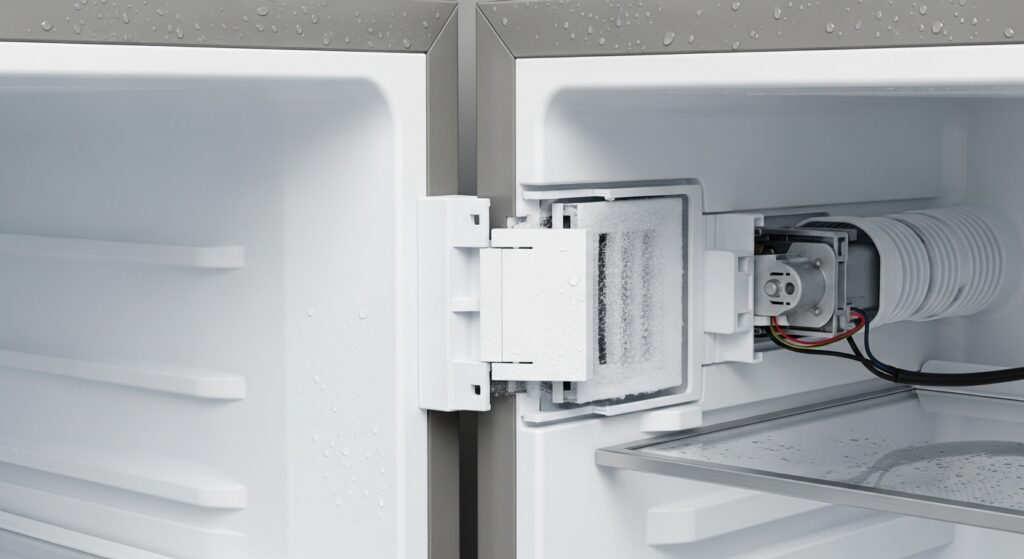
In many refrigerators, the freezer makes the cold and the fresh-food section “borrows” it. The evaporator fan pushes cold air into channels. A small door called a damper opens and closes to control how much of that air enters the refrigerator compartment. If the air path is blocked (food packages, ice, or a stuck damper), the freezer can stay cold while the fridge warms up — which is why your milk spoils while ice cream looks fine.
| Piece | What it does | When it fails, you’ll notice |
|---|---|---|
| Evaporator fan | Moves cold air off the freezer coils and into the air channels | Freezer may still feel cold, but little/no airflow reaches the fridge side |
| Air damper (air door) | Opens/closes to meter cold air into the refrigerator compartment | Fridge warms while freezer stays cold; vent feels weak or “dead” |
| Supply/return vents | Completes the airflow loop so air keeps circulating | Uneven temps; warm spots; “it works sometimes” behavior |
| Frost/ice buildup | Ice can block airflow across coils or in the vent channel | Freezer looks frosty, fridge warms gradually, airflow drops day by day |
Priority fix protocol (5 steps, safest order)
- Step 1 — Set a baseline temperature (stop guessing):
Put a simple thermometer in the fridge compartment and check after a few hours.
Target is 40°F / 4°C or below for the fridge and 0°F / -18°C for the freezer.
If the freezer is near target but the fridge is not, you’re usually chasing an airflow/damper issue. - Step 2 — Clear obvious vent blocks (the “bag of peas” problem):
Find the cold-air vent in the fridge (often top/back) and the return vent (often lower/back).
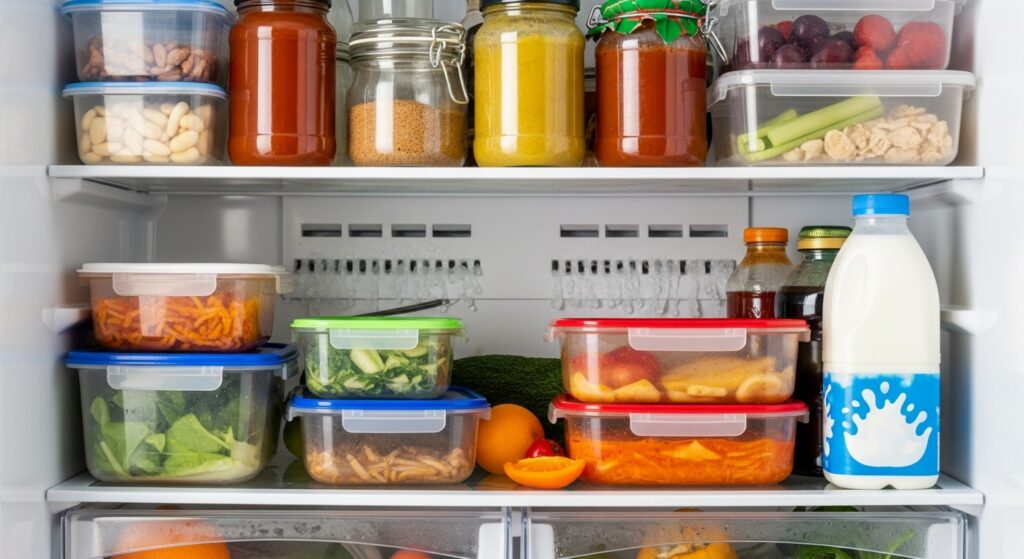
Pull food packages away from vents and don’t stack tall items against the back wall.
Wait 30–60 minutes, then re-check whether the vent airflow feels stronger. - Step 3 — Do the “airflow feel test” at the fridge vent:
During a cooling cycle, place your hand near the fridge vent opening (don’t touch blades).
You should feel a steady cool stream at some point while it’s running.
If airflow is basically zero, move to fan/damper checks next. - Step 4 — Check the evaporator fan behavior (listen first, then inspect safely):
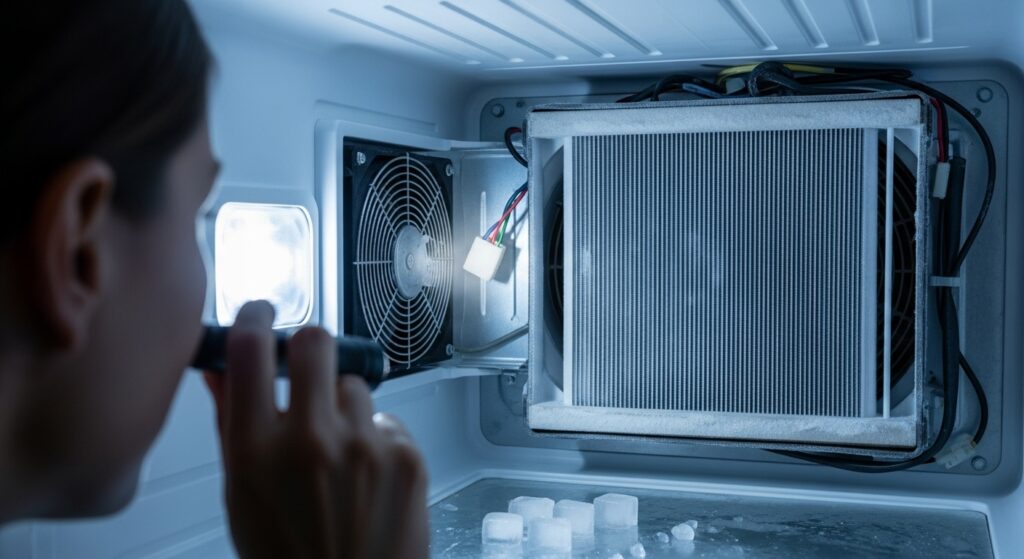
Many units run the evaporator fan when the compressor runs and the door switch is “closed.”
Listen for a smooth fan sound from the freezer-back area (not scraping, not silent all the time).
If it’s scraping or never running, that’s a strong clue — unplug before any panel access. - Step 5 — Suspect the damper door (stuck closed) or an ice-blocked air channel:
If the fan seems OK but the fridge vent stays weak/dead, the damper may be stuck shut or iced over.
Classic pattern: freezer stays strong, fridge warms slowly, and turning colder never “fixes” it.
At this stage, careful inspection (or service) beats forcing plastic gears.
Pro tip (fast sanity check)
If the freezer is cold but the fridge is warm, don’t “turn it colder” first. That can increase icing and reduce airflow even more. Fix the air path before you chase settings.
Diagnostic matrix (symptom → best next move)
Match what you’re seeing to the most likely bucket and the safest first move.
| What you notice | Most likely bucket | Best first move | What NOT to do |
|---|---|---|---|
| Freezer cold, fridge warm, vents feel weak | Damper stuck / blocked air channel | Clear vent blocks → check airflow cycles → inspect damper area (safely) | Don’t keep turning colder and hoping. |
| Freezer back wall frosty/iced | Ice restricting airflow | Look for heavy frost pattern → consider controlled defrost / service | Don’t chip ice with sharp tools. |
| No fan sound during cooling | Evaporator fan issue | Listen again during compressor run → unplug → safe inspection or service | Don’t run with covers removed. |
| Fridge sometimes cold, sometimes warm | Intermittent airflow / door seal / damper | Check vent blockage + door seal contact + loading patterns | Don’t ignore a weak door seal. |
| Burning smell, hot outlet, loud electrical buzz | Electrical hazard | Unplug immediately and call qualified service | Stop testing now. |
Timing plan (what to do today)
This helps you act fast without spiraling into random part-swapping.
| Time window | Do this | Why it matters |
|---|---|---|
| 0–15 minutes | Thermometer baseline + clear vent blocks + quick airflow feel test | Separates “loading/vent block” from real airflow failures quickly. |
| 15–60 minutes | Listen for evaporator fan during cooling cycles + check door seal contact | Confirms the air mover and prevents warm-air leaks that mimic “no cooling.” |
| Same day | If airflow stays dead: damper area inspection (unplugged) or schedule service | Avoids worsening ice restriction and protects food quality. |
The Verdict: Repair vs. Replace Analysis
Before paying for a service visit, use this simple decision matrix to see if the fix is likely worth it. A common rule-of-thumb is the “50% Rule”: if a repair is projected to cost more than about half the price of a comparable new refrigerator, replacement often makes more sense (especially on older units). Prices vary by brand, region, and availability — treat these as typical ranges, not guarantees.
| Suspected Component | Est. Part Cost (DIY) | DIY Difficulty | The Verdict |
|---|---|---|---|
| Air Path Blockage | $0 | ★☆☆☆☆ (Easy) | FIX. Often a loading/vent clearance issue. |
| Evaporator Fan Motor | $40 – $120 | ★★★☆☆ (Moderate) | FIX. Usually high-value if the rest of the fridge is healthy. |
| Damper Control Assembly | $60 – $180 | ★★★☆☆ (Moderate) | FIX if the unit is under ~10 years and otherwise stable. |
| Defrost System (Heater / Thermostat / Sensor) | $30 – $90 | ★★★☆☆ (Moderate) | FIX. Often resolves recurring ice blocks that starve airflow. |
| Main Control Board | $180 – $400 | ★★★★☆ (Hard) | REPLACE is often smarter if the unit is older and repair totals climb. |
| Sealed System / Compressor | $500+ (Pro Only) | ★★★★★ (Expert) | Usually REPLACE. |
Expert financial tip:
On older refrigerators (often 10–15+ years), even “mid-priced” repairs can snowball because plastics, dampers, and sensors become harder to match. If multiple symptoms show up at once (airflow + electronics + icing), set a firm budget ceiling before you spend.
Common mistakes that waste time (and sometimes spoil food)
- Cranking the controls colder first. This can turn a mild airflow issue into a heavier ice restriction.
- Ignoring vent blockage. One oversized container can choke the return path and make the fridge side drift warm.
- Assuming “freezer cold” means everything is fine. The fridge side is a separate airflow zone.
- Skipping a thermometer. “Feels cold” isn’t a measurement — use numbers so you know when it’s fixed.
- Forcing the damper by hand. If gears are stuck, forcing can break mounts and make repair harder.
Serious cases (stop and call service)
Stop if you notice a burning smell, melted plastic, repeated breaker trips, loud electrical buzzing, or heavy ice buildup that returns quickly after defrosting. If the refrigerator stays above safe temperatures for hours and you’re worried about food safety, treat it as urgent and follow official food-safety guidance.
FAQ
Why is the freezer cold but the refrigerator warm?
Because the freezer can still generate cold while the fridge side fails to receive it. The most common causes are blocked vents, a stuck damper door, ice restricting the air channel, or an evaporator fan that isn’t moving air.
Where is the damper located?
Often near the top-back of the refrigerator compartment (or in the divider area between freezer and fridge). It looks like a small vent/box that opens and closes to control airflow. Some models hide it behind a cover.
How can I tell if airflow is the problem?
Do the vent “feel test” during a cooling cycle. If the freezer is cold but the fridge vent feels dead or very weak, airflow/damper is the best suspect. Heavy frost on the freezer back wall is another strong clue.
Can overpacking really make the refrigerator warm?
Yes. Air needs a loop: supply vent out, return vent back. If either path is blocked by food, cold air can’t circulate and the fridge side warms unevenly.
Why does turning the dial colder sometimes make it worse?
If airflow is already weak, colder settings can encourage more frost/ice in the airflow area—like pinching a straw. Fix vents, fan, and damper first, then fine-tune temperature.
When should I stop DIY and call a technician?
If airflow stays dead after clearing vents, frost returns quickly after defrosting, the fan makes grinding/scraping noises, or you notice any electrical heat/burning smell—stop and get qualified service. Also consider service if your unit is older and repair totals approach replacement territory.
Internal Links
- https://homefixatlas.com/refrigerator-not-cooling-fix-guide/ — Full cooling checklist when BOTH sections struggle (coils, airflow, door seal).
- https://homefixatlas.com/refrigerator-temperature-fluctuating/ — Fix temperature swings caused by airflow patterns, sensors, and loading habits.
- https://homefixatlas.com/refrigerator-runs-constantly/ — If it runs nonstop, diagnose heat load, dirty coils, door seal leaks, and airflow strain.
References
- USDA FSIS — Refrigerator temperature guidance (40°F / 4°C or below)
- GE Appliances — How controls regulate damper/airflow between compartments
Safety notice
This article is informational and prioritizes safe, external checks first. Internal access can involve sharp metal edges and electrical components. If you smell burning, notice hot wiring/outlet, repeated breaker trips, or rapid recurring ice buildup, stop use and contact a qualified professional.
Update log: 2026-01-27 — Combined the airflow-first protocol (vents → fan → damper), added repair-vs-replace economics, and expanded diagnostic tables and image-based checks.

I publish step-by-step troubleshooting guides for common home appliance issues (washer, dryer, refrigerator, HVAC basics).
Content is written for everyday homeowners and cross-checked with manufacturer manuals, safety guidance, and trusted public resources.
Posts include practical checks, clear stop-signs for safety, and guidance on when it’s better to call a qualified technician. Updates are logged whenever steps or recommendations change.
Safety note: If you smell gas, see burning, or suspect electrical hazards—stop immediately and contact a qualified professional.