Why Refrigerator Temperature Fluctuating Issues Happen (Sensors, Airflow, and Control Settings)
Last updated: December 20, 2025
Refrigerator temperature fluctuating problems are commonly caused by airflow restrictions, sensor misplacement, or control settings that allow wide temperature swings. While brief changes are normal, frequent or extreme fluctuations can affect food safety and energy efficiency.
Quick answer: If your refrigerator temperature keeps changing, start by checking airflow around vents, sensor placement, and door sealing before assuming a faulty control board.
Table of Contents
- 1) Common Signs of Temperature Fluctuation
- 2) Why Refrigerator Temperature Changes
- 3) Step-by-Step Fix Protocol
- 4) Real Search Scenarios Explained
- 5) FAQ
- 6) Safety Disclaimer
- 7) References
1) Common Signs of Refrigerator Temperature Fluctuating
- Food freezing in some areas but spoiling in others
- Temperature display changing frequently
- Ice melting and refreezing
- Compressor cycling more often than usual
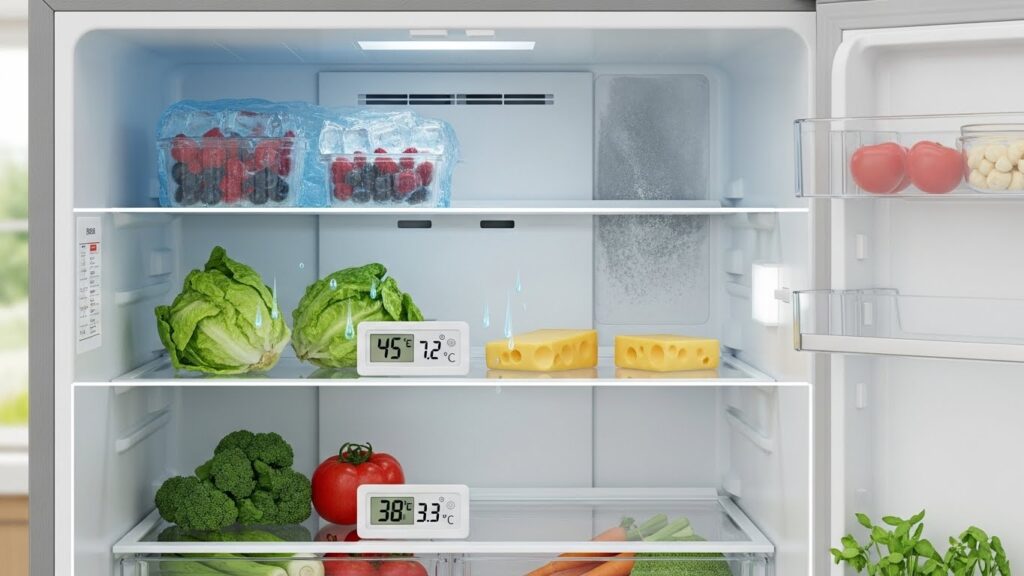
2) Why Refrigerator Temperature Fluctuating Issues Occur
Across LG, Samsung, Whirlpool, GE, and Bosch refrigerators, temperature swings are usually linked to:
- Blocked air vents preventing consistent airflow
- Temperature sensor exposure to warm air
- Door gasket leaks
- Overpacked refrigerator compartments
- Control board or thermostat drift
Important: Modern refrigerators cycle cooling to save energy, but wide swings are not normal.
3) Step-by-Step Fix Protocol (Most Effective First)
Safety note: Unplug the refrigerator before inspecting sensors or internal components.
Step 1 — Check airflow and vent clearance
Blocked vents are the most common reason for refrigerator temperature fluctuating. Ensure food items are not pressed against vent openings.
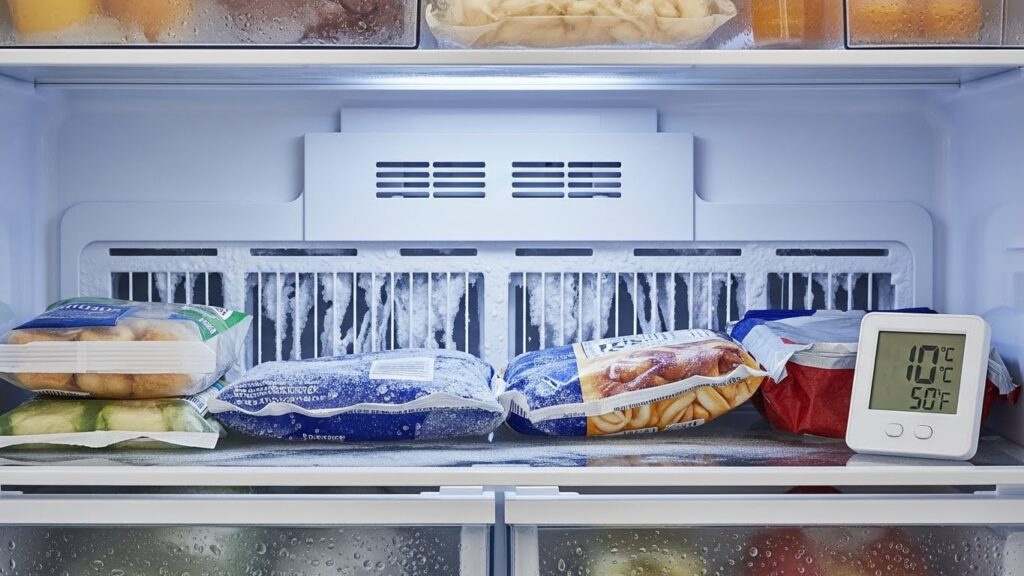
Step 2 — Inspect temperature sensor placement
If sensors are exposed to warm air from door openings, they may trigger unnecessary cooling cycles. Avoid placing warm food near sensor locations.
Step 3 — Check door gaskets and sealing
Leaky door seals allow warm air inside, confusing temperature sensors. Clean and inspect gaskets for gaps or damage.

Step 4 — Review temperature settings
Avoid extreme settings. Use manufacturer-recommended temperature ranges and allow 24 hours for stabilization.
Step 5 — Monitor over 24 hours
After adjustments, observe temperature stability before assuming component failure.
4) Real Search Scenarios Explained
“Refrigerator temperature fluctuating up and down”
Usually caused by airflow restrictions or sensor exposure to warm air.
“Fridge temperature inconsistent”
Often linked to overpacking or poor vent clearance.
“Refrigerator temperature swings after power outage”
Control boards may need time or a reset to stabilize readings.
5) FAQ
Is refrigerator temperature fluctuation normal?
Minor cycling is normal, but wide or frequent swings indicate a problem.
Can overpacking cause temperature issues?
Yes. Overpacked compartments block airflow and cause uneven cooling.
How long should temperature stabilize after changes?
Most refrigerators stabilize within 12–24 hours.
Can a faulty sensor cause fluctuations?
Yes. Sensors exposed to warm air or failing internally can misread temperatures.
When should I call a technician?
If temperature swings persist after airflow and seal checks, professional diagnosis is recommended.
6) Safety Disclaimer
This guide is for general informational purposes only. If you are not comfortable inspecting internal refrigerator components, contact a qualified technician.
7) References
- Energy.gov — Refrigerator temperature control basics
- Consumer Reports — Refrigerator temperature consistency
Related Guides on This Site
- Refrigerator Runs Constantly: Coils and Airflow Fixes
- Refrigerator Not Cooling After Power Outage
- Freezer Frost Build-Up: Door Seal and Air Leak Solutions

I publish step-by-step troubleshooting guides for common home appliance issues (washer, dryer, refrigerator, HVAC basics).
Content is written for everyday homeowners and cross-checked with manufacturer manuals, safety guidance, and trusted public resources.
Posts include practical checks, clear stop-signs for safety, and guidance on when it’s better to call a qualified technician. Updates are logged whenever steps or recommendations change.
Safety note: If you smell gas, see burning, or suspect electrical hazards—stop immediately and contact a qualified professional.