Why does my refrigerator run constantly?
A refrigerator usually runs nonstop due to poor heat rejection or air leaks. To stop constant running, follow these 5 steps:
- Clean Condenser Coils: Dust buildup forces the compressor to work 25% harder.
- Check Door Gaskets: Use the “Paper Test” to find cold air leaks.
- Verify Temperature Settings: Set the fridge to 37°F (3°C) and freezer to 0°F (-18°C).
- Unblock Air Vents: Ensure at least 2 inches of space between food and the back wall.
- Inspect the Condenser Fan: Ensure the fan is spinning to dissipate heat from the compressor.
Detailed step-by-step checks with photos are explained below.
⚠️ Safety First: Unplug the refrigerator or switch off power at the breaker before cleaning coils or moving panels. Avoid contact with moving fans and sharp edges. Note: Some internal components can be extremely hot to the touch even after the unit is unplugged.
Tools Needed
| Tool | Purpose |
|---|---|
| Vacuum + brush attachment | Cleaning condenser coils |
| Flashlight | Inspecting door seals and vents |
| Thermometer | Verifying temperature stability |
Why a Refrigerator Running Constantly Matters
Last updated: December 26, 2025
Refrigerator runs constantly complaints are common after heat waves, heavy grocery loads, or months without maintenance. According to energy efficiency research, a refrigerator with dirty coils can consume up to 25% more electricity than a clean unit. Manufacturer guidance consistently prioritizes airflow, sealing, and heat rejection before suspecting sealed-system failures.
Quick check: If the fridge never quiets down, start with door seals and condenser coils.
Table of Contents
- 1) What “Normal” Run Time Looks Like
- 2) Most Common Causes
- 3) Step-by-Step Fix Protocol
- 4) Efficiency Tips That Reduce Run Time
- 5) FAQ
- 6) How This Guide Was Prepared
- 7) Important Safety Notice
- 8) References
1) What “Normal” Run Time Looks Like
Modern refrigerators cycle on and off throughout the day. Extended run times are expected during hot weather, after loading warm food, or following door openings. Continuous operation—with little to no rest—usually points to air leaks, heat buildup at the coils, or unstable temperatures. In highly efficient “Inverter” models, the compressor may run at a very low speed almost constantly; however, it should not be running at high power or making loud noises nonstop.
2) Most Common Causes
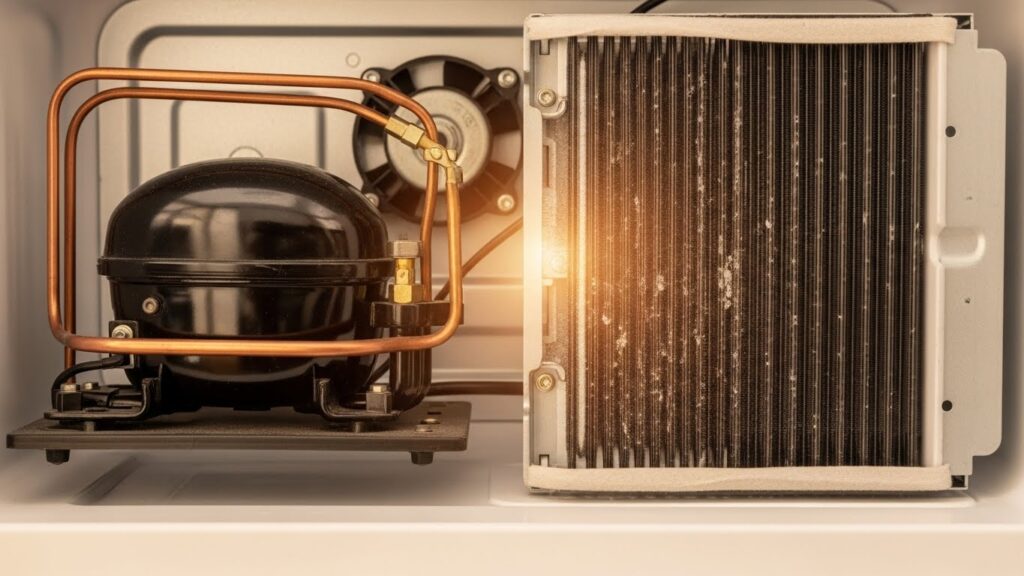
- Dirty condenser coils: Trapped dust prevents heat release.
- Door seal leaks: Warm, humid air keeps the system working.
- Overloading: Blocking vents disrupts airflow.
- Warm room temperatures: Kitchens heat up compressor workload.
- Temperature settings: Set too cold increases run time.
Why this matters: Constant operation raises energy use and shortens component life, specifically the compressor and evaporator fan motor.
3) Step-by-Step Fix Protocol (User-Level First)
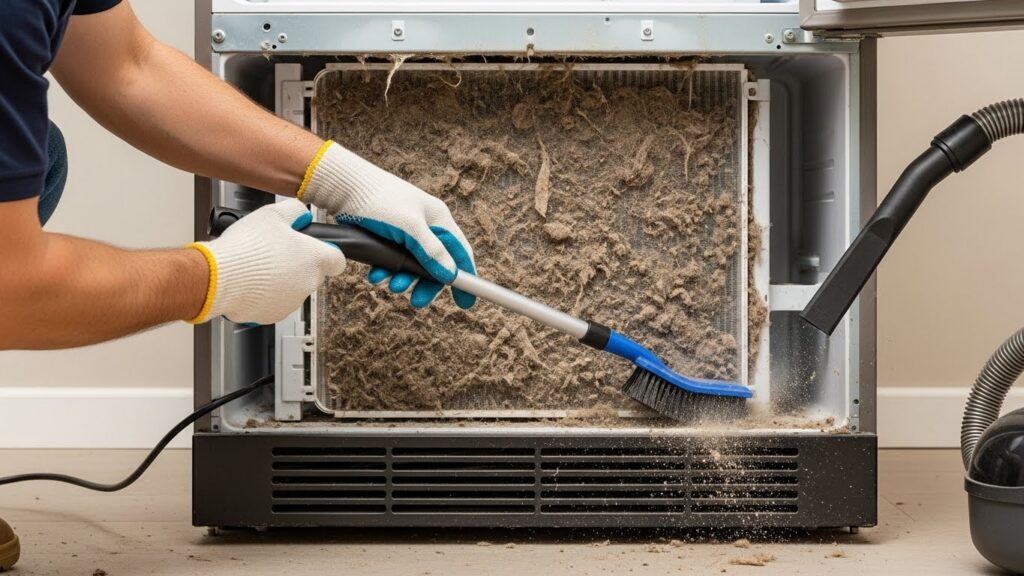
Step A — Clean the condenser coils
Unplug the fridge and vacuum coils underneath or behind. Manufacturers recommend coil cleaning at least once per year. Expert Hack: Use a coil brush or compressed air to reach deep into the fins where a standard vacuum might miss.
Step B — Check door seals
Use the paper test around the gasket. Weak resistance indicates air leaks. Clean sticky seals with mild soap and water. Pro Tip: If the seal is warped, you can sometimes “re-shape” it by carefully applying low heat from a hair dryer.
Step C — Verify temperatures
Target about 37°F (3°C) for the fridge and 0°F (-18°C) for the freezer. Large swings can keep the compressor running. Wait 24 hours after adjusting settings before measuring again for an accurate reading.
Step D — Improve airflow
Keep vents clear and avoid packing items tightly against the back wall. Maintain a 2-inch gap between items and the evaporator vents to ensure proper thermal exchange.
Stop point: If the unit still runs nonstop after these checks, sealed-system issues (like a refrigerant leak) or control board failures may require a certified technician.
4) Efficiency Tips That Reduce Run Time
- Allow hot food to cool before loading
- Limit long door openings
- Keep coils clean and vents clear
- Ensure at least 1-2 inches of clearance on the sides and back of the unit for proper heat dissipation.
5) FAQ
Is it bad if my refrigerator runs all the time?
Yes. Continuous operation increases energy use and significantly accelerates wear on the compressor.
Can dirty coils really cause constant running?
Yes. Poor heat rejection forces the compressor to stay on longer to achieve the same cooling effect.
How often should condenser coils be cleaned?
About once per year, more often (every 6 months) in dusty or pet-friendly homes with shedding hair.
When should I call a technician?
If run time doesn’t improve after cleaning, sealing, and airflow checks, or if you hear loud “clicking” sounds from the compressor area.
6) How This Guide Was Prepared
This guide follows common troubleshooting sequences emphasized in manufacturer support documentation and public energy-efficiency guidance, prioritizing user-safe checks first. Data points regarding energy consumption are synthesized from Energy.gov and Department of Energy (DOE) research.
7) Important Safety & Information Notice
This article is provided for general informational purposes only. Appliance servicing involves electrical components and moving parts. If you are unsure or uncomfortable performing these steps, contact a qualified technician. Never attempt to open the sealed refrigerant system.
8) References
- Energy.gov: Refrigerators and Freezers (Energy Saver)
- GE Appliances: Why is my refrigerator running constantly?
- Consumer Reports: Refrigerator reliability and efficiency
Related Guides on This Site

I publish step-by-step troubleshooting guides for common home appliance issues (washer, dryer, refrigerator, HVAC basics).
Content is written for everyday homeowners and cross-checked with manufacturer manuals, safety guidance, and trusted public resources.
Posts include practical checks, clear stop-signs for safety, and guidance on when it’s better to call a qualified technician. Updates are logged whenever steps or recommendations change.
Safety note: If you smell gas, see burning, or suspect electrical hazards—stop immediately and contact a qualified professional.