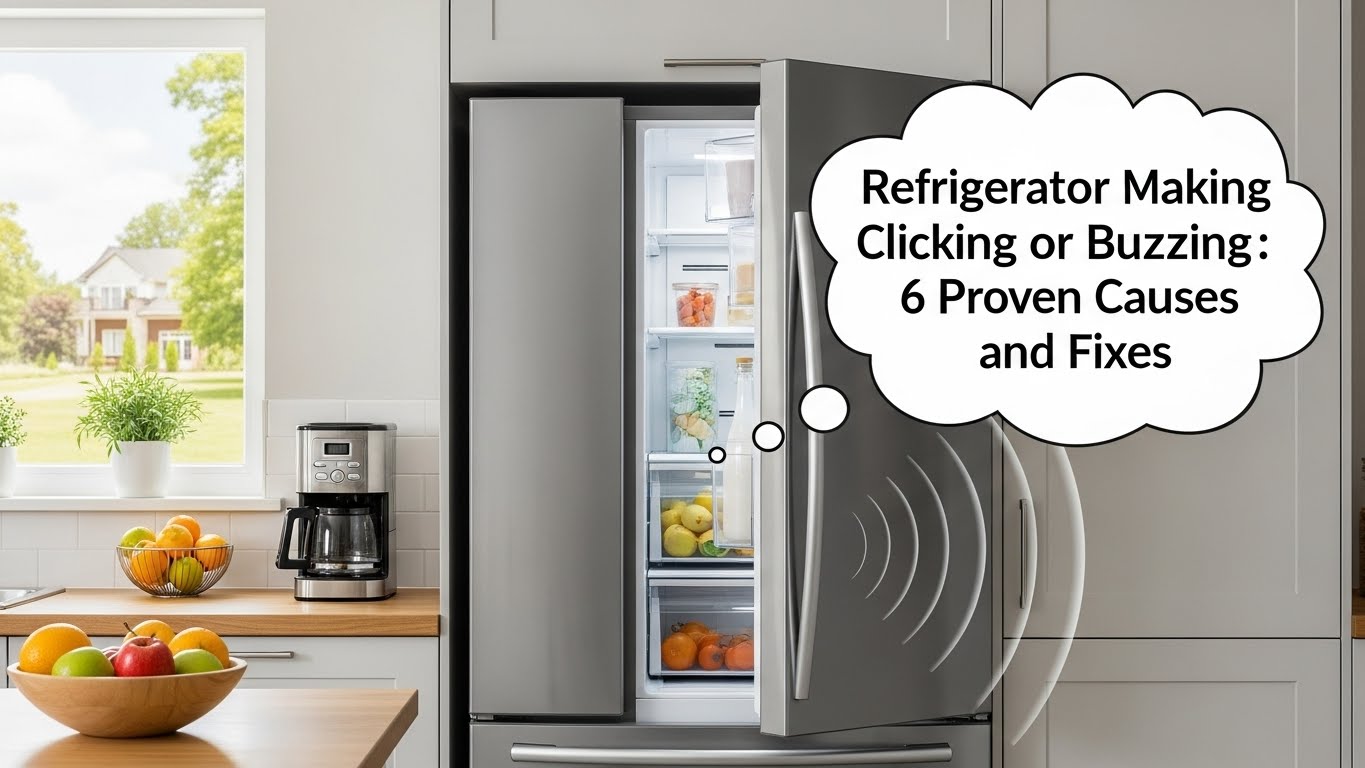
Why a Refrigerator Is Making Clicking or Buzzing Noises
Last updated: December 14, 2025
Refrigerator making clicking or buzzing noises is most often related to normal electrical switching, airflow vibration, or components working under stress rather than an immediate mechanical failure. Understanding when a noise is normal — and when it signals a problem — helps prevent unnecessary repairs.
Quick answer: Clicking usually comes from relays or defrost timers, while buzzing often points to fans, water valves, or vibration against nearby surfaces.
Table of Contents
- 1) Common Clicking and Buzzing Sounds Explained
- 2) Why Refrigerators Make These Noises
- 3) Step-by-Step Fix Protocol
- 4) Real Search Scenarios Explained
- 5) FAQ
- 6) Safety Disclaimer
- 7) References
1) Common Clicking and Buzzing Sounds
- Single click: Compressor relay engaging or disengaging
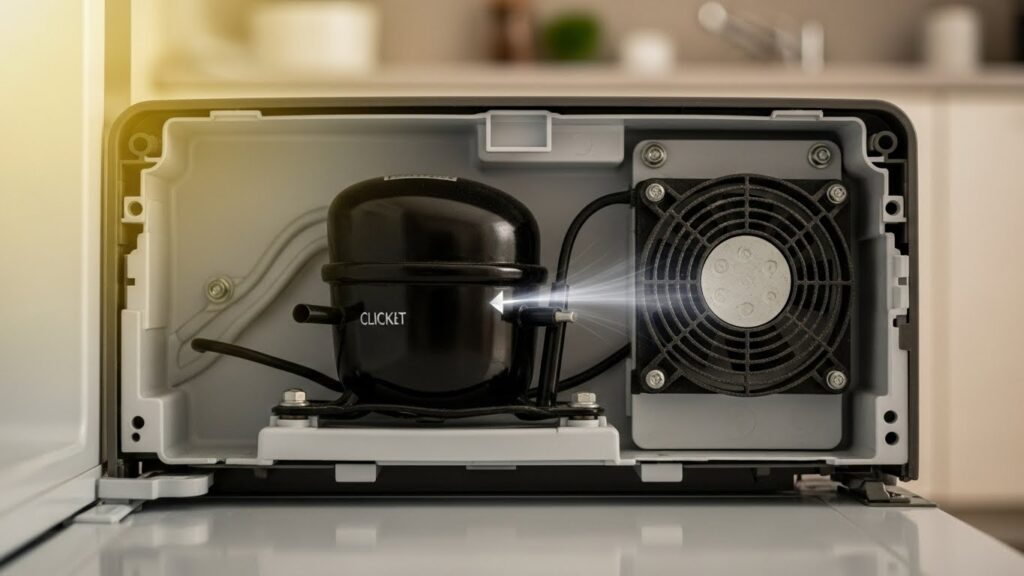
- Repeated clicking: Compressor struggling to start
- Low buzzing: Water inlet valve or condenser fan
- Rattling buzz: Vibration against cabinets or wall
2) Why a Refrigerator Makes Clicking or Buzzing Noises
Across brands like LG, Samsung, Whirlpool, GE, and Bosch, these noises usually come from:
- Compressor start relay switching on and off
- Defrost timer or control board cycling
- Condenser or evaporator fan motors
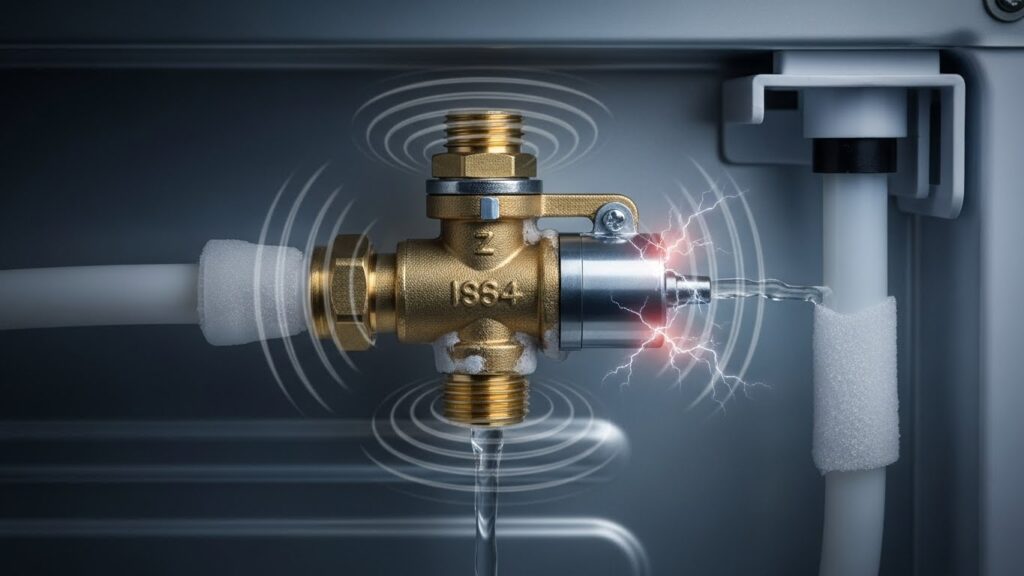
- Water inlet valve during ice maker fill
- Cabinet vibration against floors or walls
Important: Newer refrigerators often make more operational sounds due to high-efficiency compressors and thinner insulation.
3) Step-by-Step Fix Protocol (High-Probability First)
Safety note: Unplug the refrigerator before accessing rear panels or moving the unit.
Step 1 — Identify when the noise occurs
Note whether the clicking or buzzing happens during startup, ice making, or continuously. Timing often reveals the source.
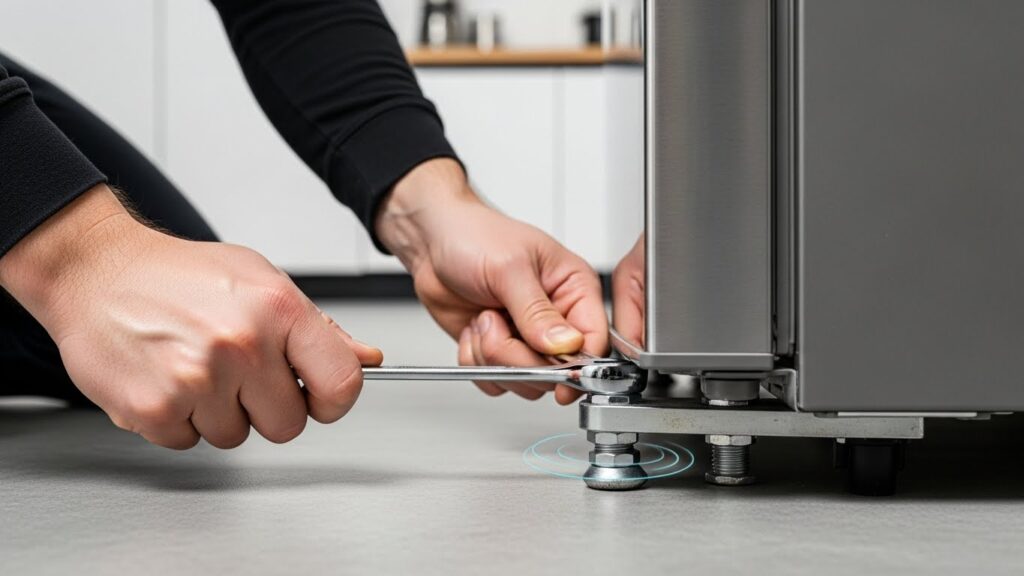
Step 2 — Check for vibration and leveling issues
An unlevel refrigerator can vibrate against flooring or cabinets, creating buzzing sounds. Adjust leveling feet so the unit sits evenly.
Step 3 — Inspect condenser fan and coils
Debris around the fan can cause buzzing or rattling noises. Clean coils and ensure the fan spins freely.
Step 4 — Listen during ice maker operation
Buzzing that occurs only during ice production often comes from the water inlet valve. This is normal unless the sound is unusually loud or constant.
Step 5 — Evaluate repeated clicking
Repeated clicking every few minutes may indicate a failing start relay or compressor stress. At this stage, professional diagnosis is recommended.
4) Real Search Scenarios Explained
“Refrigerator clicking noise every few minutes”
Often linked to compressor relay cycling or startup issues.
“Fridge buzzing noise but cooling fine”
Usually caused by fan operation or vibration rather than a fault.
“New refrigerator making buzzing sound”
High-efficiency models commonly produce operational sounds that older units did not.
5) FAQ
Are clicking noises from a refrigerator normal?
Yes. Occasional clicking from relays or control boards is normal during operation.
Should I worry about a buzzing refrigerator?
Short buzzing sounds are normal. Continuous or loud buzzing should be investigated.
Can noise indicate a failing compressor?
Repeated clicking combined with cooling problems may indicate compressor-related issues.
Does leveling really reduce noise?
Yes. Proper leveling minimizes vibration and sound transmission.
When should I call a technician?
If noises persist after basic checks or are accompanied by cooling failure, professional service is advised.
6) Safety Disclaimer
This guide is for general informational purposes only. If you are not comfortable working around electrical appliances or moving heavy equipment, contact a qualified technician. Always disconnect power before inspection.
7) References
Related Guides on This Site
- Refrigerator Runs Constantly: Coils and Airflow Fixes
- Freezer Frost Build-Up: Door Seal and Air Leak Solutions
- Ice Maker Not Working: Water Line and Filter Checks

I publish step-by-step troubleshooting guides for common home appliance issues (washer, dryer, refrigerator, HVAC basics).
Content is written for everyday homeowners and cross-checked with manufacturer manuals, safety guidance, and trusted public resources.
Posts include practical checks, clear stop-signs for safety, and guidance on when it’s better to call a qualified technician. Updates are logged whenever steps or recommendations change.
Safety note: If you smell gas, see burning, or suspect electrical hazards—stop immediately and contact a qualified professional.