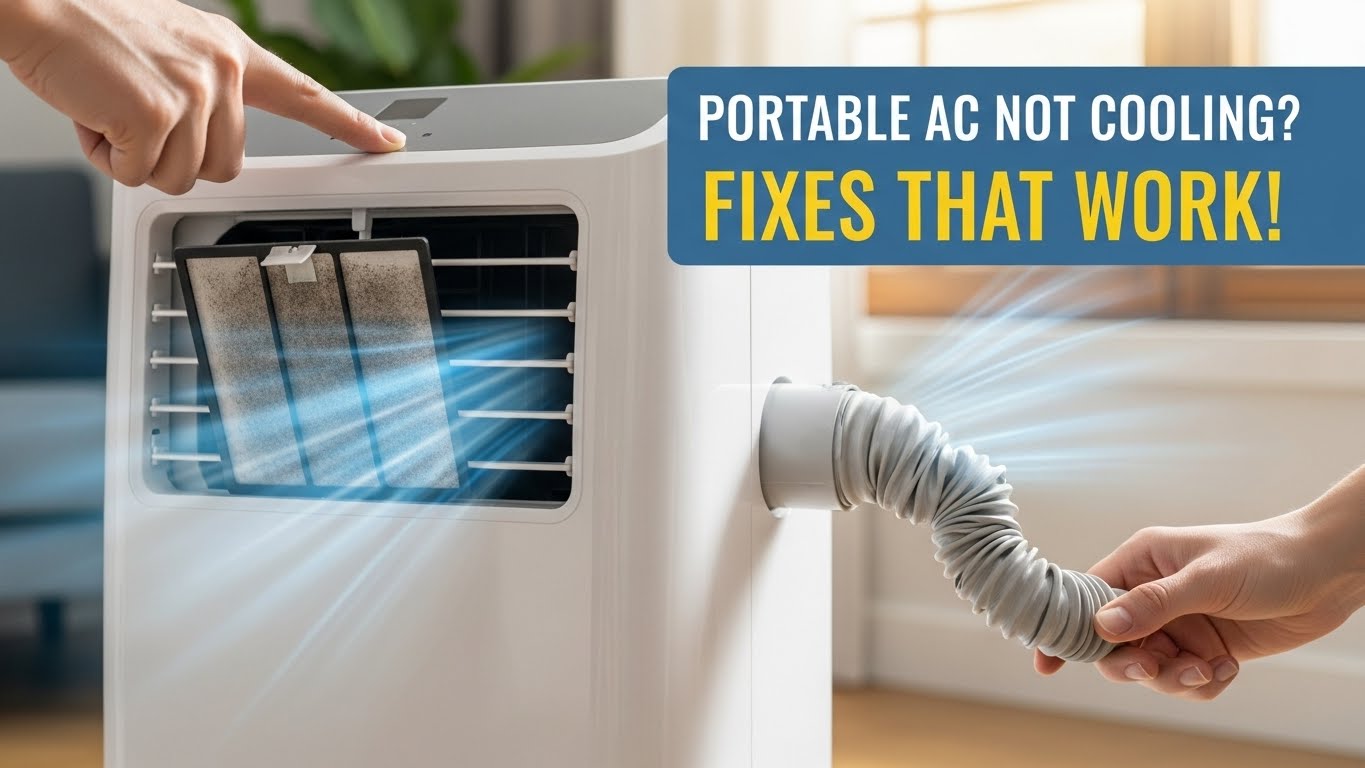
Why is my portable AC running but not cooling?
If your portable AC is running but the room stays warm, the most common causes are hot exhaust air leaking back into the room, dirty filters (low airflow), or negative pressure on single-hose models pulling warm air in from elsewhere. In many cases the unit is functional — the setup is the problem.
Use the quick Delta T test below, then follow the step-by-step fixes to restore real cooling.
Safety First: Unplug the portable AC before cleaning filters, adjusting hoses, or opening any access panels. Do not open sealed refrigerant lines or attempt “recharging.” If you notice a hissing sound, oily residue, a burning smell, or a hot/melted plug, stop using the unit and contact the manufacturer or a qualified technician.
Last updated: January 7, 2026
Quick Triage (30 seconds):
- Cold air at the vent, but room stays hot: installation leak / exhaust heat re-entry / negative pressure.
- Air is not cold: filter clog → airflow collapse → possible coil freeze; or a mechanical issue.
- Cools for 10–20 minutes then stops: coil freezing, tank-full shutoff, or airflow restriction.
Table of Contents
- 1) Why portable ACs lose cooling fast
- 2) The “Delta T” test (the fastest truth test)
- 3) Step-by-step fixes that actually restore cooling
- 4) Single-hose vs dual-hose: the negative-pressure problem
- 5) When to stop troubleshooting and replace the unit
- 6) FAQ
- 7) References
1) Why portable ACs lose cooling fast
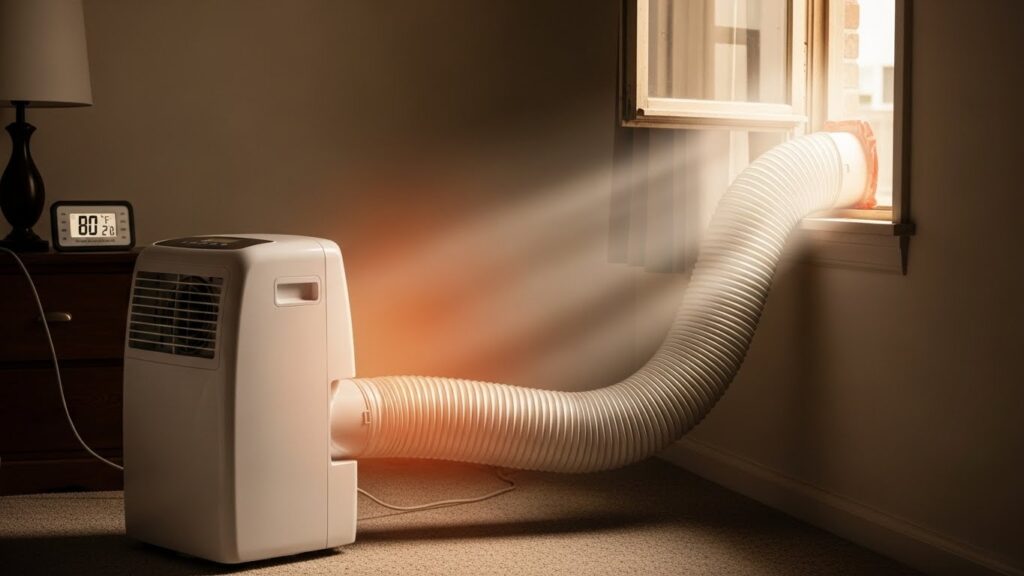
Portable ACs are extremely sensitive to setup quality because the hot side (compressor + exhaust) is inside your room. That means small issues — a loose window kit, a long/bent hose, or a leaky hose connection — can cancel a big chunk of your cooling output.
- Exhaust heat re-entry: hot air leaks back through gaps in the window kit or hose joints.
- Hose “radiator effect”: the exhaust hose gets hot and radiates heat back into the room.
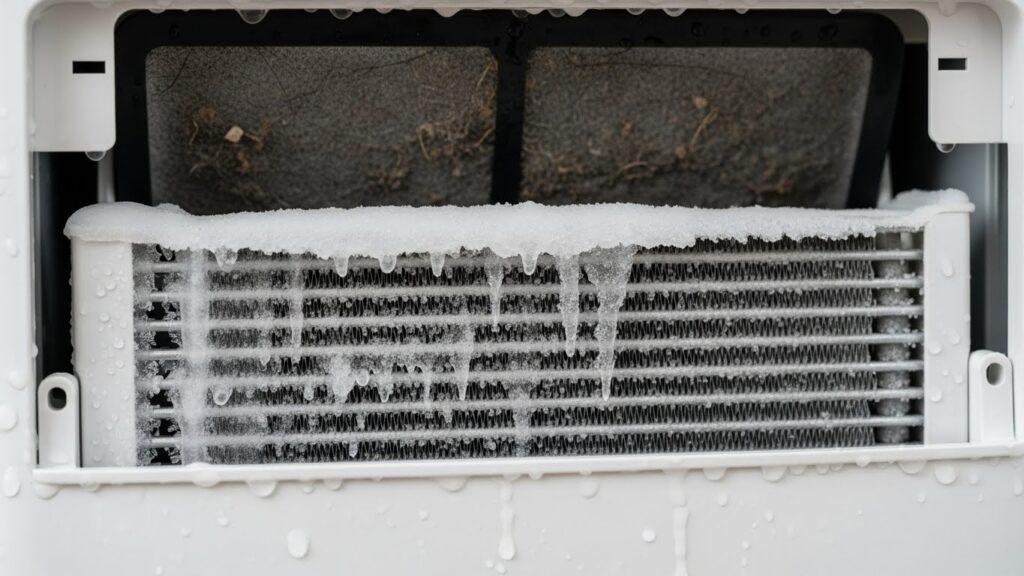
- Airflow collapse: dirty filters reduce airflow, lowering heat exchange and sometimes freezing coils.
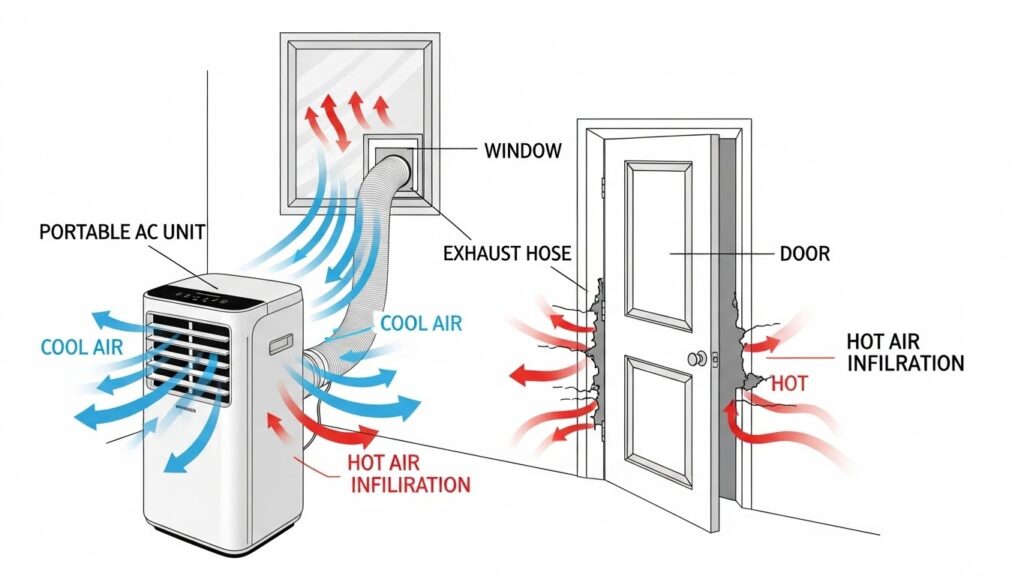
- Negative pressure (single-hose): pushing air out can pull hot air in through door cracks and other openings.
2) The “Delta T” test (the fastest truth test)
The Delta T test tells you whether the AC is producing cold air properly — or if the “no cooling” feeling is really a setup/air-leak problem.
How to run the Delta T test:
- Let the unit run on Cool for 10 minutes.
- Measure temperature at the intake (near the filter) and at the cold air outlet.
- Look for a meaningful drop. If the air is clearly colder than intake but the room stays hot, focus on leaks / negative pressure.
Interpretation shortcut:
• Cold vent air + warm room → your unit is cooling, but you’re losing the battle through leaks / hose heat / negative pressure.
• Not-cold vent air → filter/coil airflow problem first; if clean and still not cold, suspect a mechanical fault.
3) Step-by-step fixes that actually restore cooling
Step 1 — Clean the filter (and thaw the coils if needed)
Dirty filters reduce airflow, which reduces cooling and can trigger coil freeze. Unplug the unit, remove the filter, vacuum it gently or wash it per your manual, then let it dry fully.
- If you see frost/ice: turn the unit off and let it thaw completely (fan-only can help).
- After thaw: restart with a clean filter and clear airflow space around the unit.
Step 2 — Shorten and straighten the exhaust hose
Keep the hose as short and straight as possible. Long runs and tight bends trap heat, reduce exhaust flow, and increase heat spillback into your room.
Step 3 — Seal every gap in the window kit (no “tiny cracks”)
Portable AC performance often fails at the window kit. Use foam tape / weather stripping to eliminate gaps. One overlooked crack can allow continuous hot-air infiltration.
Step 4 — Insulate the exhaust hose (reduce the “radiator effect”)
If the hose is hot to the touch, it’s heating your room. Wrapping it in an insulation sleeve can reduce radiant heat transfer, especially in small rooms.
Step 5 — Fix the room pressure problem (single-hose models)
Single-hose units exhaust indoor air. That air must be replaced — often by hot air leaking in under doors or through building gaps. You can improve results by sealing the room better and controlling where replacement air comes from.
- Close other doors/windows that allow hot air to flow into the cooled room.
- Seal the “easy entry points” first: door under-gaps, window frame gaps, and loose window adapters.
- If possible long-term: consider a dual-hose portable AC (better pressure balance).
Step 6 — Check tank-full / drainage behavior
Some portable ACs reduce cooling or stop the compressor when the internal tank is full. If the unit runs but cooling is inconsistent, check indicator lights, drain plug, and drain path per the manual.
Stop point: Do not open sealed panels, refrigerant lines, or compressor compartments. If you suspect a refrigerant leak, electrical overheating, or compressor failure, stop and contact the manufacturer or a licensed HVAC technician.
4) Single-hose vs dual-hose: the negative-pressure problem
This is the part most people miss: a single-hose portable AC can create negative pressure in the room because it exhausts indoor air. The room then pulls replacement air from wherever it can — often warm air from adjacent spaces or outdoors. Dual-hose units reduce that effect by separating intake and exhaust airflow.
5) When to stop troubleshooting and replace the unit
Portable ACs are often not cost-effective to repair when sealed-system components fail. Stop DIY and consider replacement if you see:
- Oily residue near coils or fittings, or a persistent hissing sound (possible refrigerant leak).
- Compressor clicks / hums but the air never becomes cold after installation fixes.
- Electrical warning signs: hot plug, melted/discolored outlet, burning smell, repeated breaker trips.
- Repeated coil freeze even with a clean filter and proper airflow clearance.
6) FAQ
Why is the air cold near the unit but the room won’t cool?
That usually means the AC is producing cold air, but you’re losing cooling through window kit leaks, hot hose radiation, or negative pressure pulling warm air back in.
Does insulating the exhaust hose actually help?
Yes, especially in small rooms. If the hose is hot, it radiates heat back into the space. Insulation reduces that “indoor heater” effect.
Is a dual-hose portable AC really better?
In many homes, yes — mainly because it reduces negative pressure and improves airflow balance, so your unit isn’t constantly fighting against warm air being sucked back into the room.
How often should I clean the filter?
During heavy use, check it regularly. If you have pets, dust, or long daily runtime, it may clog faster than expected. A dirty filter is one of the most common causes of performance loss.
How this guide was prepared
This guide prioritizes user-safe checks first (air leaks, hose setup, airflow maintenance, pressure balance), then moves to replacement criteria when signs suggest sealed-system or electrical failure. It is written to reduce fire/electrical risk while improving real-world cooling performance.
7) References
- U.S. Department of Energy — Air Conditioning (efficiency, maintenance basics)
- U.S. Department of Energy — Room Air Conditioners (sizing and efficiency concepts)
- U.S. Department of Energy — Air Conditioner Maintenance (filters and airflow upkeep)
- Honeywell — Single-Hose vs Dual-Hose Portable ACs (negative pressure explanation)
- ASHRAE — Indoor environmental quality / air movement guidance (general reference)
Related Guides on This Site
- Dryer Not Heating — Airflow and Safety Checks
- Microwave Not Heating — Safe Diagnostic Steps
- HomeFix Atlas — Appliance Troubleshooting Hub
Important Safety & Information Notice: This content is provided for general informational purposes only. Portable AC troubleshooting involves electrical and mechanical hazards. Do not modify safety devices or open sealed refrigeration components. If problems persist after airflow and installation checks — or if you observe signs of electrical damage — stop using the unit and consult the manufacturer or a qualified technician.

I publish step-by-step troubleshooting guides for common home appliance issues (washer, dryer, refrigerator, HVAC basics).
Content is written for everyday homeowners and cross-checked with manufacturer manuals, safety guidance, and trusted public resources.
Posts include practical checks, clear stop-signs for safety, and guidance on when it’s better to call a qualified technician. Updates are logged whenever steps or recommendations change.
Safety note: If you smell gas, see burning, or suspect electrical hazards—stop immediately and contact a qualified professional.