Why is my microwave not heating?
A microwave usually stops heating due to:
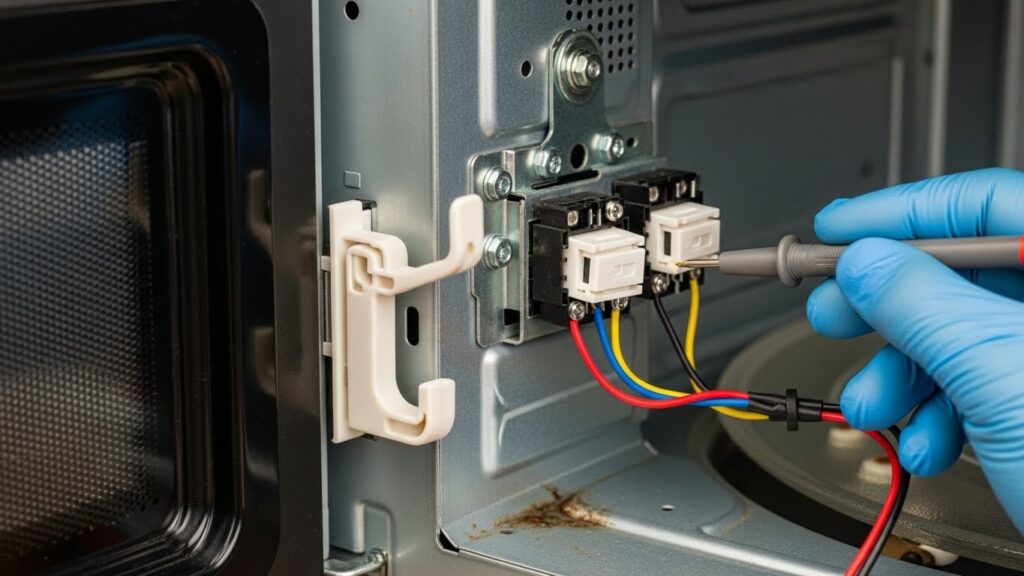
- Faulty Door Interlock Switches: The most common mechanical failure.
- Blown High-Voltage Fuse: Protects internal circuits from power surges.
- Magnetron Failure: The component responsible for generating heat wears out.
The unit may still run and spin while producing no heat. Detailed step-by-step checks with photos are explained below.
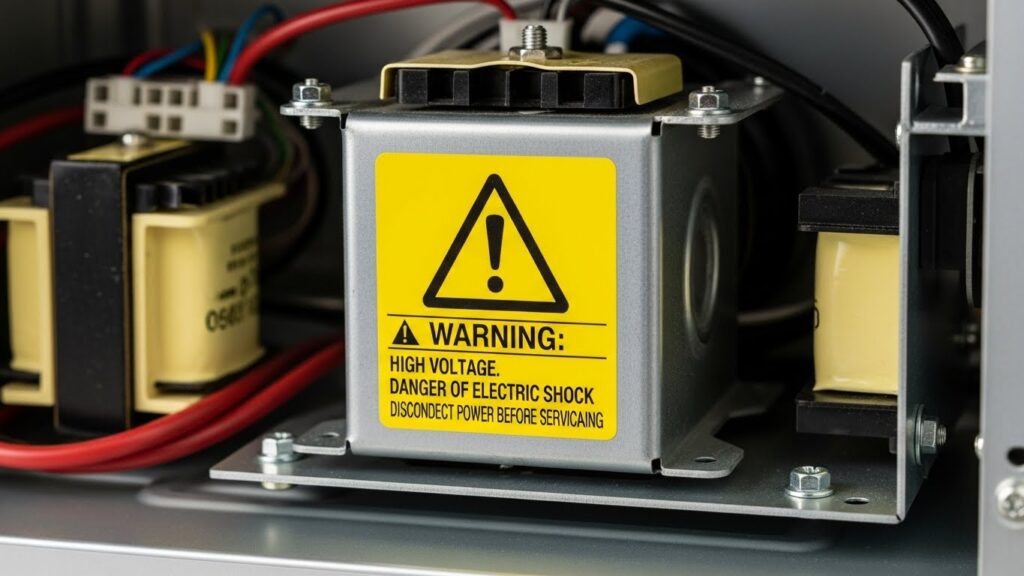
⚠️ CRITICAL SAFETY WARNING: Unplug the microwave and allow it to sit for at least 10 minutes. Microwaves contain a High-Voltage Capacitor that stores a lethal electrical charge even after being unplugged. Do not attempt to open the outer cabinet or touch internal high-voltage parts without proper training and a discharge tool.
Tools Needed
| Tool | Purpose |
|---|---|
| Screwdriver | Accessing outer panels (if applicable) |
| Flashlight | Inspecting door latches and switches |
| Cup of water (8oz) | Basic heating performance test |
Why Microwave Not Heating Is a Common but Misleading Problem
Last updated: December 28, 2025
Microwave not heating issues can be confusing because the appliance often appears to work normally. Lights turn on, the turntable spins, and buttons respond—yet food stays cold. Service manuals consistently show that safety systems (specifically the interlock system) allow operation without heat when certain components fail.
Quick answer: If your microwave runs but does not heat, start with door switch checks before assuming a major internal failure.
Table of Contents
- 1) Common Symptoms
- 2) What the Data and Manuals Show
- 3) Step-by-Step Safe Diagnosis
- 4) Real Search Scenarios Explained
- 5) FAQ
- 6) How This Guide Was Prepared
- 7) Important Safety Notice
- 8) References
1) Common Signs a Microwave Is Not Heating
- Microwave runs but food stays cold
- Turntable spins with no temperature change
- Unusual humming or buzzing sounds: Often called the “Hum of Death,” indicating a shorted magnetron.
- Heats intermittently, then stops suddenly
2) What the Data and Manufacturer Manuals Show
Across Whirlpool, GE, Samsung, LG, and Panasonic service documentation, the following causes appear most frequently:
- Door switch (Interlock) failure: Most common; prevents magnetron activation for safety.
- Internal high-voltage diode: When this fails, the magnetron receives no power.
- Magnetron wear: Gradual loss of microwave emission over several years of use.
Why this matters: Statistics show that nearly 50% of heating failures are related to simple door switch alignment rather than expensive parts.
3) Step-by-Step Safe Diagnosis (User-Level First)
Step 0 — Perform a “Hard Reset”
Unplug the microwave for a full 5 minutes. This discharges small control board capacitors and can resolve logic glitches in the touch panel.
Step 1 — Perform a basic water heating test
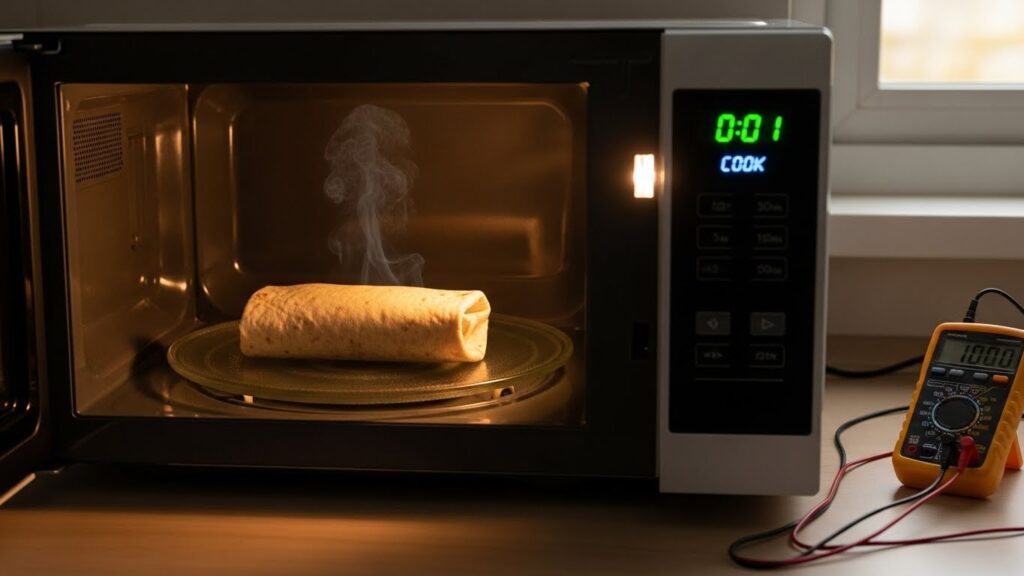
Place an 8oz cup of water inside and run on High for 60 seconds. The water should be steaming (approx. 150°F+). If it’s only lukewarm, your high-voltage diode may be failing.
Step 2 — Inspect door alignment and latches
A misaligned door prevents the 3-4 safety interlock switches from engaging. Clean any grease buildup on the door hooks with a damp cloth to ensure a crisp “click” when closing.
Step 3 — Listen for abnormal sounds (Sound Diagnosis)
Loud buzzing: Typically indicates a failing magnetron or transformer.
Complete silence (but spinning): Usually suggests a blown internal fuse or a failed relay on the control board.
Step 4 — Stop before internal access
Internal high-voltage components can retain charge for days. Do not remove the outer cover. High-voltage repairs must be handled by a certified technician.
4) Real Search Scenarios Explained
“Microwave runs but does not heat”
Typically caused by a faulty door interlock switch or a blown high-voltage fuse.
“Microwave heats sometimes”
Often linked to intermittent door switch contact or a magnetron nearing its end of life.
“Sparks inside microwave with no metal”
Usually caused by a damaged waveguide cover (the small mica sheet on the side wall) which can eventually lead to no heat.
5) FAQ
Is it safe to use a microwave that does not heat?
It is generally safe to keep it plugged in, but running it empty or while it’s failing can cause further electrical damage.
Can a blown high-voltage fuse be replaced easily?
Technically yes, but since it is located inside the high-voltage section, it requires professional safety protocols.
Is magnetron replacement worth it?
For budget countertop models (under $100), replacement of the unit is usually more economical than professional repair.
6) How This Guide Was Prepared
This guide is based on manufacturer service manuals from Samsung, LG, and GE, and common troubleshooting procedures reviewed against official appliance brand documentation.
7) Important Safety & Information Notice
This article is provided for general informational purposes only. Microwaves contain high-voltage components that can cause serious injury or death. Never open the cabinet. If external checks do not solve the issue, contact a qualified appliance technician.
8) References
Related Guides on This Site

I publish step-by-step troubleshooting guides for common home appliance issues (washer, dryer, refrigerator, HVAC basics).
Content is written for everyday homeowners and cross-checked with manufacturer manuals, safety guidance, and trusted public resources.
Posts include practical checks, clear stop-signs for safety, and guidance on when it’s better to call a qualified technician. Updates are logged whenever steps or recommendations change.
Safety note: If you smell gas, see burning, or suspect electrical hazards—stop immediately and contact a qualified professional.