The fast answer (what fixes most damp loads)
Laundry that comes out warm but still damp is usually not a “bad heater” problem. It’s almost always moist air failing to leave the drum (restricted venting) or the dryer ending early because the moisture sensors misread dryness (often from fabric softener residue).
If you want one place to start: clean the moisture sensor bars + check for a crushed or lint-loaded vent path.
Safety First: Always unplug the dryer before cleaning lint paths or wiping sensors. Do not run the dryer with a blocked vent. If you smell burning, notice unusually hot cabinet panels, or see weak exhaust outdoors, stop and inspect the vent system.
Last updated: January 11, 2026
Quick navigation1) What “warm but damp” really means
2) The 3 fastest checks (most common fixes)
3) Moisture sensor cleaning (the “false dry” trap)
4) Airflow checks (lint housing → vent → exterior flap)
5) Load and fabric mix problems
6) When it’s likely a deeper mechanical issue
FAQ
1) What “warm but damp” really means
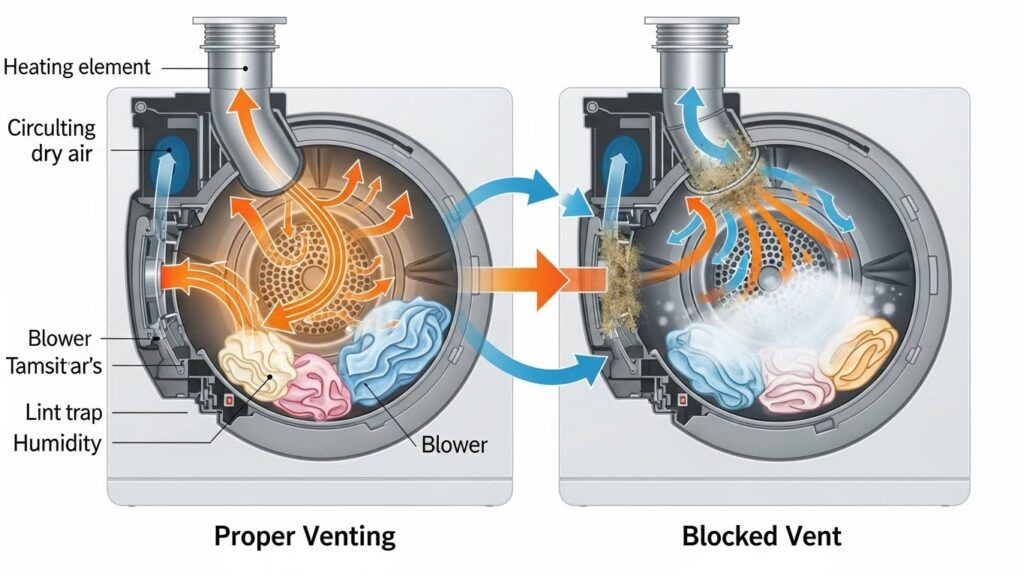
Drying is two things happening at the same time: the dryer adds heat, and the dryer moves wet air out. If the heater works but the air can’t escape, the drum becomes a humid “steam box.” Clothes come out hot (because heat is present) but still damp (because moisture never truly left).
That’s why vent restrictions and sensor mistakes can beat a perfectly good heater. The dryer is doing work — it’s just working against itself.
2) The 3 fastest checks (these fix most damp loads)
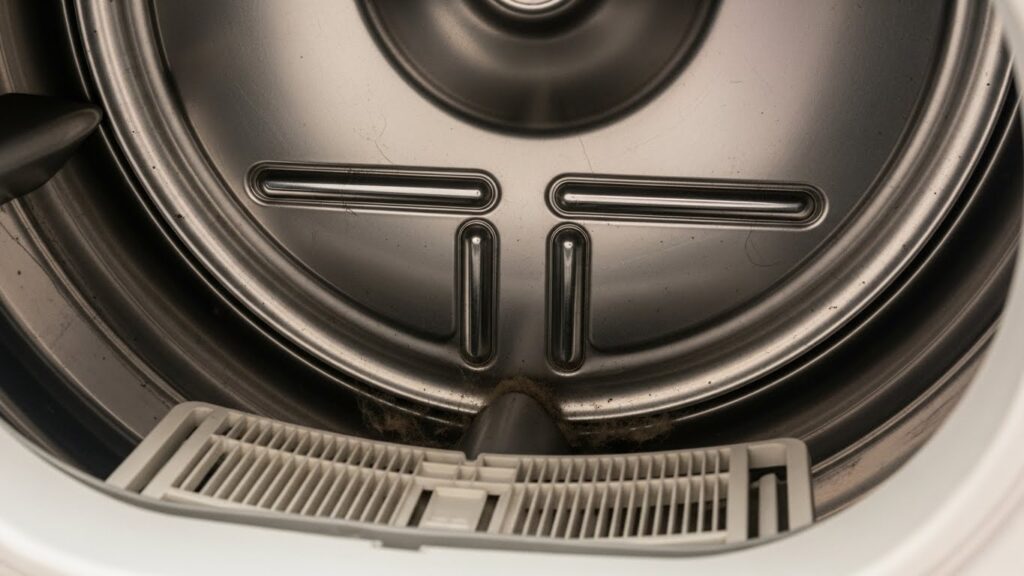
Check #1: Wipe the moisture sensor bars
If you use dryer sheets or fabric softener, sensor bars can develop a thin, waxy film. That film acts like an insulator, and the control board may stop the cycle early.
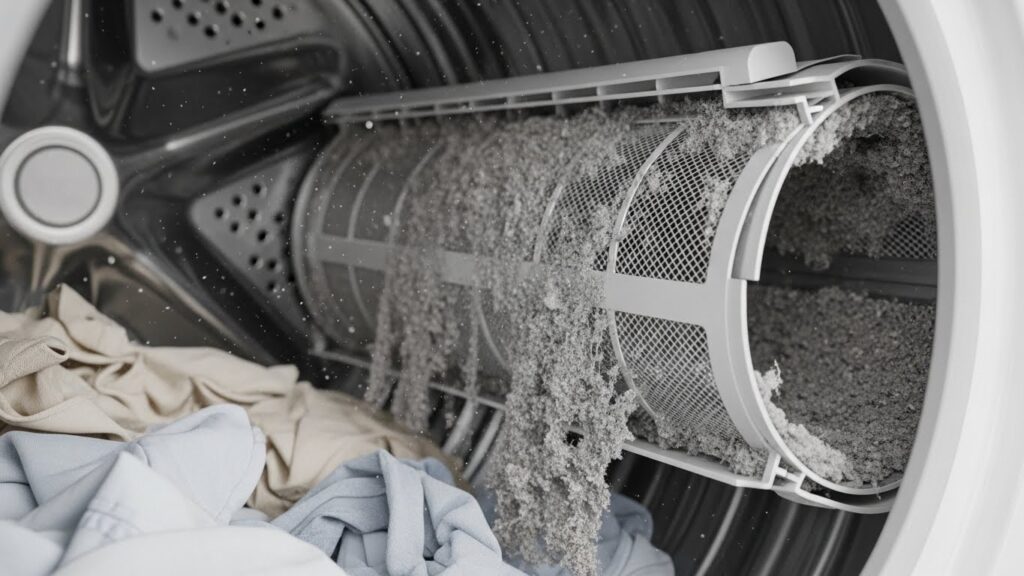
Check #2: Clean the lint filter and the lint housing
A lint screen can look “okay” and still be partially sealed by residue or micro-lint. More importantly, lint builds up in the housing below the screen where you don’t normally see it. That hidden blockage quietly wrecks airflow.
Check #3: Look for a crushed or lint-loaded vent run
If the vent hose is kinked behind the dryer, the machine may still heat and spin, but moisture can’t leave efficiently. Outdoors, you should usually feel a steady, strong exhaust while the dryer runs. Weak outdoor exhaust is a big clue.
3) Moisture sensor cleaning (the “false dry” trap)
Moisture sensors are simple: damp fabric makes contact and changes the electrical signal the dryer reads. When the sensor bars are coated, the dryer reads the coating — not the clothes. The result is the classic pattern: the dryer runs, the load feels warm, and then the cycle ends before towels are truly dry.
60-second sensor clean (safe, simple)
- Unplug the dryer.
- Find the two metal sensor bars inside the drum (usually near the lint filter area).
- Use rubbing alcohol on a soft cloth and wipe the bars thoroughly.
- Let it air-dry for a minute, then run a test load.
If your damp-load issue “mysteriously” comes and goes, sensor residue is one of the most common reasons.
4) Airflow checks (lint housing → vent → exterior flap)
Think of a dryer like a tunnel: air must enter, pass through the drum, pick up moisture, and exit outside. A blockage at any point turns the drum into a humid loop.
Airflow “path” checklist
- Lint screen: clean every load, and rinse if it feels waxy or “sealed.”
- Lint housing: vacuum the slot and the cavity below the screen.
- Behind the dryer: confirm the flex vent isn’t crushed or sharply bent.
- Long vent runs: long or multi-bend venting needs more frequent cleaning.
- Outdoor hood: make sure the flap opens freely and isn’t stuck shut.
5) Load size and fabric mix problems (yes, this matters)
Even with perfect airflow, certain loads finish “wrong” because the dryer makes decisions based on what it senses. Two common patterns show up in real homes:
- Very small loads: items may not contact the sensor bars consistently, so Auto-Dry ends early.
- Mixed weights: T-shirts dry fast, towels stay wet. The dryer “sees” the fast-drying items and stops too soon.
Quick fix: run tiny loads on Timed Dry, and dry towels/denim separately from light fabrics.
6) When it’s likely a deeper mechanical issue
If you’ve cleaned sensors, cleared lint housing, confirmed strong outdoor exhaust, and the load still stays damp, then the problem may be inside the cabinet (blower wheel lint-loading, internal duct restriction, airflow seals, or control issues). Those are usually technician-level because they involve opening panels and working near electrical components.
Stop and inspect if you notice any of these
- Burning smell during or after a cycle
- Dryer cabinet feels unusually hot to the touch
- Very weak airflow at the outdoor vent
- Repeated thermal shutoffs (cycle stops, then restarts later)
FAQ
Why does the dryer feel hot but the clothes are still wet?
Heat can be present while moisture is trapped. Restricted venting keeps humidity inside the drum, so fabric re-absorbs moisture near the end of the cycle.
Does Timed Dry “solve” damp laundry?
It can force extra runtime, but it’s usually a workaround. If Auto-Dry keeps failing, check sensor residue and airflow first so the dryer can end cycles correctly again.
Why are towels damp but shirts are dry?
Mixed-density loads confuse the sensor logic. Lighter items dry first and trigger early shutoff while heavy towels still hold moisture.
Is it safe to run a dryer with a disconnected vent?
Not recommended. Venting is part of how the dryer removes moisture and heat safely. If venting is damaged or blocked, fix the vent path before continued use.
HomeFix Atlas Technical Clusters
- Airflow Engineering: Delta-T Testing for Portable HVAC →
- Psychrometrics: Why Dehumidifiers Stop Condensing →
References
- Whirlpool — Dryer Not Drying: Lint Screen + Vent Clog Fixes [web:84]
- Mr. Appliance — Dryer Not Drying: 15 Reasons + Sensor Cleaning [web:97]
Technical Integrity Notice: This guide prioritizes the two highest-yield causes of damp laundry: airflow restriction and moisture sensor misreads.
Update Log: Jan 11, 2026 — Rebuilt troubleshooting flow (sensor + airflow path) and added safety stop signals for overheating and weak exhaust.
Important Safety & YMYL Notice
This content is provided for general informational purposes only. Dryer maintenance mistakes can increase fire, electrical, or indoor air risks. If inspection requires opening panels or accessing internal electrical components, consult a qualified technician.

I publish step-by-step troubleshooting guides for common home appliance issues (washer, dryer, refrigerator, HVAC basics).
Content is written for everyday homeowners and cross-checked with manufacturer manuals, safety guidance, and trusted public resources.
Posts include practical checks, clear stop-signs for safety, and guidance on when it’s better to call a qualified technician. Updates are logged whenever steps or recommendations change.
Safety note: If you smell gas, see burning, or suspect electrical hazards—stop immediately and contact a qualified professional.