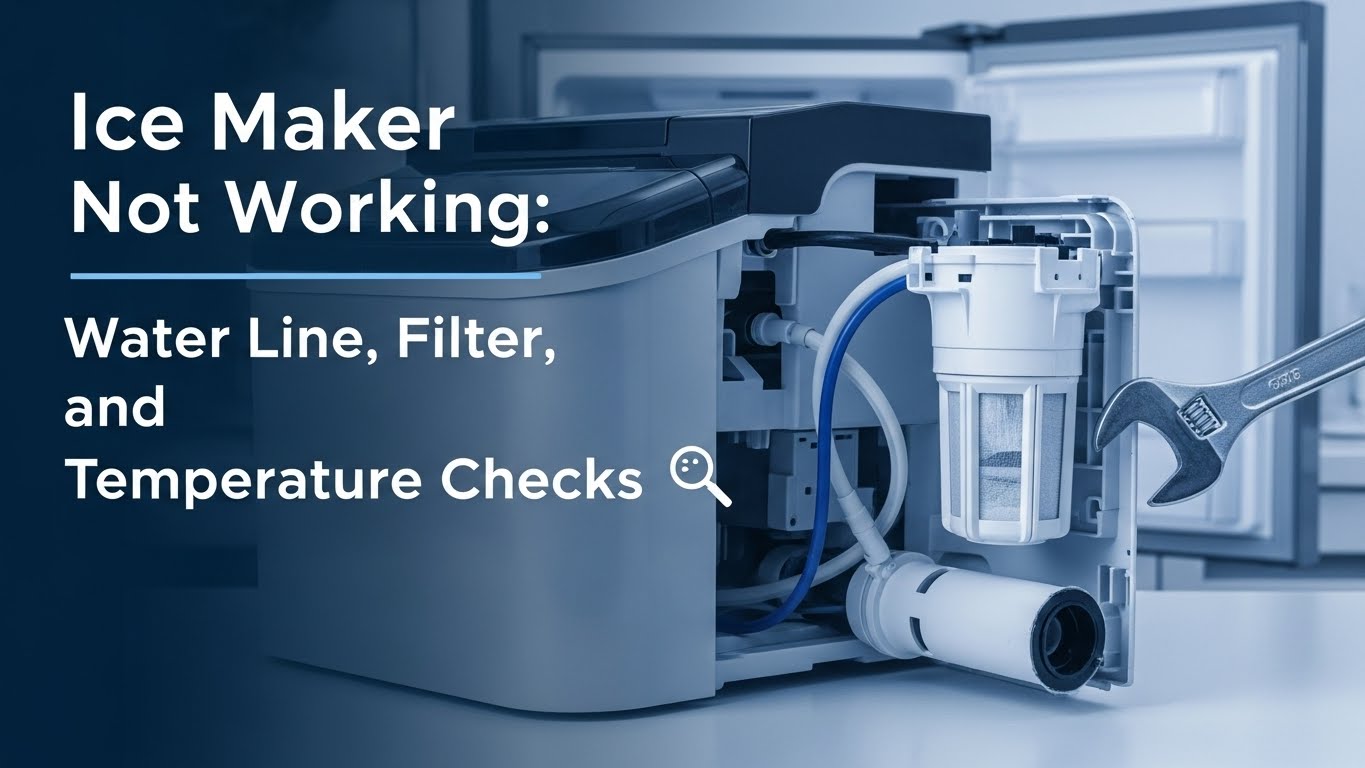
Why an Ice Maker Is Not Working (Water Line, Filter, and Freezer Temperature Issues)
Last updated: December 14, 2025
When an ice maker is not working, the cause is usually not a dead ice maker but a water supply interruption, a clogged water filter, or freezer temperatures that are just warm enough to stop ice production. This guide follows the same diagnostic order used in manufacturer service manuals—starting with the highest-probability checks first.
Fast answer: If your ice maker stopped producing ice, check the water line, water filter, and freezer temperature before assuming a failed ice maker module.
Table of Contents
- 1) Common Symptoms
- 2) Why Ice Makers Stop Working
- 3) Step-by-Step Fix Protocol
- 4) Real Search Scenarios Explained
- 5) FAQ
- 6) Safety Disclaimer
- 7) References
1) Common Signs an Ice Maker Is Not Working
- No ice production at all
- Ice maker makes noise but produces no ice
- Ice cubes are small, hollow, or misshapen
- Ice production stopped after a filter change
- Freezer works, but ice maker does not
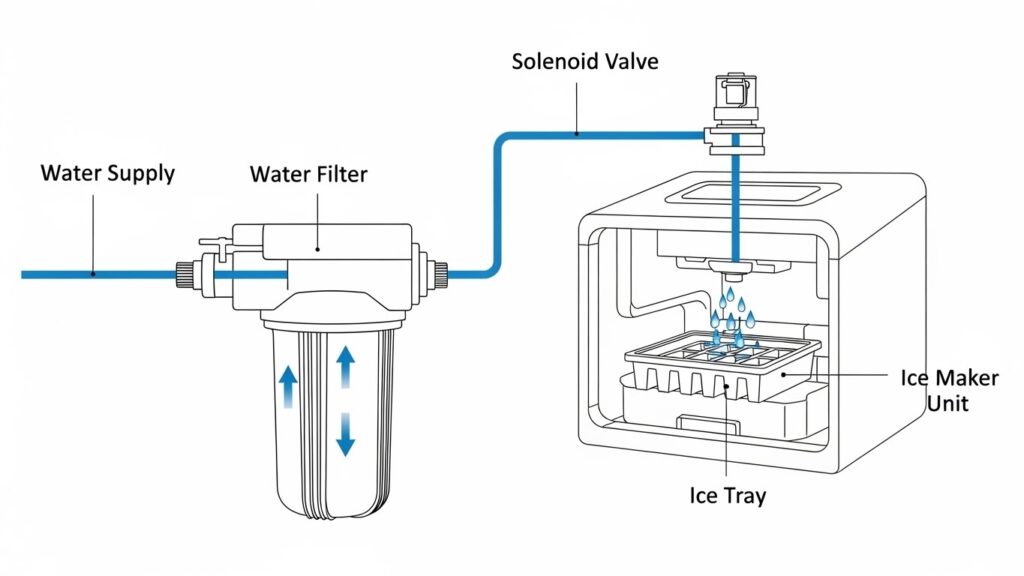
2) Why Ice Makers Stop Working
Across major brands like LG, Samsung, Whirlpool, GE, and Bosch, ice maker failures usually fall into a few predictable categories:
- Water supply problems (kinked or frozen water line)
- Clogged or incorrectly installed water filter
- Freezer temperature too warm for ice formation
- Ice maker shutoff arm or sensor engaged
- Electrical or control issues (less common)
Important: Ice makers are very sensitive to water pressure and temperature. Even small changes can stop ice production completely.
3) Step-by-Step Fix Protocol (High-Probability First)
Safety note: Unplug the refrigerator or turn off power before inspecting water connections. Shut off the water supply if disconnecting lines.
Step 1 — Confirm the ice maker is turned ON
Check the shutoff arm or control switch. If the arm is raised or the sensor is blocked, ice production will stop.
Step 2 — Check freezer temperature
Ice makers generally require freezer temperatures cold enough to freeze water reliably. If the freezer is slightly warm, ice production may pause even though food still feels frozen.
Step 3 — Inspect the water supply line
Trace the water line from the wall to the refrigerator:
- Look for kinks or sharp bends
- Check for freezing near the freezer entry point
- Confirm the household water valve is fully open
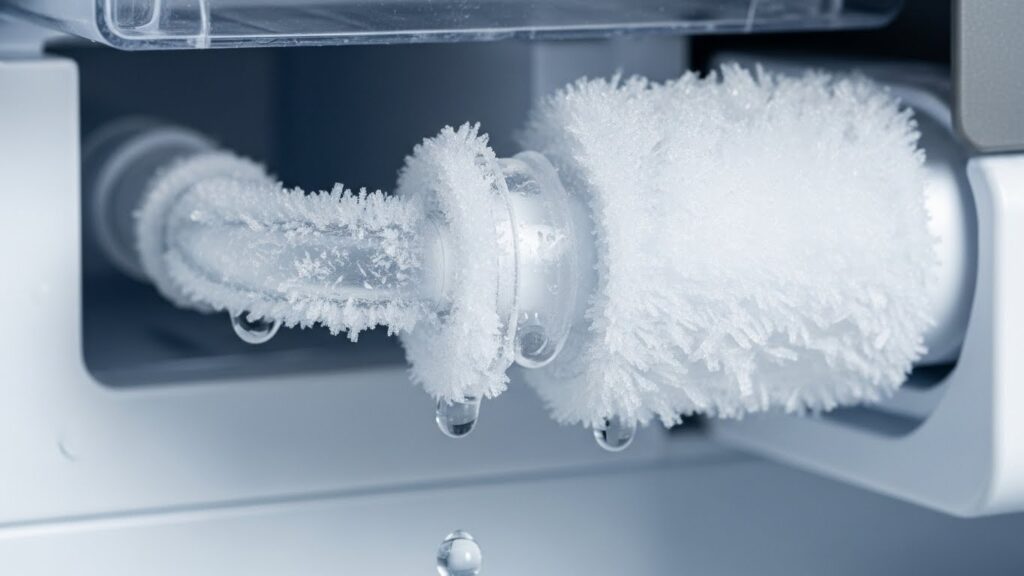
Step 4 — Check or replace the water filter
A clogged or improperly seated filter can restrict water flow enough to stop ice production. If ice stopped after a filter change, reinstall the filter carefully or try a known-good replacement.
Step 5 — Allow recovery time
After restoring water flow or replacing a filter, allow several hours for the ice maker to cycle and begin producing ice again.
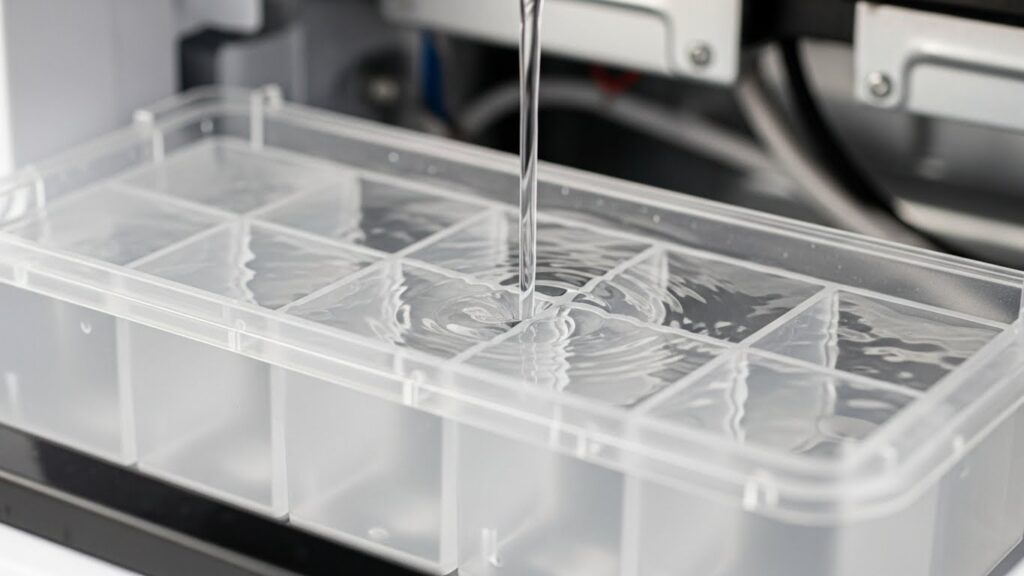
4) Real Search Scenarios Explained
“Ice maker not working but water dispenser works”
This often points to a partially restricted filter, ice maker valve issue, or temperature-related problem rather than a full water supply failure.
“Ice maker stopped working after filter change”
The filter may not be fully seated, or air is trapped in the line. Reinstall the filter and allow time for pressure to stabilize.
“Ice maker not making ice but freezer is cold”
Freezer temperature may still be marginal for ice production, or the ice maker shutoff mechanism may be engaged.
5) FAQ
How cold does the freezer need to be for ice making?
Ice makers generally require freezer temperatures cold enough to freeze water consistently. If temperatures drift warmer, ice production may pause.
How long after fixing the water line should ice start forming?
It can take several hours for the ice maker to cycle and begin producing ice normally.
Can a clogged filter stop ice production?
Yes. Even partial water flow restriction can prevent the ice maker from filling properly.
Is it safe to thaw a frozen water line?
Thawing can be safe if done gently. Avoid open flames or excessive heat that could damage tubing.
When should I call a technician?
If water supply, filter, and temperature checks don’t restore ice production, professional diagnosis is recommended.
6) Safety Disclaimer
This guide is for general informational purposes only. If you are not comfortable working with plumbing connections or electrical appliances, contact a qualified technician. Always disconnect power and water before inspection.
7) References
- Energy.gov — Refrigerator and freezer basics
- Consumer Reports — Ice maker troubleshooting
- Whirlpool — How ice makers work
Related Guides on This Site
- Refrigerator Not Cooling: Step-by-Step Diagnostic Guide
- Freezer Not Freezing Enough: Airflow and Frost Build-Up Fix
- Dishwasher Not Draining: Filter and Pump Troubleshooting Guide

I publish step-by-step troubleshooting guides for common home appliance issues (washer, dryer, refrigerator, HVAC basics).
Content is written for everyday homeowners and cross-checked with manufacturer manuals, safety guidance, and trusted public resources.
Posts include practical checks, clear stop-signs for safety, and guidance on when it’s better to call a qualified technician. Updates are logged whenever steps or recommendations change.
Safety note: If you smell gas, see burning, or suspect electrical hazards—stop immediately and contact a qualified professional.