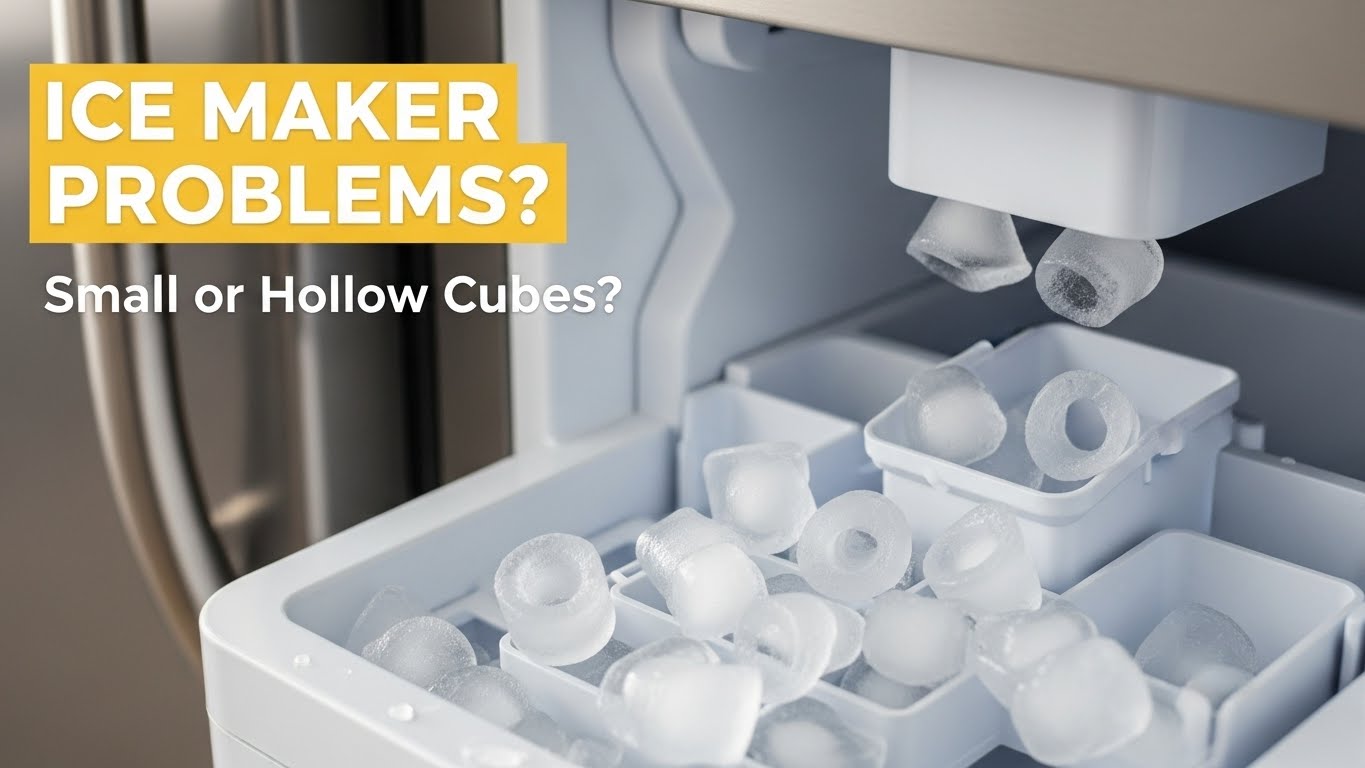
Why an Ice Maker Makes Small or Hollow Ice Cubes (Water Pressure, Filters, and Fill Time)
Last updated: December 14, 2025
Ice maker making small or hollow ice cubes is almost always caused by restricted water flow, low water pressure, or filtration issues rather than a broken ice maker. When the ice mold does not fill completely, cubes freeze too quickly and form with hollow centers.
Quick answer: Small or hollow ice cubes usually mean the ice maker is not receiving enough water during the fill cycle.
Table of Contents
- 1) Common Ice Cube Problems
- 2) Why Ice Cubes Turn Out Small or Hollow
- 3) Step-by-Step Fix Protocol
- 4) Real Search Scenarios Explained
- 5) FAQ
- 6) Safety Disclaimer
- 7) References
1) Common Signs of Small or Hollow Ice Cubes
- Ice cubes look thin or incomplete
- Cubes collapse easily when handled
- Ice production slows down
- Cubes appear clear on the outside but hollow inside
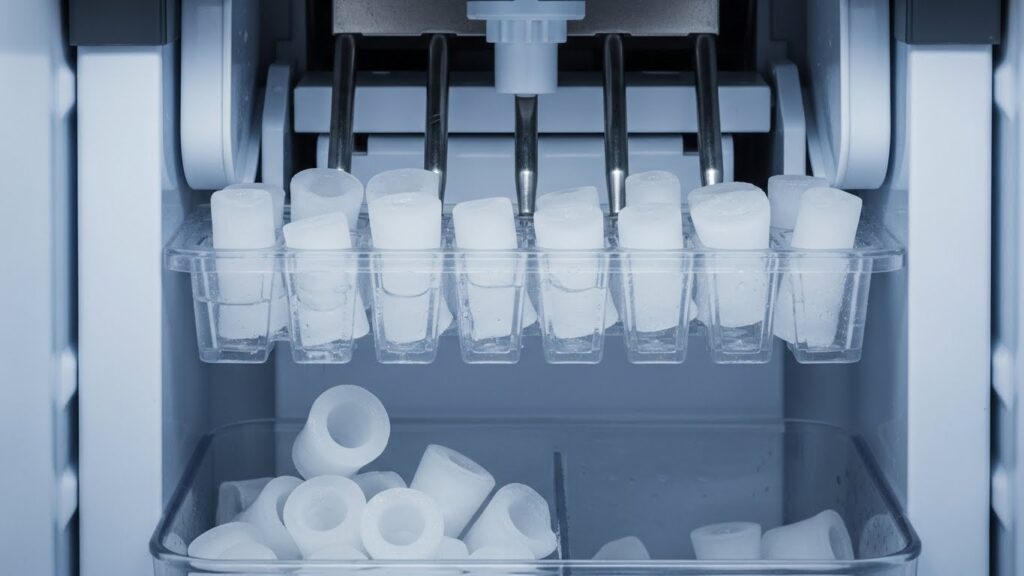
2) Why Ice Makers Produce Small or Hollow Ice Cubes
Across LG, Samsung, Whirlpool, GE, and Bosch refrigerators, the same issues appear repeatedly:
- Low household water pressure
- Clogged or overdue water filters
- Kinked or partially blocked water lines
- Ice maker fill time set too short
- Mineral buildup in the inlet valve
Important: Ice quality problems almost always appear before complete ice maker failure.
3) Step-by-Step Fix Protocol (High-Probability First)
Safety note: Turn off the water supply before inspecting water lines or filters.
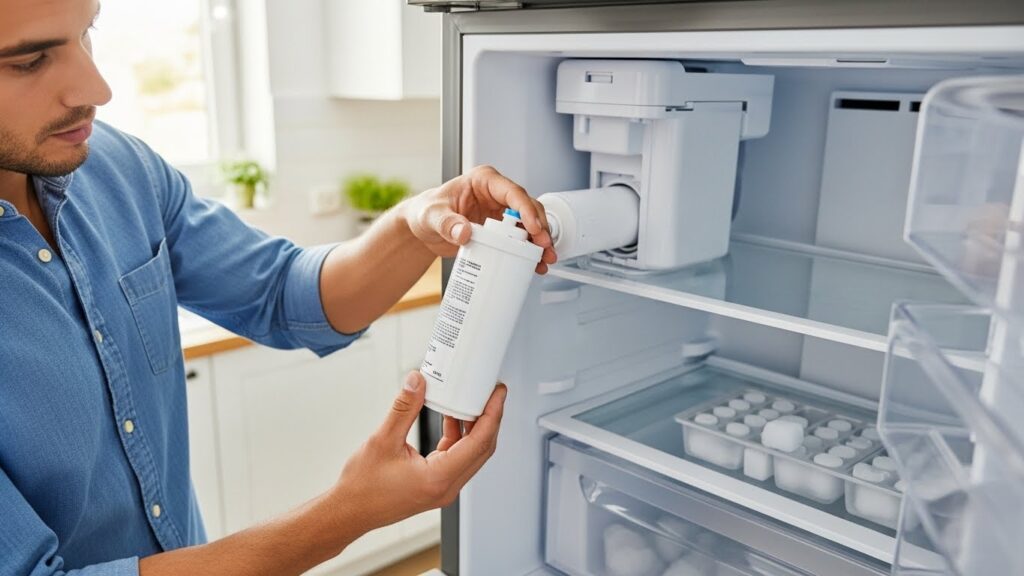
Step 1 — Replace or remove the water filter
A clogged filter is the most common cause of ice maker making small or hollow ice cubes. If the filter is overdue, replace it or temporarily remove it for testing.
Step 2 — Check household water pressure
Ice makers typically require adequate pressure to fill molds properly. Low pressure results in incomplete fills and hollow cubes.
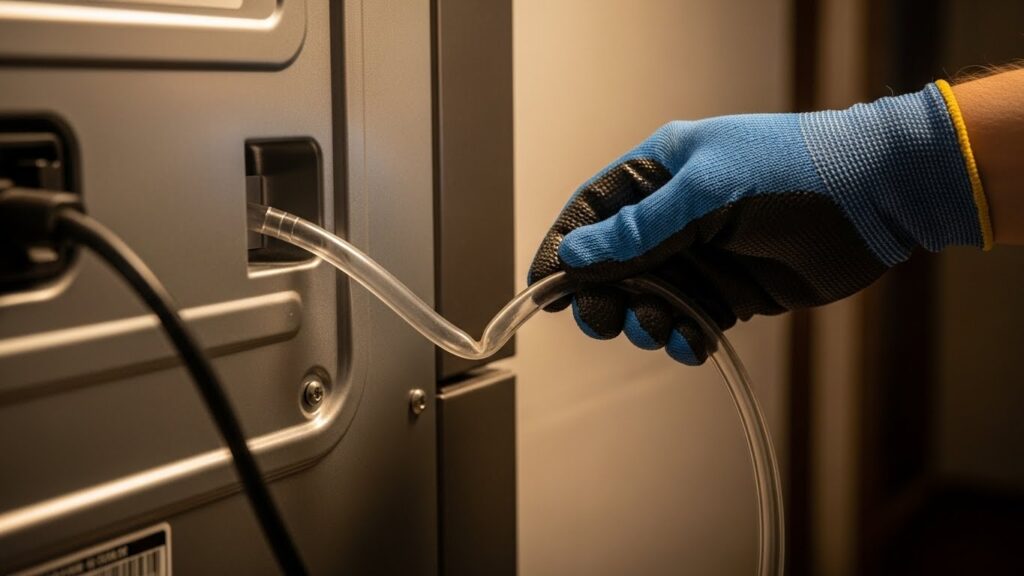
Step 3 — Inspect the water supply line
Look for kinks, sharp bends, or frozen sections that restrict flow. Straighten or replace damaged tubing.
Step 4 — Allow 24 hours after changes
Ice makers need time to cycle after flow is restored. Discard the first batch of ice.
4) Real Search Scenarios Explained
“Ice maker making small ice cubes”
Usually points to low water flow or a clogged filter.
“Hollow ice cubes in refrigerator”
Almost always caused by incomplete mold filling.
“Ice maker works but ice is thin”
Indicates marginal water pressure rather than a mechanical fault.
5) FAQ
Are hollow ice cubes safe to use?
Yes. They are safe but indicate a water flow issue that should be corrected.
Can a dirty filter really affect ice size?
Yes. Restricted filters reduce water volume entering the ice mold.
How long after replacing a filter will ice improve?
Improvement is usually visible within 12–24 hours.
Do all refrigerators require the same water pressure?
Most residential ice makers have similar minimum requirements, but exact specs vary by model.
When should I replace the ice maker?
If water flow is normal and ice quality does not improve, professional diagnosis is recommended.
6) Safety Disclaimer
This guide is for general informational purposes only. If you are not comfortable working with water connections, contact a qualified technician.
7) References
Related Guides on This Site
- Ice Maker Not Working: Water Line and Filter Checks
- Refrigerator Making Clicking or Buzzing Noises
- Refrigerator Runs Constantly: Coils and Airflow Fixes

I publish step-by-step troubleshooting guides for common home appliance issues (washer, dryer, refrigerator, HVAC basics).
Content is written for everyday homeowners and cross-checked with manufacturer manuals, safety guidance, and trusted public resources.
Posts include practical checks, clear stop-signs for safety, and guidance on when it’s better to call a qualified technician. Updates are logged whenever steps or recommendations change.
Safety note: If you smell gas, see burning, or suspect electrical hazards—stop immediately and contact a qualified professional.