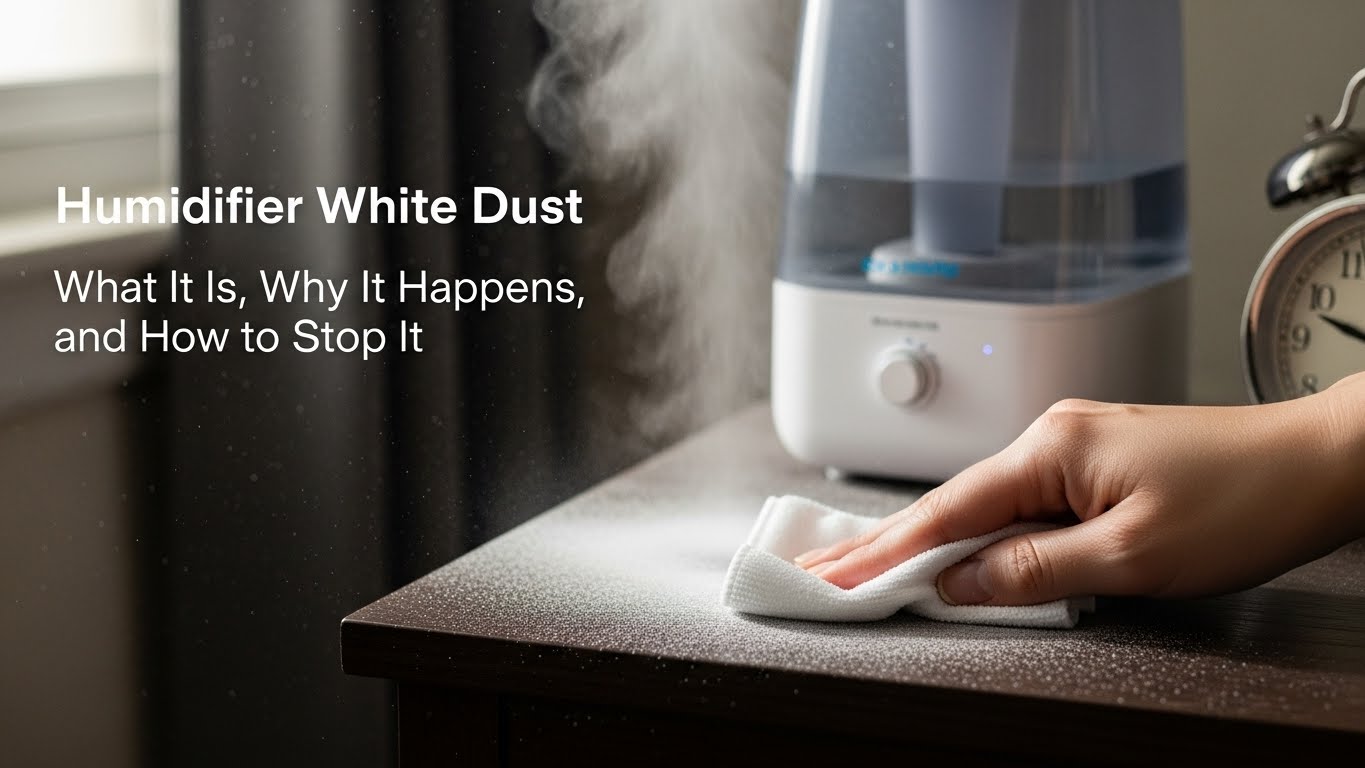
What is white dust from a humidifier?
White dust from a humidifier is usually mineral particles (calcium, magnesium, etc.) that become airborne when tap water is used—especially in ultrasonic models. It’s not mold, but it can coat surfaces and may irritate sensitive airways. Below is the fastest way to stop it—without unsafe “hacks.”
Safety First: Always unplug the humidifier before cleaning or refilling. Do not mix cleaning chemicals in the tank, and never run the unit if you see a cracked tank, damaged cord, or melted plug.
Last updated: January 8, 2026
Table of Contents
- 1) Why humidifiers produce white dust
- 2) The fastest fix (and why it works)
- 3) Tools & supplies that actually help
- 4) Step-by-step: stop white dust for good
- 5) Is white dust dangerous?
- 6) Common mistakes that make it worse
- 7) FAQ
- 8) Related guides
- 9) References
1) Why Humidifiers Produce White Dust
The short version: tap water contains dissolved minerals. In many ultrasonic humidifiers, the mist is created by vibration—not by boiling/evaporation—so the minerals can hitch a ride in tiny droplets. When that water mist evaporates in the room, the minerals remain and settle as a fine white powder on desks, floors, and electronics.
Quick clue you’re dealing with minerals (not mold):
- The dust looks like chalky powder and wipes off easily.
- It gets worse when you crank mist output higher.
- It improves dramatically when you switch to distilled water.
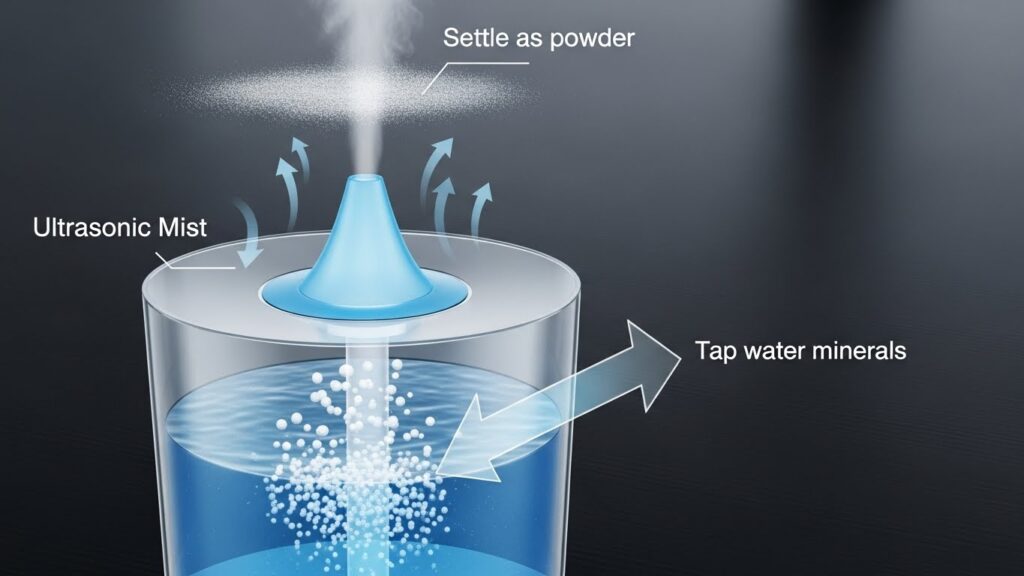
2) The Fastest Fix (And Why It Works)
If you want the highest success rate with the least effort: switch to distilled or demineralized water. When the water has near-zero minerals, there’s nothing left to become dust. EPA also recommends using distilled water to reduce mineral buildup and emissions.
Reality check: boiling tap water won’t remove minerals. It may reduce microbes, but it does not meaningfully reduce dissolved solids that cause white dust.
3) Tools & Supplies That Actually Help
| Item | Why it matters |
|---|---|
| Distilled / demineralized water | Stops the mineral source (best fix). :contentReference[oaicite:3]{index=3} |
| Demineralization cartridge (if your model supports it) | Reduces minerals when distilled isn’t practical. |
| Soft brush + microfiber cloth | Removes mineral scale without damaging parts. |
| Mild descaler (citric acid) or plain vinegar (model-safe) | Helps dissolve scale on the tank/transducer area. Follow manufacturer guidance. :contentReference[oaicite:4]{index=4} |
4) Step-by-Step: Stop White Dust for Good
Step 1 — Identify your humidifier type (this changes everything)
White dust is most associated with ultrasonic units because they can aerosolize what’s in the water. Evaporative humidifiers typically trap minerals in the wick/filter instead of releasing them into the air.
Step 2 — Switch water first (don’t waste time deep-cleaning yet)
Use distilled water for 2–3 days and watch the room. If the white dust drops sharply, you’ve confirmed minerals are the root cause. If dust continues at the same rate, you may be dealing with unrelated indoor particulate sources (rare, but it happens).
Step 3 — Dial down mist output (especially in smaller rooms)
High output can increase mineral dispersal and surface buildup. Aim for comfortable humidity rather than maximum fog. If you don’t have a hygrometer, the “too much” signal is often condensation on windows or damp surfaces.
Step 4 — Clean on a schedule that prevents scale from “snowballing”
Mineral scale can make performance worse and increase residues over time. EPA guidance emphasizes regular cleaning and maintenance to prevent buildup and indoor air issues.
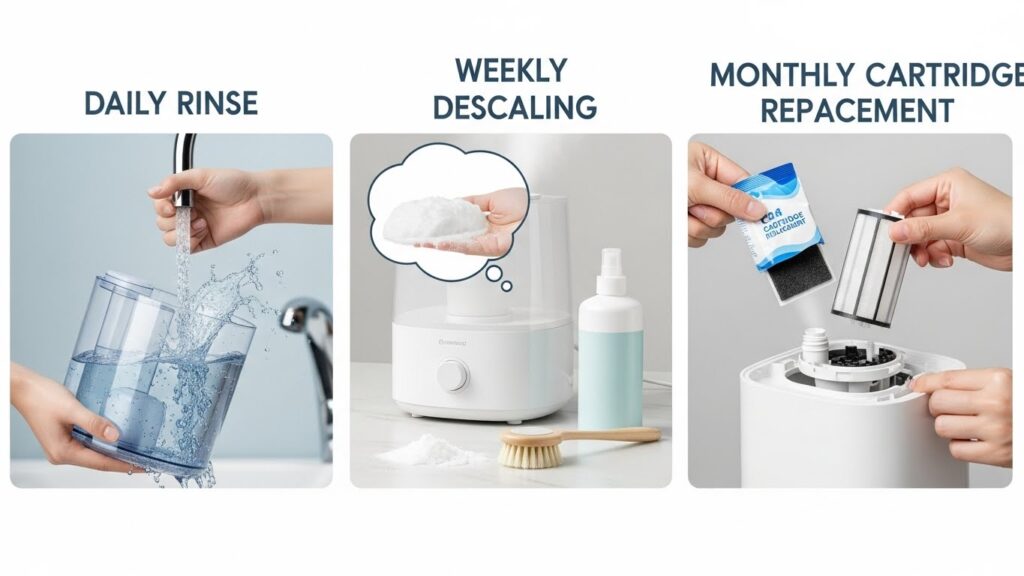
Simple routine that works (for most homes):
- Daily: Empty remaining water, rinse, and refill with fresh water.
- Weekly: Descale visible mineral film gently (no harsh scrubbing).
- Monthly: Replace/refresh demineralization cartridges (if used) and inspect seals.
Step 5 — If distilled water is too expensive, control minerals another way
- Demineralization cartridge: reduces dust, but effectiveness depends on replacement timing.
- Reverse osmosis (RO) water: usually much lower minerals than tap (results vary).
- Switch humidifier type: consider an evaporative model if white dust is a constant battle.
5) Is White Dust Dangerous?
White dust is typically mineral residue, not mold. For many people it’s mostly a nuisance—until it isn’t. If you have asthma, allergies, or airway sensitivity, fine particles can be irritating. Mayo Clinic notes humidifiers can disperse minerals (“white dust”) and recommends distilled water to reduce it.
If anyone in the home is sensitive: Use distilled water, keep humidity in a moderate range, and clean the unit regularly. If irritation persists, stop using the humidifier and reassess (or consult a professional).
6) Common Mistakes That Make White Dust Worse
- Running ultrasonic on hard tap water for weeks without maintenance.
- Cranking output in a closed room (faster mineral settling).
- Skipping routine cleaning until scale becomes thick and stubborn.
- Placing the unit next to electronics where residue can build up (screens, PC fans, consoles).
- Mixing cleaners or using aggressive chemicals in the tank (unsafe and unnecessary).
7) FAQ
Does boiling tap water remove the minerals that cause white dust?
No. Boiling may address microbes, but it does not remove dissolved minerals. Distilled or demineralized water is the reliable fix.
Do evaporative humidifiers cause white dust?
Typically no, because minerals are captured in the wick/filter instead of being released as airborne dust.
Can white dust damage electronics?
Over time, mineral residue can accumulate on surfaces and vents. If you see buildup on screens or devices, relocate the unit and switch water type.
My “white dust” smells musty. Is that still minerals?
Odor changes the story. Minerals are usually odorless. A musty smell suggests contamination (biofilm/mold) and calls for stricter cleaning or stopping use. Follow EPA maintenance guidance and your manufacturer’s instructions.
8) Related Guides on HomeFix Atlas
- Portable AC Not Cooling — Airflow and Installation Fixes
- Heater Shuts Off After a Few Minutes — Overheat Protection
- HomeFix Atlas — Appliance Troubleshooting Hub
9) References
- U.S. EPA — Use and Care of Home Humidifiers
- ” PubMed — Ultrasonic humidifier water type & indoor PM2.5 (“white dust”) study
Important Safety & Information Notice: This guide is for general informational purposes only and does not replace manufacturer instructions. Humidifiers affect indoor air quality and may aggravate respiratory conditions in sensitive individuals. Do not modify the device, do not mix cleaning chemicals, and discontinue use if irritation or electrical damage is observed.

I publish step-by-step troubleshooting guides for common home appliance issues (washer, dryer, refrigerator, HVAC basics).
Content is written for everyday homeowners and cross-checked with manufacturer manuals, safety guidance, and trusted public resources.
Posts include practical checks, clear stop-signs for safety, and guidance on when it’s better to call a qualified technician. Updates are logged whenever steps or recommendations change.
Safety note: If you smell gas, see burning, or suspect electrical hazards—stop immediately and contact a qualified professional.