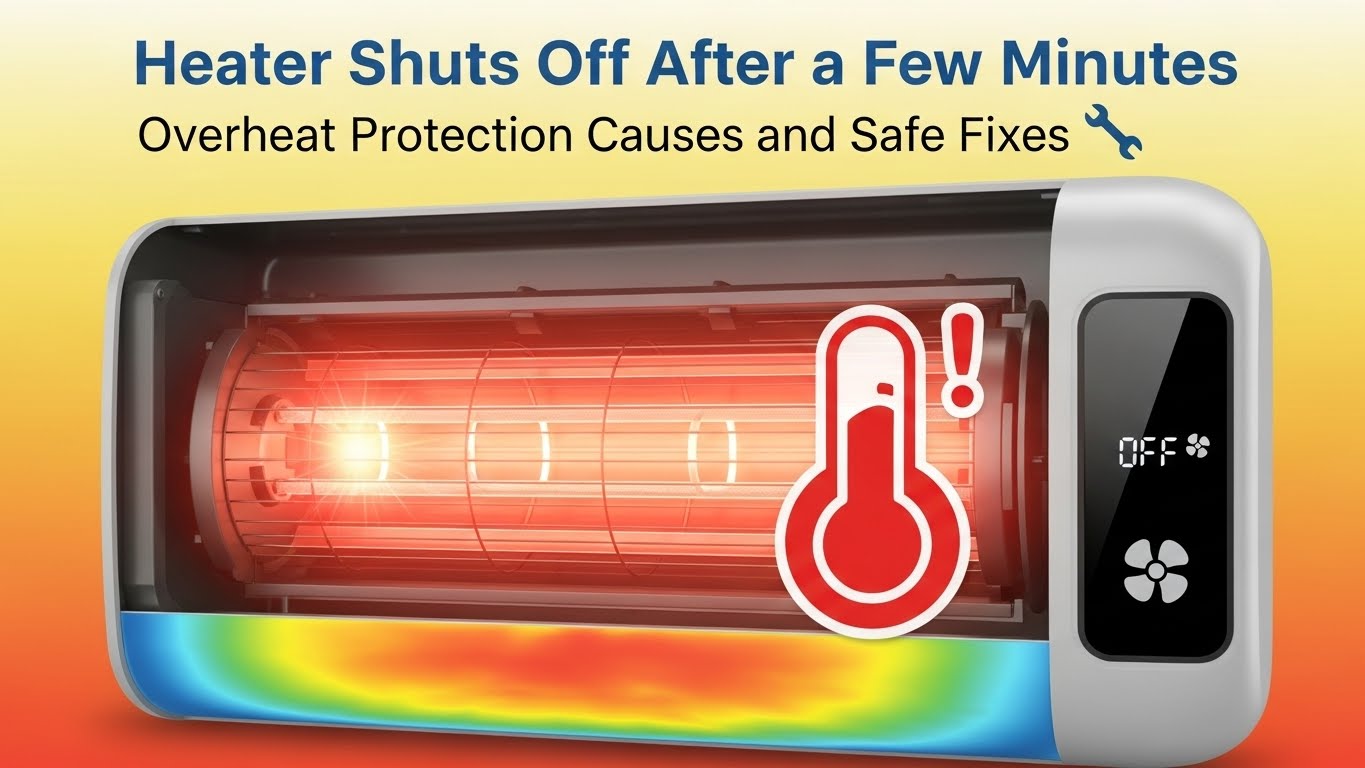
Why does my heater shut off after a few minutes?
A heater that shuts off after a few minutes is usually short-cycling caused by a safety sensor. The top triggers are restricted airflow (dust/blocked vents), heat trapped too close to walls/furniture, or unstable power from extension cords/power strips. Fixing the environment and doing a 15–30 minute full cooldown reset solves most cases.
Safety First: Unplug the heater and let it cool before inspection. Never bypass thermal cutoffs or safety switches. Stop immediately if the outlet/plug feels hot, you smell burning plastic, or you see discoloration/sparking.
Last updated: January 7, 2026
Quick Fix Order (most successful first)
- Clearance zone: move heater to open floor with ~3 ft (1 m) clearance on all sides.
- Wall outlet only: unplug any power strip/extension cord; use a dedicated wall outlet.
- Airflow recovery: vacuum intake/exhaust vents (dust = fast overheat).
- Full cooldown reset: unplug for 30 minutes before retrying.
- Red flags: hot plug/outlet, burning smell, sparks, shutdown in seconds → stop and replace/technician.
Tools needed (safe, basic)
| Item | Why it matters |
|---|---|
| Vacuum / soft brush | Removes dust that blocks airflow and triggers overheat shutdown |
| Known working wall outlet | Rules out weak circuits, tripped GFCI, or loose outlet issues |
| Open floor space | Prevents heat from pooling/reflecting back into the heater |
Table of contents
- 1) What “short-cycling” really means
- 2) The 3 most common triggers
- 3) Step-by-step protocol to stop shutdowns
- 4) When to fix vs replace
- 5) Common mistakes that make it worse
- 6) FAQ
- 7) Related guides
- 8) References
- 9) Important safety notice
1) What “short-cycling” really means
When a heater runs for a few minutes and shuts off, it’s often short-cycling—the unit is being stopped by a safety sensor. That sensor is doing its job: it’s reacting to heat building up inside the heater faster than the heat can escape. The room may still feel cold, but internally the heater can be too hot because of airflow restriction or heat trapping.
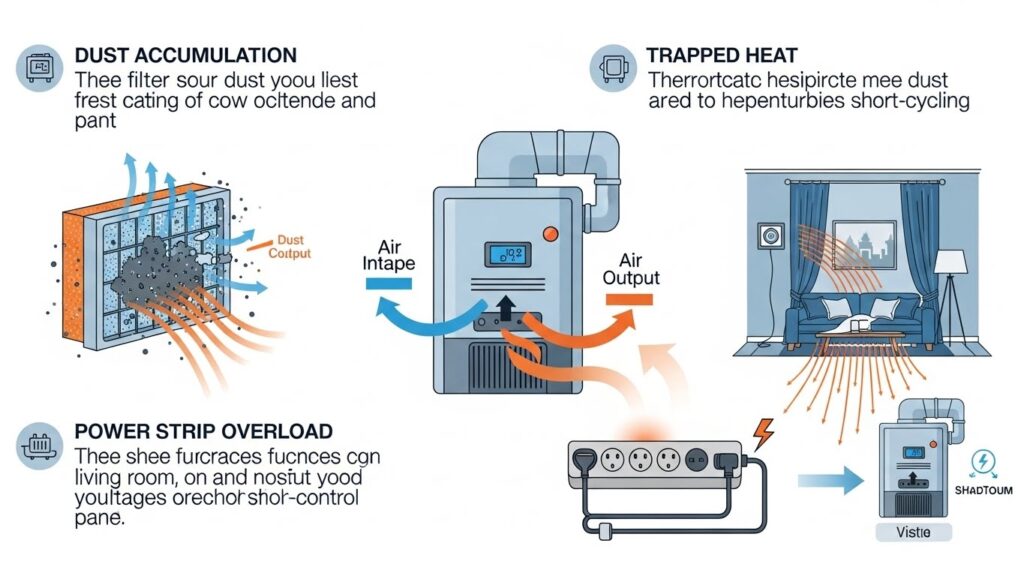
2) The 3 most common triggers
Trigger A — Airflow stagnation (dust + blocked vents)
Dust on intake/exhaust grilles acts like a filter that’s already full. Less air moves through the chassis, heat pools inside, and the heater shuts down to prevent overheating. This is especially common at the beginning of winter when heaters come out of storage.
Trigger B — Heat trapped or reflected back into the heater
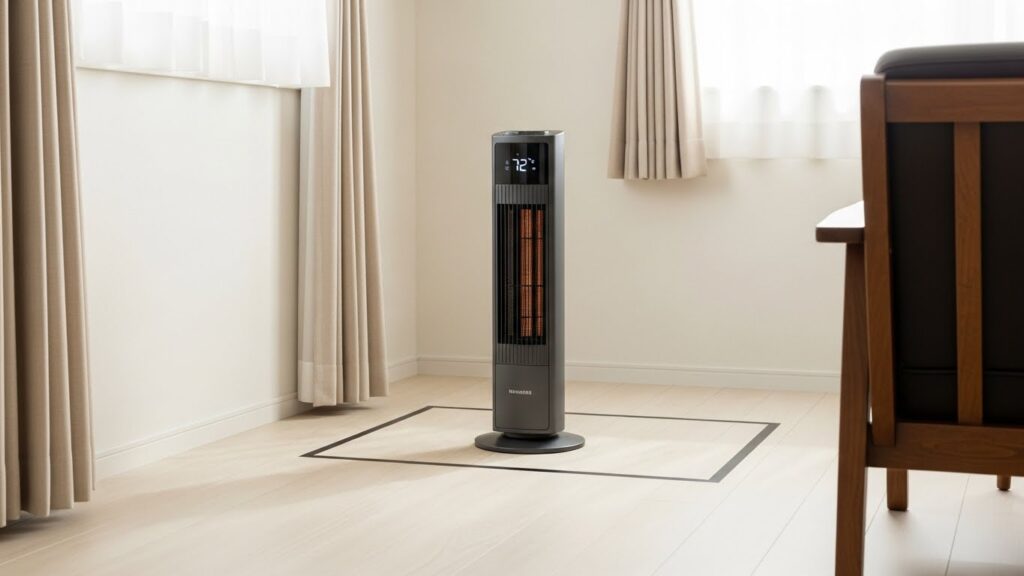
Put a heater too close to furniture, curtains, a wall, or under a desk and you create a hot “pocket.” Some heat gets reflected back and warms the heater’s shell and sensors—so it shuts off even though the room is not warm yet. A simple fix is distance: aim for ~3 ft (1 m) clearance.
Trigger C — Voltage sag (power strip / extension cord)
Many portable heaters pull close to the limit of a household circuit. Cheap extension cords and power strips add electrical resistance, which can cause voltage drop and heat at the plug. Some heaters shut down when power looks unstable; others keep trying until the safety system trips.
3) Step-by-step protocol to stop repeated shutdowns
Step 1 — Build a “clearance zone” first
Move the heater to open floor space. Keep it away from curtains, bedding, furniture, and walls. If you’ve been running it under a desk or beside a couch, this change alone can stop the shutdown loop.
Step 2 — Wall outlet only (no strips, no cords)
Plug directly into a wall outlet. If the outlet is shared with other high-watt devices (microwave, kettle, hair dryer), switch to a different outlet on a different circuit if possible.
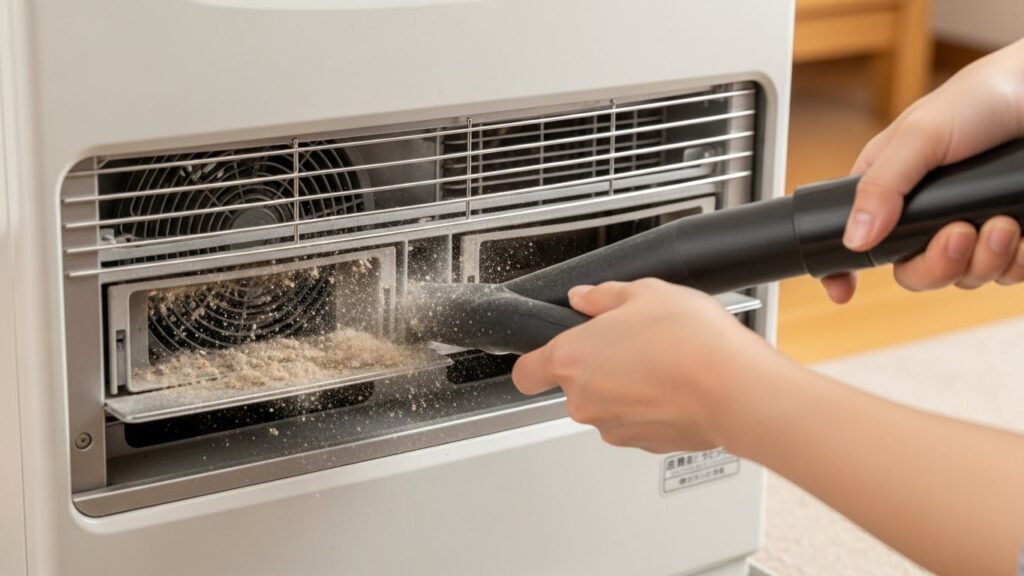
Step 3 — Airflow recovery (quick cleaning)
Unplug the heater. Then vacuum the intake and exhaust grilles with a soft brush attachment. Keep it gentle—your goal is to remove surface dust without pushing debris inward.
Step 4 — The “thermal memory” reset (30 minutes)
Many safety cutoffs need time to cool back to baseline. Unplug the unit for 30 full minutes before restarting. Switching it off/on with a remote or control knob often won’t reset a hardware-level overheat trip.
Critical warning: If your plug or outlet feels hot, looks discolored, or you smell burning plastic, stop using the heater. That’s a high-resistance connection risk and can lead to an electrical fire.
4) When to fix vs replace
- Fix it if: the heater runs normally after clearance + wall outlet + vent cleaning + cooldown reset.
- Replace it if: shutdown happens within seconds, you hear crackling, see sparks, smell burning, or it shuts off every 1–2 minutes regardless of placement.
- Stop and get help if: you’re unsure about the outlet condition or see plug melting/discoloration.
5) Common mistakes that make it worse
- Restarting repeatedly without waiting for a full cooldown (it will keep tripping)
- Running in tight spaces (under desks, against walls, behind curtains)
- Using power strips/extension cords “just for a day”
- Ignoring early warning signs (hot plug, odor, discoloration)
6) FAQ
Is it normal for a heater to shut off automatically?
Yes—automatic shutdown is a built-in safety feature. The goal is to prevent overheating and reduce fire risk. The key is whether the shutdown is occasional (normal cycling) or constant after a few minutes (short-cycling).
Why does it shut off faster on “High”?
High setting produces more heat per minute. Any airflow restriction or trapped heat reaches the overheat threshold faster, so the safety sensor trips sooner than on Low.
Can an extension cord really cause shutdowns?
Yes. Extension cords add resistance and can heat up at the plug. This can destabilize power delivery and increase internal temperatures. For heaters, manufacturers consistently advise wall outlet only.
Does room size cause shutdown?
Room size by itself doesn’t force shutdown. What matters is airflow around the heater and whether heat is trapped near the unit.
7) Related technical guides
- Dryer Not Heating — Heating Element and Safety Checks
- Microwave Not Heating — Safe Diagnostic Steps
- HomeFix Atlas — Appliance Troubleshooting Hub
8) References
9) Important safety & information notice
Professional Disclaimer: This guide is for informational purposes only. Space heaters involve high electrical load and fire risk. Do not modify safety devices or operate a heater that shows signs of damage (hot outlet, melting plug, burning smell, sparking). If problems persist after the steps above, stop using the heater and consult the manufacturer or a qualified technician.

I publish step-by-step troubleshooting guides for common home appliance issues (washer, dryer, refrigerator, HVAC basics).
Content is written for everyday homeowners and cross-checked with manufacturer manuals, safety guidance, and trusted public resources.
Posts include practical checks, clear stop-signs for safety, and guidance on when it’s better to call a qualified technician. Updates are logged whenever steps or recommendations change.
Safety note: If you smell gas, see burning, or suspect electrical hazards—stop immediately and contact a qualified professional.