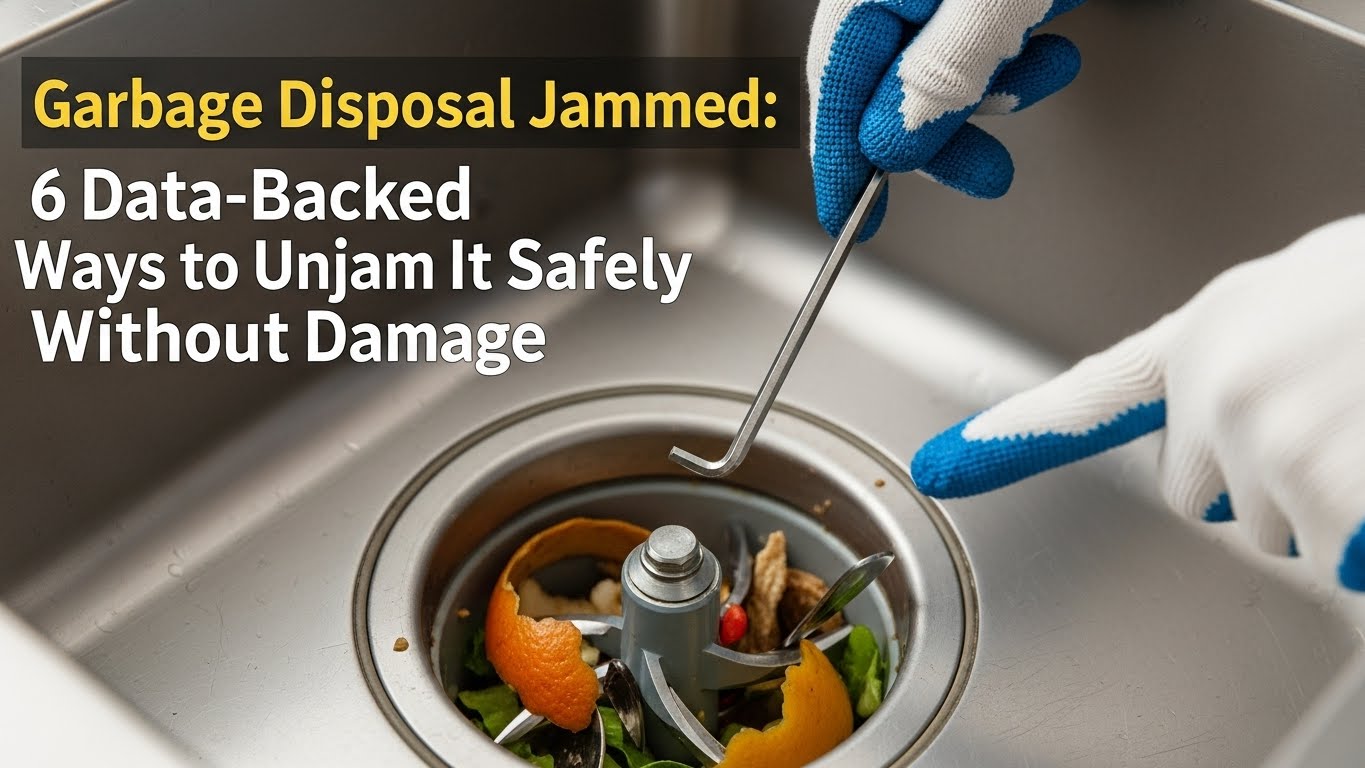
Why Garbage Disposal Jammed Happens (Food Wedges, Overload Protection, and Flywheel Lock)
Last updated: December 23, 2025
Garbage disposal jammed issues are most commonly caused by hard food objects wedged between the impellers and grind ring, or by overload protection engaging after resistance spikes. Manufacturer manuals consistently recommend manual rotation and reset checks before assuming mechanical failure.
Quick answer: Most jammed disposals can be cleared safely using the hex key reset method—no disassembly required.
Table of Contents
- 1) Common Symptoms of a Jammed Disposal
- 2) What the Data and Manuals Show
- 3) Step-by-Step Safe Unjamming Protocol
- 4) Real Search Scenarios Explained
- 5) FAQ
- 6) Safety Disclaimer
- 7) References
1) Common Signs a Garbage Disposal Is Jammed
- Humming sound but no grinding
- Unit shuts off immediately after switch-on
- No sound at all after overload trips
- Sink drains slowly or backs up
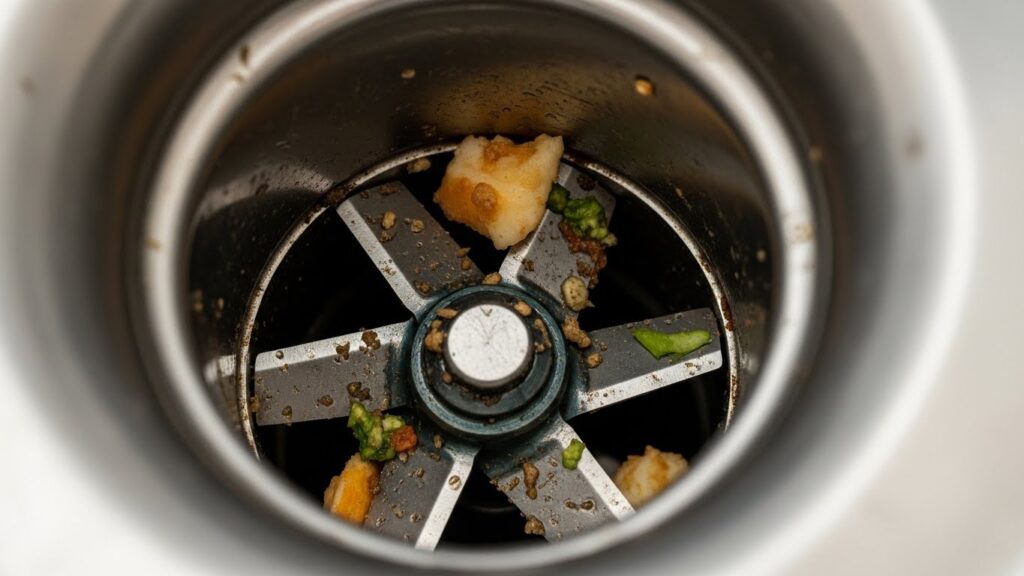
2) What the Data and Manufacturer Manuals Show
Across InSinkErator, Waste King, Moen, and GE manuals, these findings are consistent:
- Primary jam cause: Hard food items (bones, fruit pits) wedged in the grind chamber.
- Overload protection: Most units trip after resistance spikes to prevent motor damage.
- Manual rotation: A standard 1/4-inch hex key is used on most models to rotate the flywheel.
Why this matters: A jammed disposal often protects itself—clearing the jam restores function without repair.
3) Step-by-Step Safe Unjamming Protocol (Manual-Based Order)
Safety first: Turn off power at the breaker. Never reach inside with your hand.
Step 1 — Cut power completely
Shut off the disposal at the breaker panel. Do not rely on the wall switch alone.
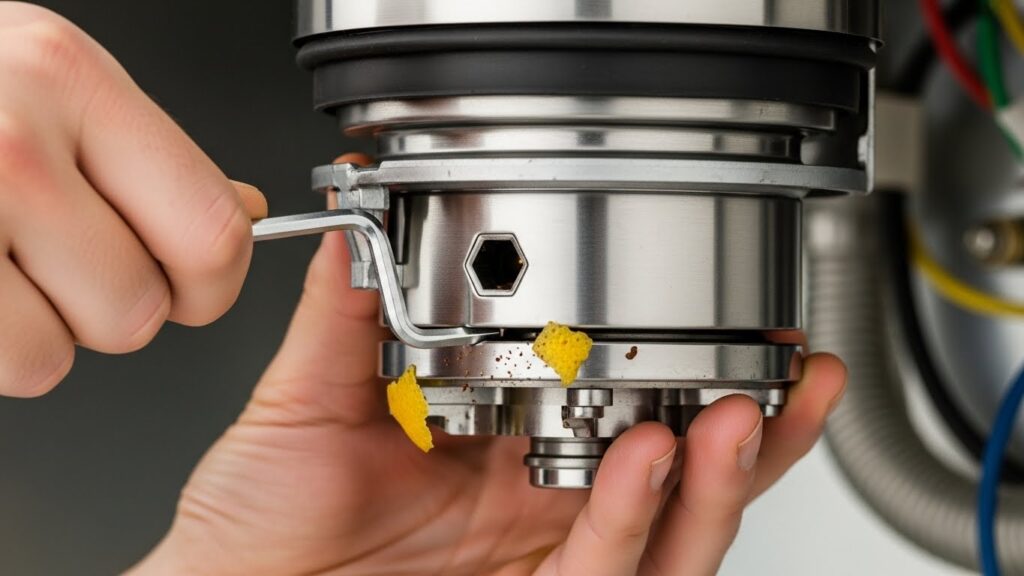
Step 2 — Manually rotate the flywheel
Insert a 1/4-inch hex key into the bottom socket and rotate back and forth until resistance loosens.
Step 3 — Remove loose debris with tools
Use tongs or pliers to remove visible objects. Never use bare hands.
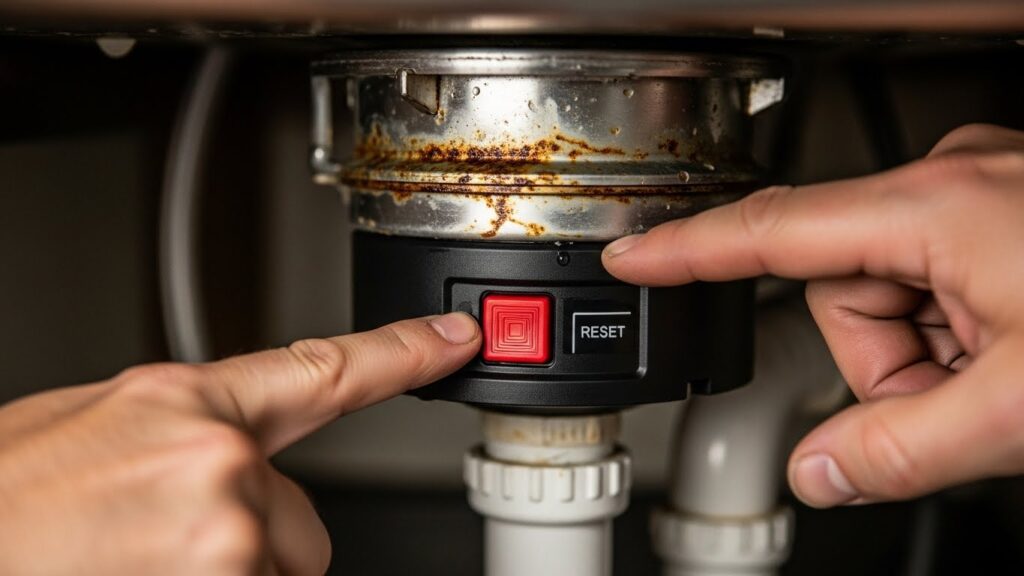
Step 4 — Press the reset button
The red reset button restores power after overload trips. Wait 5–10 minutes before pressing if the motor feels warm.
Step 5 — Restore power and test with water
Turn on cold water and briefly test the disposal. If it spins freely, the jam is cleared.
Step 6 — Evaluate repeat jams
Frequent jams may indicate worn impellers or improper use. Replacement may be more economical than repeated repairs.
4) Real Search Scenarios Explained
“Garbage disposal humming but not spinning”
Typically a locked flywheel due to a wedged object.
“Garbage disposal won’t turn on after jam”
Overload protection may need a reset after cooling.
“New garbage disposal jammed”
Often caused by hard food waste during early use.
5) FAQ
Is it safe to use a wooden spoon to unjam a disposal?
No. Use only tools designed for the task, such as a hex key or pliers.
How long should I wait before pressing the reset button?
Wait 5–10 minutes if the unit feels warm.
Can ice help clear a jam?
Ice can help clean residue but will not clear hard object jams.
Why does my disposal jam frequently?
Worn components or improper food waste types are common causes.
When should I replace the disposal?
If jams occur repeatedly or the motor overheats, replacement may be recommended.
6) Safety Disclaimer
This guide is for general informational purposes only. Always disconnect power before servicing appliances and follow manufacturer instructions.
7) References
- InSinkErator — Jam clearing and reset instructions
- Moen — Garbage disposal troubleshooting
- Consumer Reports — Garbage disposal reliability and care
Related Guides on This Site

I publish step-by-step troubleshooting guides for common home appliance issues (washer, dryer, refrigerator, HVAC basics).
Content is written for everyday homeowners and cross-checked with manufacturer manuals, safety guidance, and trusted public resources.
Posts include practical checks, clear stop-signs for safety, and guidance on when it’s better to call a qualified technician. Updates are logged whenever steps or recommendations change.
Safety note: If you smell gas, see burning, or suspect electrical hazards—stop immediately and contact a qualified professional.