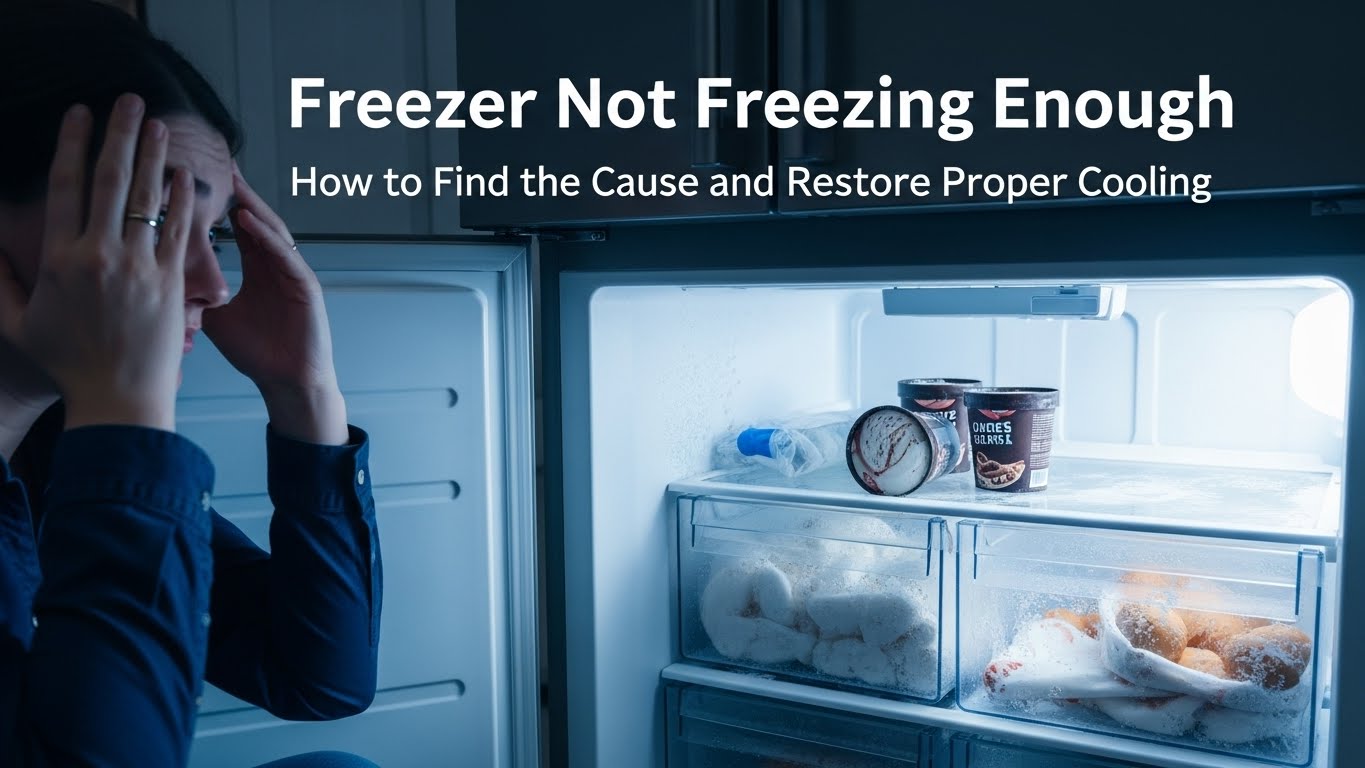
Why is my freezer not freezing enough?
A freezer typically fails to freeze properly due to airflow restriction or cooling system inefficiency. To restore 0°F (-18°C) temperatures, follow these 5 steps:
- Clear the Vents: Maintain a 2-inch gap between food and the back wall.
- Inspect the Evaporator Fan: Listen for the fan running behind the back panel.
- Clean Condenser Coils: Vacuum dust from underneath or behind the unit.
- Check the Door Seal: Perform the “Dollar Bill Test” to find cold air leaks.
- Verify Frost Levels: If frost is heavy, a defrost component may have failed.
Step-by-step checks with photos are explained below.
⚠️ Safety First: Unplug the refrigerator or switch off power at the breaker before removing panels, clearing ice, or cleaning coils. Avoid sharp evaporator fins and moving fans. Warning: Never use a knife to scrape ice; you may puncture the refrigerant lines.
Tools Needed
| Tool | Purpose |
|---|---|
| Freezer thermometer | Confirming actual freezer temperature |
| Flashlight | Inspecting frost and airflow paths |
| Vacuum + brush | Cleaning condenser coils |
How “Freezer Not Freezing Enough” Affects Food Quality
Last updated: December 26, 2025
When a freezer is not freezing enough, food may stay cold but not fully frozen. This often shows up as soft ice cream, frost-covered packages, or meat that refreezes after thawing. According to food safety guidance, freezers should hold close to 0°F (-18°C) for long-term storage. Technician Insight: If your freezer is only at 20°F (-6°C), bacteria can’t grow, but enzymes remain active, causing food to lose its texture and flavor 10x faster.
Quick check: If ice cubes look cloudy or partially melted, the freezer temperature is likely rising above target.
Table of Contents
- 1) What Freezer Performance Is Normal?
- 2) Most Common Reasons a Freezer Won’t Freeze Properly
- 3) Step-by-Step Fix Protocol
- 4) Preventing Weak Freezing in the Future
- 5) FAQ
- 6) How This Guide Was Prepared
- 7) Important Safety Notice
- 8) References
1) What Freezer Performance Is Normal?
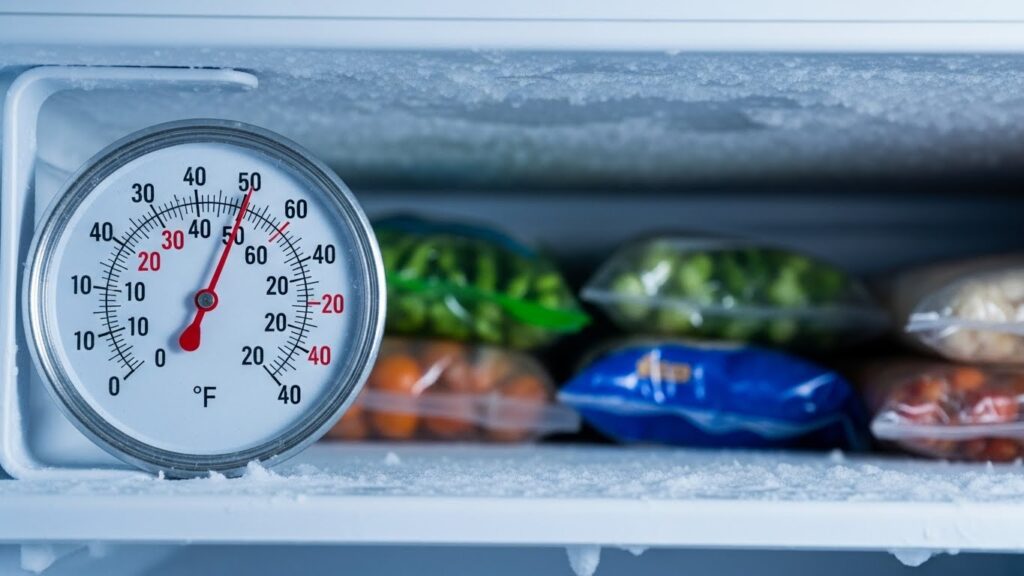
Freezers cycle on and off and may briefly warm during defrost cycles. Short swings of a few degrees are normal. Problems start when temperatures stay above freezing for extended periods or food softens repeatedly. Pro Tip: Place a glass of vegetable oil in the freezer with a thermometer inside. Oil doesn’t freeze but reflects the “true” steady-state temperature of your food better than air.
2) Most Common Reasons a Freezer Won’t Freeze Properly
- Blocked Airflow (The 2-Inch Rule): Food stacked against the back wall blocks the evaporator fan.
- Evaporator Fan Failure: The fan that blows cold air through the freezer stops spinning.
- Dirty Condenser Coils: Dust acts as insulation, trapping heat inside the system.
- Faulty Door Gasket: Cracked seals let humid room air in, causing ice buildup.
- Defrost System Malfunction: If the heater fails, ice chokes the cooling coils.
Why this matters: Weak freezing increases freezer run time and accelerates food spoilage.
3) Step-by-Step Fix Protocol
Step 1 — Verify the “Liquid” Temperature
Measure the temperature after the unit has been closed for 24 hours. Ignore short spikes; focus on sustained temperatures above 0°F (-18°C).
Step 2 — Implement the “2-Inch Gap”
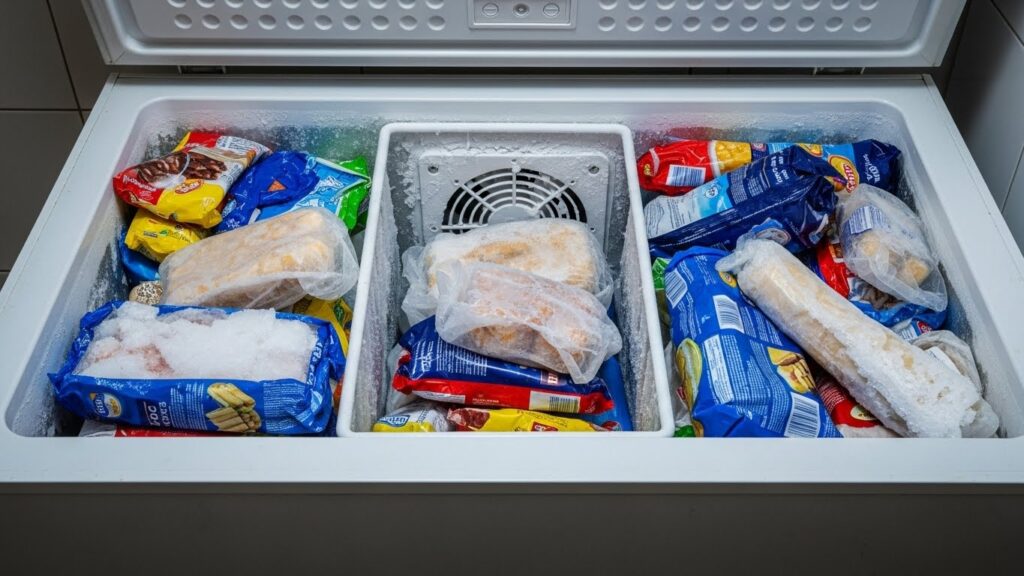
Move all items at least 2 inches away from the back wall vents. Airflow is the lifeblood of a freezer; if the air can’t circulate, the thermostat will sense the wrong temperature and shut off too early.
Step 3 — Inspect the Evaporator Fan (Listen for Noise)
Open the freezer door and manually press the door switch. You should hear the fan speed up. If you hear grinding or silence, the fan motor or blade is obstructed by ice or failed mechanically.
Step 4 — Clean the Condenser Coils
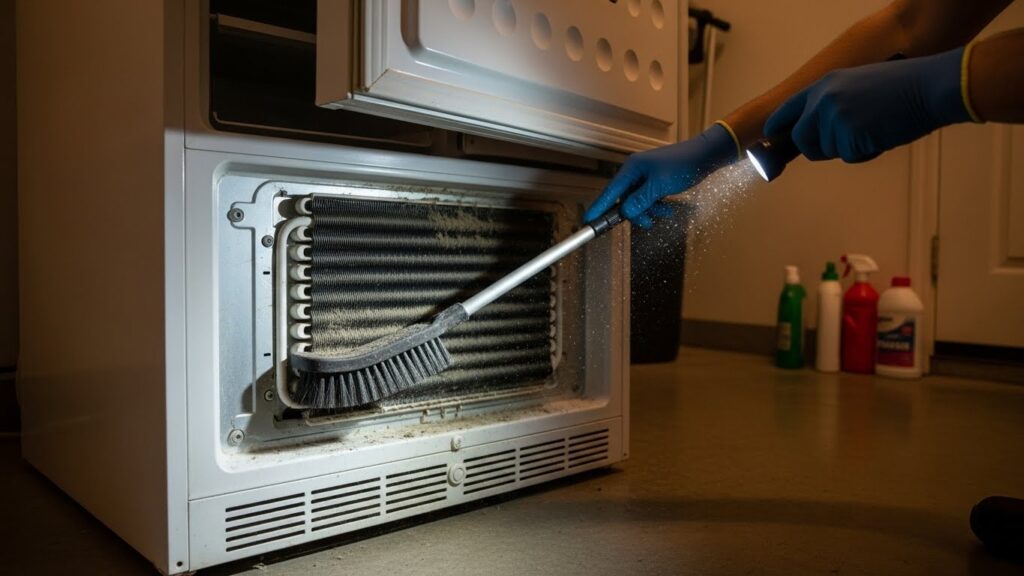
Unplug the unit and vacuum coils underneath or behind the refrigerator. If you have pets, hair buildup here is the #1 cause of “partial freezing” because the compressor overheats and shuts down.
Stop point: If freezing performance doesn’t improve after airflow, frost, and coil checks, sealed-system issues (refrigerant leak) or control board failures may require professional service.
4) Preventing Weak Freezing in the Future
- Maintain a “Medium-Full” load; an empty freezer has less Thermal Mass and warms up faster.
- Clean coils every 6 months if you have pets.
- Check door seals with the “Dollar Bill Test”—if you can pull the bill out easily, the seal is bad.
5) FAQ
Q: Why is my freezer cold but not freezing solid?
A: Most likely a failed Evaporator Fan or a partial defrost failure. The air is cold, but it’s not circulating with enough force to pull heat out of the food mass.
Q: Is it normal for the freezer to warm up once a day?
A: Yes. Every 8-12 hours, the Defrost Cycle turns on a heater to melt frost. This causes a brief 15-minute temperature spike, which is normal.
Q: Can a dirty coil cause the freezer to thaw?
A: Yes. If the coils can’t release heat, the compressor will cycle off for protection, allowing the freezer temperature to rise into the danger zone.
6) How This Guide Was Prepared
This guide follows troubleshooting priorities from GE, Whirlpool, and Samsung service manuals, starting with user-safe inspections before advanced repairs.
8) References
- FoodSafety.gov: Safe Storage Charts
- Energy.gov: Appliance Efficiency Tips
- GE Appliances: Freezer Troubleshooting FAQ
Related Guides on This Site

I publish step-by-step troubleshooting guides for common home appliance issues (washer, dryer, refrigerator, HVAC basics).
Content is written for everyday homeowners and cross-checked with manufacturer manuals, safety guidance, and trusted public resources.
Posts include practical checks, clear stop-signs for safety, and guidance on when it’s better to call a qualified technician. Updates are logged whenever steps or recommendations change.
Safety note: If you smell gas, see burning, or suspect electrical hazards—stop immediately and contact a qualified professional.