Why Dishwasher Smells Bad (Food Residue, Moisture Traps, and Drain Backflow)
Last updated: December 21, 2025
Dishwasher smells bad issues are most commonly caused by food residue trapped in filters and seals, standing moisture inside the tub, or drain backflow from sink plumbing. Service manuals consistently identify routine filter cleaning and moisture control as the first-line fixes.
Quick answer: Persistent odors usually mean organic buildup is being reactivated by warm wash cycles—not a failed dishwasher.
Table of Contents
- 1) Common Odor Types and What They Mean
- 2) What the Data and Manuals Show
- 3) Step-by-Step Deep Cleaning Protocol
- 4) Real Search Scenarios Explained
- 5) FAQ
- 6) Safety Disclaimer
- 7) References
1) Common Dishwasher Odors and Likely Sources
- Rotten food smell: Food particles trapped in the filter or sump
- Musty or mildew odor: Moisture trapped in door seals and insulation
- Sewage-like smell: Drain backflow or improper hose routing
- Burnt or chemical smell: Detergent residue reacting with heat

2) What the Data and Service Manuals Show
Across Bosch, Whirlpool, GE, LG, and Samsung documentation, odor complaints show consistent patterns:
- Filter cleaning frequency: Recommended every 1–4 weeks, depending on soil level.
- Moisture retention: Leaving the door closed after cycles increases odor risk by allowing microbial growth.
- Drain backflow prevention: Proper hose high-loop height of 20–32 inches (50–80 cm) reduces sewer odor intrusion.
Why this matters: Warm water activates odors from organic residue even if dishes appear clean.
3) Step-by-Step Deep Cleaning Protocol (Manual-Based Order)
Safety note: Disconnect power before removing filters or accessing the drain area.
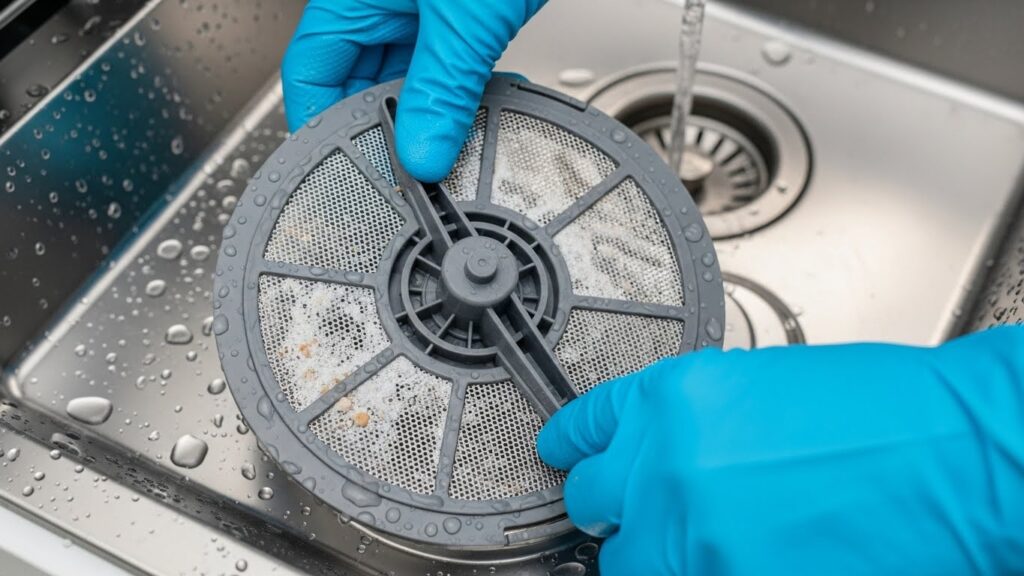
Step 1 — Remove and wash the filter assembly
Most odor problems begin here. Rinse the filter under warm water and use a soft brush. Manufacturers recommend cleaning every 1–4 weeks.
Step 2 — Clean door seals and edges
Wipe the rubber gasket and door edges where moisture accumulates. These areas rarely dry fully during normal cycles.
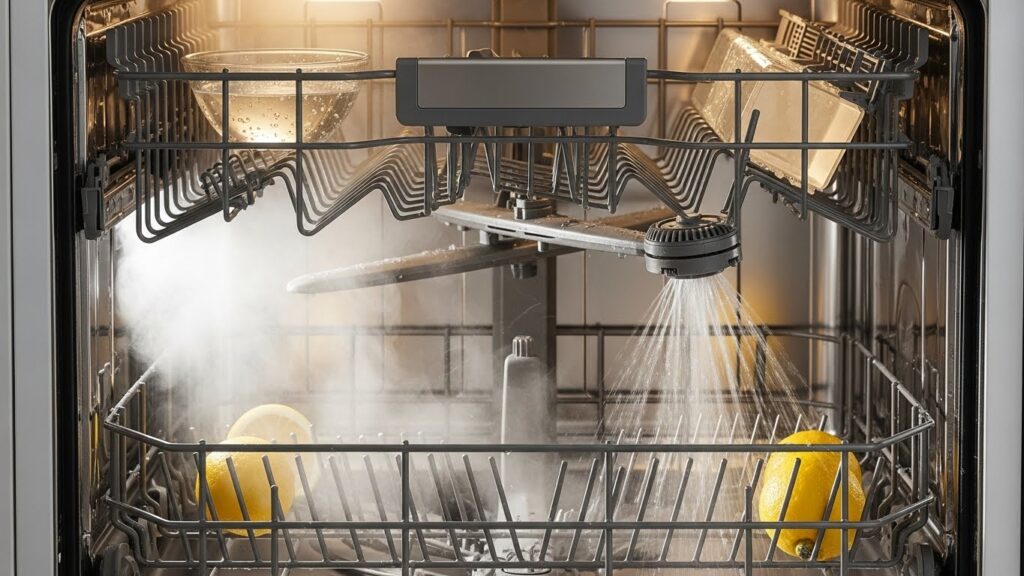
Step 3 — Run a hot cleaning cycle
Use a manufacturer-approved dishwasher cleaner or a hot cycle to dissolve internal buildup. High-temperature cycles help break down organic residue.
Step 4 — Improve drying and ventilation
After each cycle, open the door slightly for 10–30 minutes to allow moisture to escape.
Step 5 — Check drain hose routing
Ensure a proper high loop or air gap to prevent sewer gas from entering the dishwasher.
4) Real Search Scenarios Explained
“Dishwasher smells bad after every wash”
Usually caused by residue trapped in filters or door seals.
“Dishwasher smells like sewage”
Commonly linked to drain hose routing or sink plumbing backflow.
“New dishwasher smells bad”
Often caused by installation-related drain issues or manufacturing residue that needs an initial cleaning cycle.
5) FAQ
How often should I clean my dishwasher to prevent odors?
Most manufacturers recommend filter cleaning every 1–4 weeks and a cleaning cycle monthly.
Does leaving the door closed cause odors?
Yes. Trapped moisture encourages odor-causing microbial growth.
Can drain issues cause bad smells?
Yes. Improper hose routing can allow sewer odors to enter the dishwasher.
Are dishwasher cleaners necessary?
They help dissolve internal residue but do not replace manual filter cleaning.
When should I call a technician?
If odors persist after cleaning and drain checks, professional inspection is recommended.
6) Safety Disclaimer
This guide is for general informational purposes only. Always disconnect power before servicing appliances and follow manufacturer instructions.
7) References
- Bosch — Dishwasher cleaning and odor prevention
- Whirlpool — How to clean a dishwasher
- Consumer Reports — Dishwasher maintenance and performance
Related Guides on This Site
- Dishwasher Not Draining
- Dishwasher Not Draining But Cycle Completes
- Refrigerator Water Leaking on Floor

I publish step-by-step troubleshooting guides for common home appliance issues (washer, dryer, refrigerator, HVAC basics).
Content is written for everyday homeowners and cross-checked with manufacturer manuals, safety guidance, and trusted public resources.
Posts include practical checks, clear stop-signs for safety, and guidance on when it’s better to call a qualified technician. Updates are logged whenever steps or recommendations change.
Safety note: If you smell gas, see burning, or suspect electrical hazards—stop immediately and contact a qualified professional.