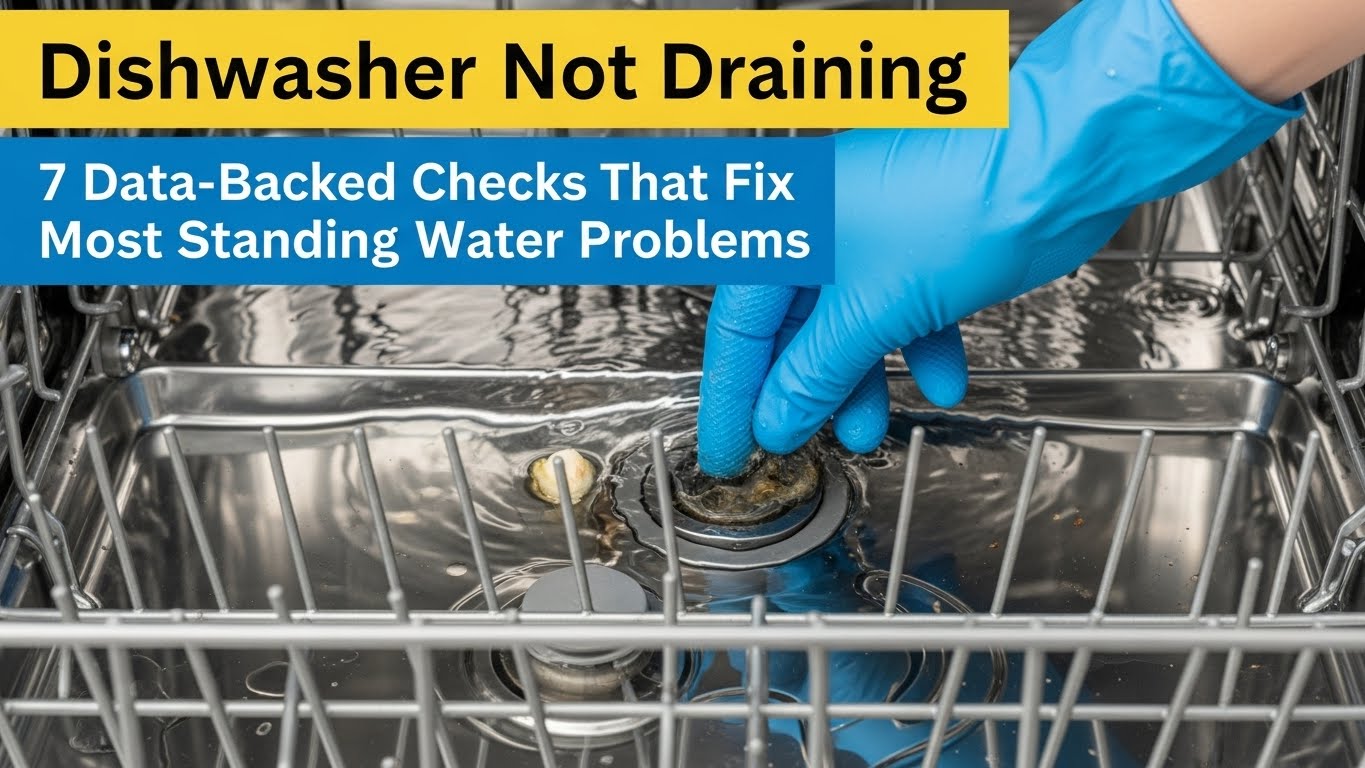
Why Dishwasher Not Draining Happens (Filter Blockage, Drain Hose Height, and Pump Issues)
Last updated: December 21, 2025
Dishwasher not draining problems are most commonly caused by food debris blocking the filter system, improper drain hose installation, or a pump that cannot move water efficiently. Manufacturer service guides consistently list filter inspection and hose routing as the first diagnostic steps.
Quick answer: Standing water after a cycle is usually a flow restriction problem, not an electronic failure.
Table of Contents
- 1) Common Symptoms of Drain Failure
- 2) What the Data and Manuals Show
- 3) Step-by-Step Fix Protocol
- 4) Real Search Scenarios Explained
- 5) FAQ
- 6) Safety Disclaimer
- 7) References
1) Common Signs a Dishwasher Is Not Draining
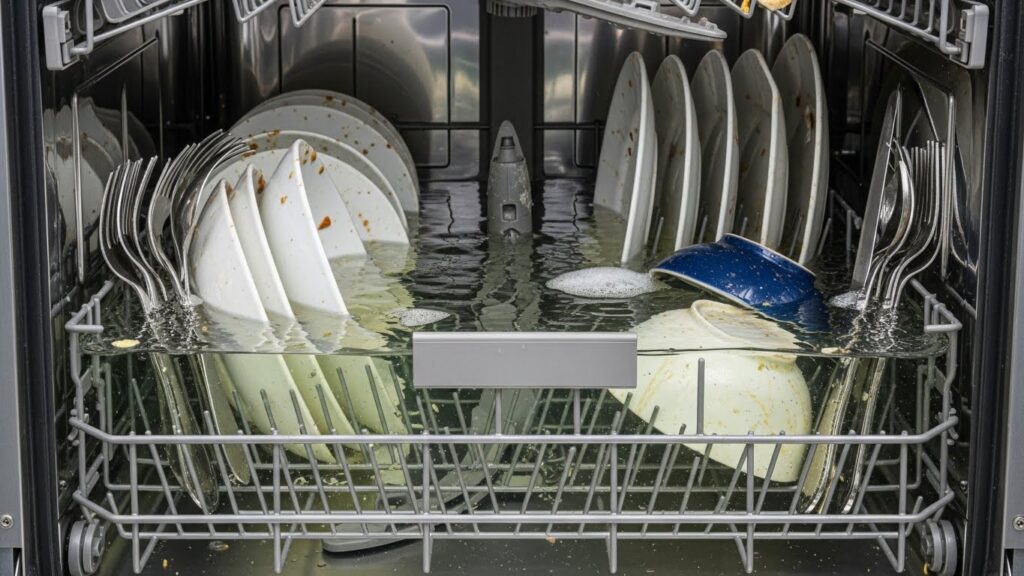
- Standing water at the bottom after cycle completes
- Dirty water returning during rinse
- Gurgling sounds from sink or air gap
- Cycle finishes but dishes remain wet and dirty
2) What the Data and Service Manuals Show
Across Bosch, Whirlpool, GE, LG, and Samsung service documentation, the same patterns appear:
- Filter-related issues: Food debris is involved in a majority of non-draining complaints logged during routine service calls.
- Drain hose height: Most manuals specify a high-loop or air-gap height of 20–32 inches (50–80 cm) above the floor to prevent backflow.
- Drain time expectation: Normal drain phases typically empty the tub within 60–120 seconds.
Why this matters: If water drains slowly or partially, the pump may still be working—but against resistance.
3) Step-by-Step Fix Protocol (Data-Backed Order)
Safety note: Disconnect power at the breaker before accessing filters or the drain area.
Step 1 — Remove and clean the filter assembly
Most manufacturers recommend cleaning the filter every 1–4 weeks, depending on usage. Blocked filters are the leading cause of a dishwasher not draining condition.

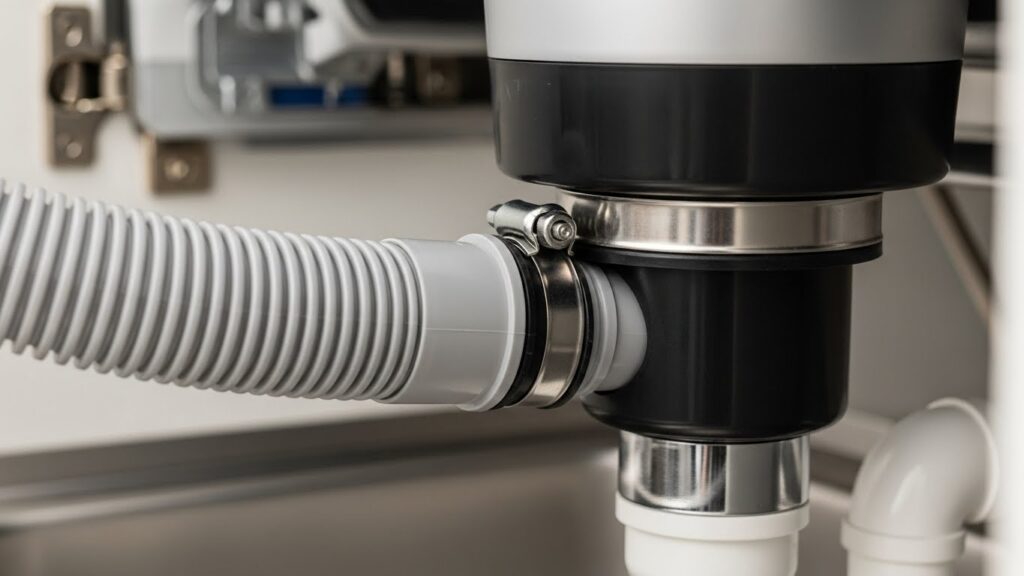
Step 2 — Check the drain hose routing and height
Ensure the hose forms a proper high loop or connects to an air gap. A hose lying flat can cause siphoning and water return.
Step 3 — Inspect the sink drain or garbage disposal inlet
New disposals often have a knockout plug that must be removed for dishwasher drainage to work.
Step 4 — Listen for the drain pump
During drain cycles, a steady hum usually indicates the pump is operating. Silence or intermittent noise may require professional inspection.
Step 5 — Run a short test cycle
After corrections, run a rinse cycle and observe whether water clears within 2 minutes.
4) Real Search Scenarios Explained
“Dishwasher not draining but cycle completes”
Typically caused by partial blockages rather than electronic failure.
“Standing water in dishwasher overnight”
Backflow from sink plumbing or improper hose height is common.
“New dishwasher not draining”
Often linked to installation issues, especially drain hose routing or disposal knockout plugs.
5) FAQ
Is standing water normal after a cycle?
A small amount near the drain is normal, but pooled water across the tub is not.
How often should dishwasher filters be cleaned?
Most manufacturers recommend every 1–4 weeks depending on usage.
Can a dishwasher drain without a high loop?
Improper hose routing increases the risk of backflow and standing water.
Does a failing pump always cause no drainage?
No. Many drain issues occur while the pump is still functional.
When should I call a technician?
If drainage does not improve after filter and hose checks, professional diagnosis is recommended.
6) Safety Disclaimer
This guide is for general informational purposes only. Always disconnect power before servicing appliances and follow manufacturer instructions.
7) References
- Bosch — Dishwasher drainage and filter maintenance
- Whirlpool — Dishwasher not draining causes
- Consumer Reports — Dishwasher performance issues
Related Guides on This Site
- Dishwasher Smells Bad: Deep Cleaning and Rinse Aid Tips
- Dishwasher Not Draining But Cycle Completes
- Refrigerator Water Leaking on Floor

I publish step-by-step troubleshooting guides for common home appliance issues (washer, dryer, refrigerator, HVAC basics).
Content is written for everyday homeowners and cross-checked with manufacturer manuals, safety guidance, and trusted public resources.
Posts include practical checks, clear stop-signs for safety, and guidance on when it’s better to call a qualified technician. Updates are logged whenever steps or recommendations change.
Safety note: If you smell gas, see burning, or suspect electrical hazards—stop immediately and contact a qualified professional.