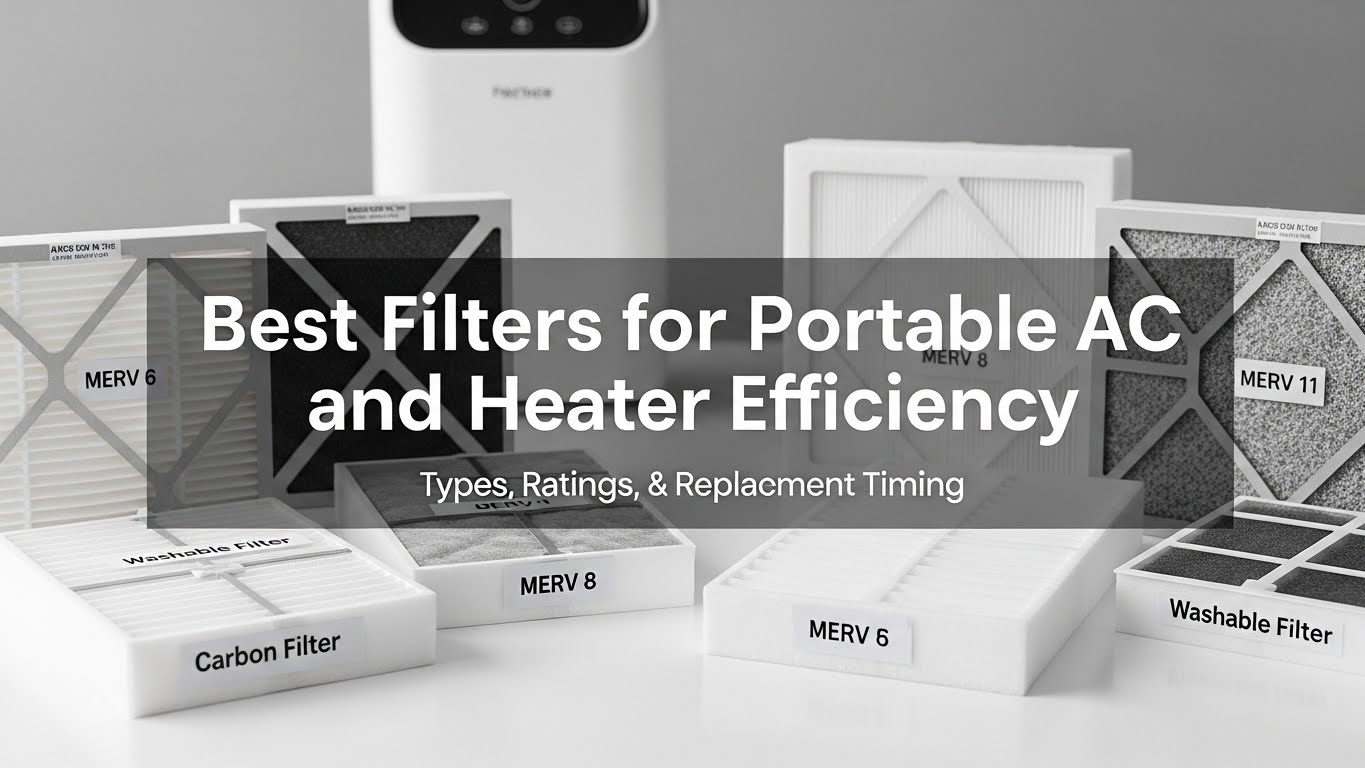
What is the best filter for portable ACs and heaters?
For most portable ACs, the “best” filter is the one that keeps airflow strong while still blocking lint and dust: usually a washable mesh (often with a foam pre-filter for pets). For many portable heaters, the “filter” is not a replaceable filter at all—it’s often just an intake screen that needs regular dust removal.
The fastest way to lose efficiency is using a filter that’s too restrictive for a small fan. This guide shows what each filter type does, how ratings matter (without overcomplicating it), and exactly when to clean or replace.
Safety First: Always unplug portable ACs and heaters before removing panels or filters. Never operate a heater with blocked intake/exhaust. Do not “DIY” a thicker filter that the manufacturer didn’t approve—restricted airflow can trigger overheating shutoffs or damage components.
Last Updated: January 10, 2026 | Technical Review: HomeFix Atlas HVAC & Safety Team
Why Filters Matter More Than Most People Think
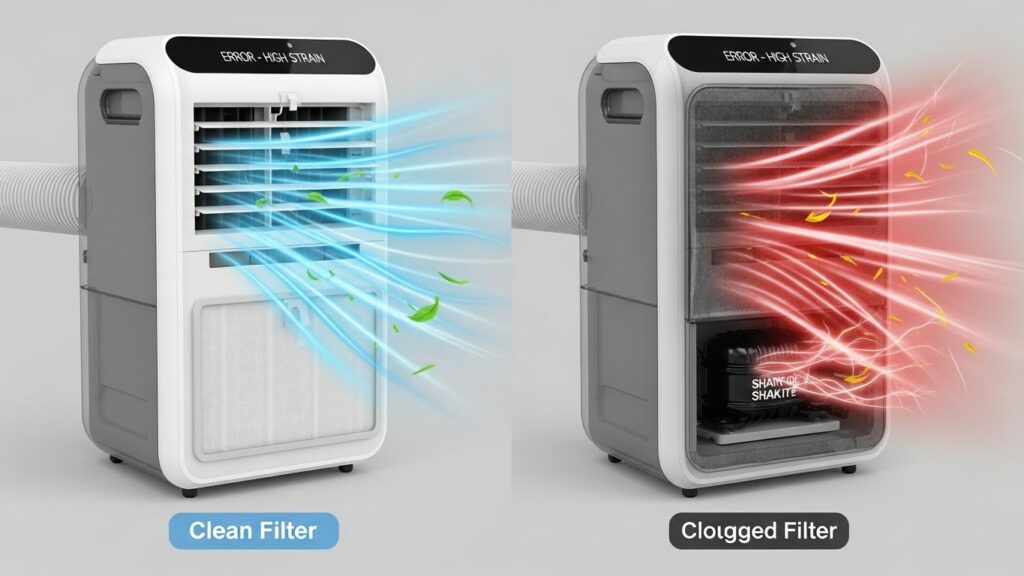
Portable units live and die by airflow. A portable AC needs steady airflow across coils to keep cooling stable. A heater (especially fan-forced types) needs airflow to carry heat away from internal parts.
When airflow drops, you usually see the same pattern: the unit runs longer, gets louder, performs worse, and starts acting “weird” (short cycling, weak output, or safety shutoffs). Filters are often the first thing to check because they’re the easiest fix.
Here’s the key idea: portable units have smaller fans than whole-house HVAC. That means they tolerate less airflow resistance. “Cleaner air” filters can be great in the right system, but they can be the wrong move in a portable chassis.
Portable AC vs Portable Heater: The Filter Reality Check
Quick clarity:
Portable AC almost always has a user-serviceable intake filter (washable mesh is most common).
Portable heater may have no true filter—often just a grille or screen that needs dust cleanup.
- Portable AC: filter protects coils from lint/dust → clogged filter = weak airflow, poor cooling, possible coil icing.
- Fan-forced heaters / ceramic heaters: dust buildup can restrict airflow → overheating protection may trip.
- Oil-filled radiators: usually no filter (clean exterior vents, keep clearance).
- Fuel-based heaters (if applicable): follow manufacturer ventilation and safety rules strictly (not a “filter upgrade” category).
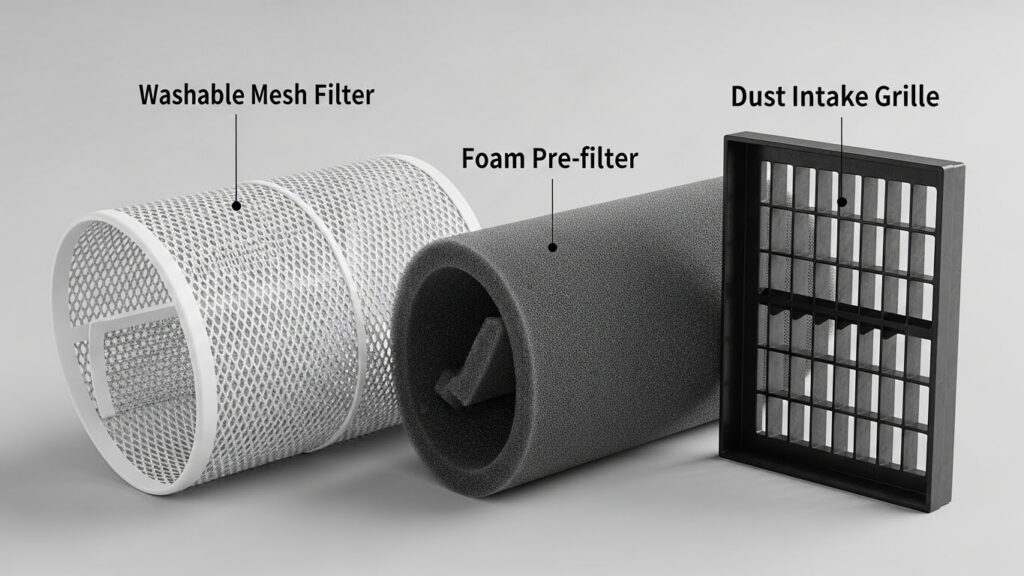
Common Filter Types (And When Each Makes Sense)
1) Washable mesh (portable AC “default best”)
This is the most common portable AC filter for a reason: it catches lint and dust that foul the coils, while keeping airflow strong. If your unit came with a washable mesh, treat that as the baseline “best filter.”
Best for: normal dust, most homes, long-term use with routine cleaning.
2) Foam pre-filter (pets, hair, and lint)
Foam pre-filters are good at catching the big “clog fast” stuff—pet hair and lint—before it mats onto the mesh. In pet homes, this can keep performance stable between cleanings.
Best for: pets, laundry-adjacent rooms, dusty apartments.
3) Pleated / higher-density “HEPA-style” add-ons (use only if approved)
This is where people accidentally hurt performance. Denser media can increase airflow resistance. If the manufacturer explicitly offers a compatible upgrade, great. If not, forcing a denser filter into the intake can reduce airflow and cause problems.
Rule: If it didn’t come with it or isn’t listed as an approved part, don’t improvise it.
Ratings (MERV/HEPA) Without the Headache
Portable units are not the same as central HVAC. Central systems can be designed to handle higher filter resistance. Portable units usually aren’t.
- For portable ACs: airflow retention matters more than chasing a high rating.
- For heaters: never “upgrade” filtration unless the manual says it’s allowed (many heaters have no filter to upgrade).
- If you want cleaner air: use a separate air purifier instead of choking a portable AC with a denser filter.
Replacement Timing: A Practical Schedule That Actually Works
Instead of memorizing a perfect number, use a simple two-part approach: (1) routine checks plus (2) performance signals.
| Filter / Intake | Check | Clean / Replace |
|---|---|---|
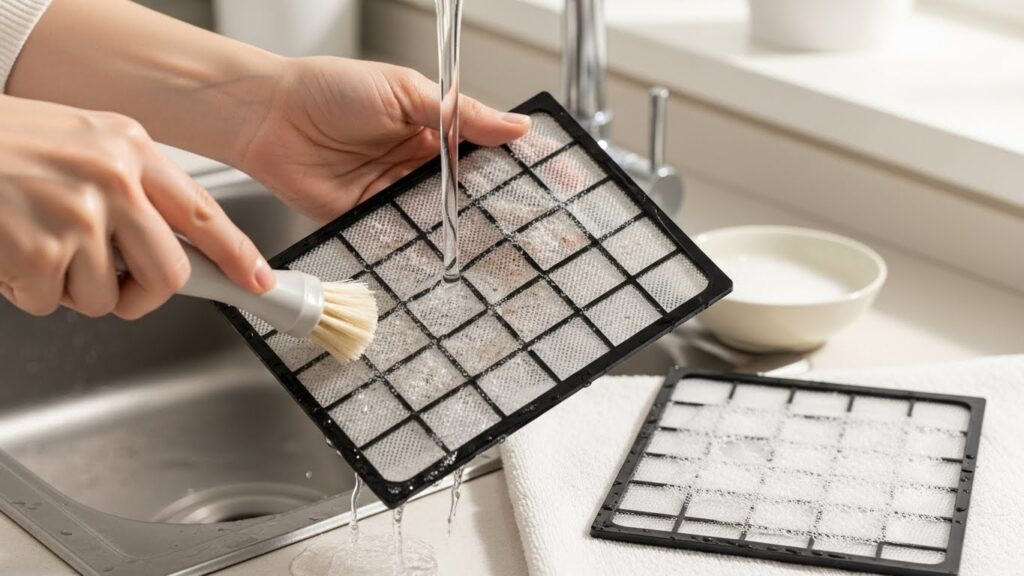
| Washable mesh (portable AC) | Every 2 weeks | Rinse + dry fully (replace if damaged/warped) |
| Foam pre-filter | Weekly in pet homes | Wash gently (replace if crumbling) |
| Heater intake screen / grille | Weekly during heavy use | Vacuum dust off (never block airflow) |
The “Light Test” (simple and underrated):
Hold the filter up to a bright light. If you see large opaque patches, airflow is being choked. Clean it, and if it still looks blocked or warped, replace it with the correct approved part.
Signs the Filter Is Hurting Performance (AC + Heater)
- Weak airflow from vents (first and most common sign)
- Unit runs longer than usual to reach comfort
- More noise, whistling, or rattling near intake
- Heater shuts off unexpectedly (overheat protection may be tripping)
- Dusty smell (often a dust-on-heater-element issue—clean intake and surrounding dust safely)
If you see these, don’t guess. Check the filter/intake first. It’s the fastest fix and prevents “bigger” problems caused by restricted airflow.
FAQ
Q1) Can I upgrade to a higher-grade filter?
A) Only if the manufacturer explicitly supports it. Portable units often can’t handle extra resistance. If you want cleaner air, use a separate air purifier instead of restricting the portable AC/heater airflow.
Q2) Does a dirty filter increase energy use?
A) Yes. Restricted airflow makes the unit work harder and run longer, which usually increases energy consumption and noise.
Q3) My heater doesn’t have a filter—what should I do?
A) Clean the intake grille/screen and keep clearance around the heater. Many heaters rely on free airflow rather than filtration.
Related Guides on HomeFix Atlas
- Portable AC Not Cooling — Airflow, Hose, and Coil Checks
- Dehumidifier Not Collecting Water — Humidity, Temperature, and Coil Diagnosis
References
- CDC/NIOSH — Indoor Environmental Quality (General Ventilation & Airflow Guidance)
- ASHRAE — Standards & Guidelines (Filtration/Airflow Concepts)
Important Safety & YMYL Notice
This content is provided for general informational purposes only. Using non-approved filters or restricting airflow may damage appliances or create safety risks. Always follow the manufacturer’s filter specifications, clearance requirements, and maintenance instructions. If your unit repeatedly shuts off, smells like burning, or shows signs of electrical damage, discontinue use and consult a qualified technician.

I publish step-by-step troubleshooting guides for common home appliance issues (washer, dryer, refrigerator, HVAC basics).
Content is written for everyday homeowners and cross-checked with manufacturer manuals, safety guidance, and trusted public resources.
Posts include practical checks, clear stop-signs for safety, and guidance on when it’s better to call a qualified technician. Updates are logged whenever steps or recommendations change.
Safety note: If you smell gas, see burning, or suspect electrical hazards—stop immediately and contact a qualified professional.