Why Air Fryer Not Turning On Happens (Power Supply, Safety Interlocks, and Overheat Protection)
Last updated: December 22, 2025
Air fryer not turning on issues are most commonly caused by power supply interruptions, basket or lid safety switches not engaging, or thermal protection that has not fully reset. Manufacturer manuals consistently list outlet checks and safety interlocks as the first diagnostics.
Quick answer: If an air fryer shows no lights or response, start with power and safety-switch checks before assuming an internal failure.
Table of Contents
- 1) Common Symptoms When an Air Fryer Won’t Power On
- 2) What the Data and Manuals Show
- 3) Step-by-Step Fix Protocol
- 4) Real Search Scenarios Explained
- 5) FAQ
- 6) Safety Disclaimer
- 7) References
1) Common Signs an Air Fryer Is Not Turning On
- No display lights or sound when plugged in
- Unit powers off immediately after start
- Buttons respond but heating never starts
- Worked previously, then stopped after long use
2) What the Data and Manufacturer Manuals Show
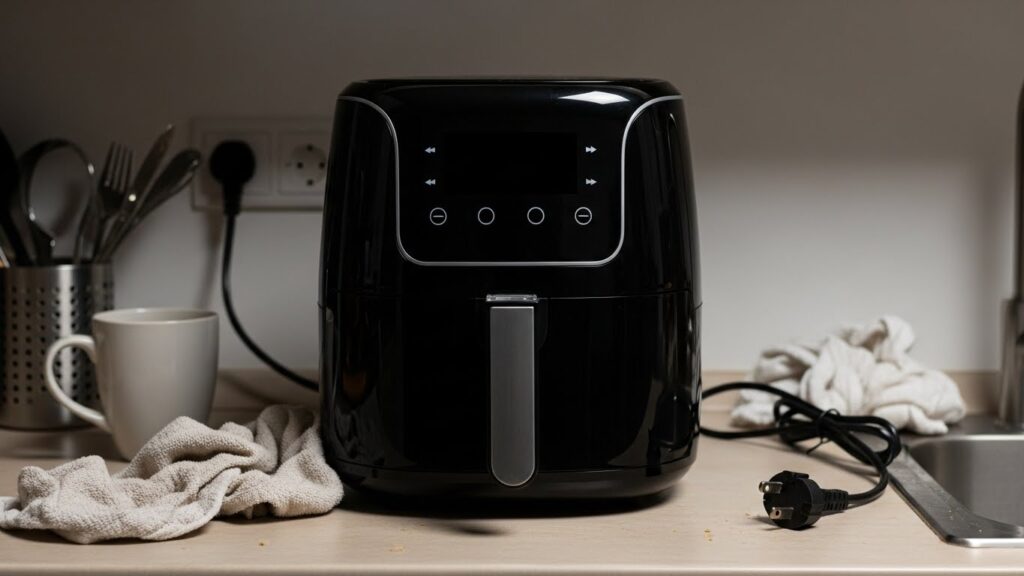
Across Philips, Ninja, Cosori, Instant Brands, and other air fryer manuals, the same causes appear repeatedly:
- Outlet load limits: Most air fryers draw 1,200–1,700 watts and may not power on with overloaded circuits.
- Safety interlocks: Basket or lid switches must fully engage for power to reach the heating system.
- Thermal reset timing: Overheat protection typically requires 20–60 minutes of cooling before reset.
Why this matters: Many “dead” air fryers are actually waiting for safety conditions to be met.
3) Step-by-Step Fix Protocol (Data-Backed Order)
Safety note: Unplug the air fryer and allow it to cool before inspection.
Step 1 — Verify the power source
Plug the unit directly into a wall outlet rated for high-draw appliances. Avoid extension cords or shared power strips.
Step 2 — Check the basket or lid seating
Most air fryers will not power on unless the basket is fully inserted and the safety switch is engaged. Remove and reseat firmly.
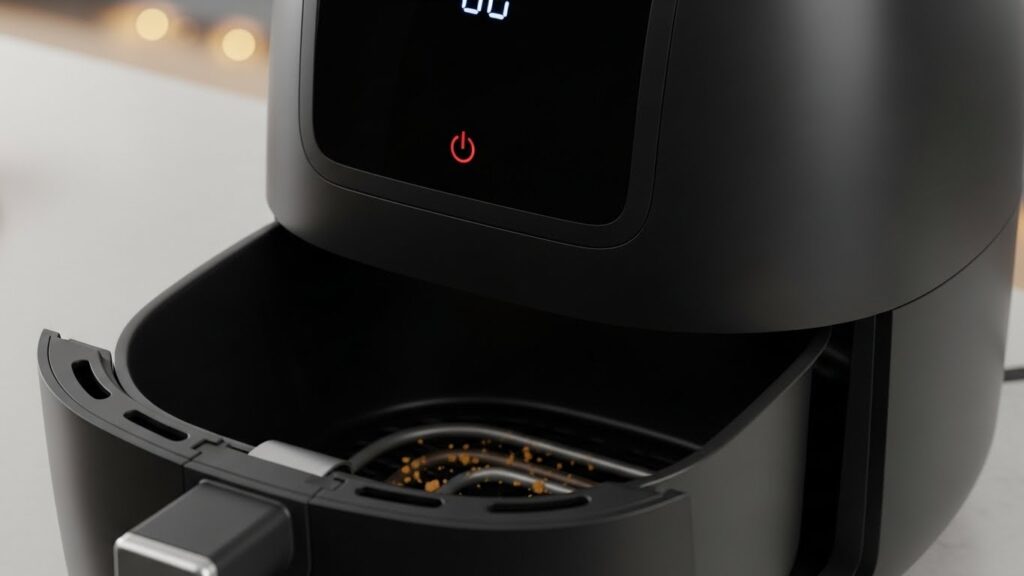
Step 3 — Allow thermal protection to reset
If the unit stopped after extended use, unplug it for 30–60 minutes to allow internal thermal cutoffs to reset.
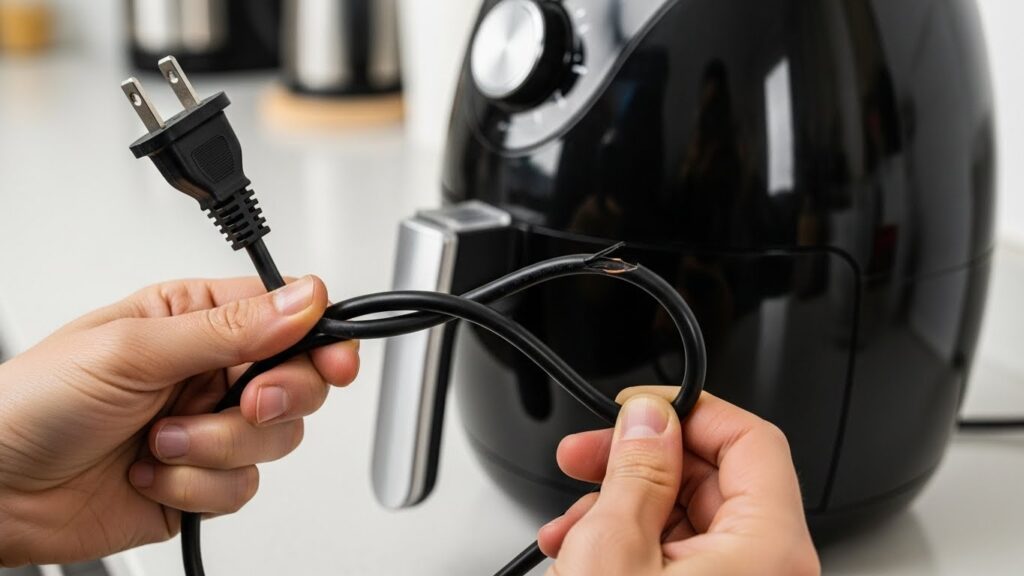
Step 4 — Inspect the power cord and plug
Look for visible damage, loose prongs, or heat marks. Damaged cords require professional replacement.
Step 5 — Try a basic reset if supported
Some digital models reset by unplugging for several minutes. Follow the manufacturer’s instructions only.
Step 6 — Evaluate internal component failure
If no lights or response occur after all checks, internal fuses or control boards may require professional service.
4) Real Search Scenarios Explained
“Air fryer not turning on but plugged in”
Usually caused by outlet load issues or safety interlocks.
“Air fryer stopped working suddenly”
Often related to thermal protection after prolonged high-temperature use.
“New air fryer won’t turn on”
Frequently due to basket seating or initial outlet compatibility.
5) FAQ
How long should I wait for an air fryer to reset?
Most thermal protections reset after 20–60 minutes of cooling.
Can extension cords prevent an air fryer from turning on?
Yes. Voltage drop can prevent proper startup.
Do all air fryers have safety switches?
Most basket-style models include at least one interlock.
Is it safe to open an air fryer to check internal parts?
No. Internal repairs should be handled by qualified technicians.
When should I replace the air fryer?
If internal components fail outside warranty, replacement may be more economical.
6) Safety Disclaimer
This guide is for general informational purposes only. Always unplug appliances before inspection and follow manufacturer safety instructions.
7) References
- Philips — Air fryer support and manuals
- Ninja Kitchen — Air fryer troubleshooting
- Consumer Reports — Air fryer safety and performance
Related Guides on This Site
Toaster Oven Not Heating Evenly

I publish step-by-step troubleshooting guides for common home appliance issues (washer, dryer, refrigerator, HVAC basics).
Content is written for everyday homeowners and cross-checked with manufacturer manuals, safety guidance, and trusted public resources.
Posts include practical checks, clear stop-signs for safety, and guidance on when it’s better to call a qualified technician. Updates are logged whenever steps or recommendations change.
Safety note: If you smell gas, see burning, or suspect electrical hazards—stop immediately and contact a qualified professional.