Top-load washer fills but won’t agitate? Use the “Spin Test” to isolate the failure in minutes.
The fastest diagnostic shortcut is simple: Does it still spin? If it spins, your motor is likely alive and the problem is usually in the mode-shift / power-transfer path (shift actuator, splutch/clutch, coupler, worn agitator dogs). If it doesn’t spin either, move upstream to lid lock/safety, control, or motor/capacitor issues.
Fast path (no tools, no parts guessing)
- Watch the sequence: Fill → pause → (should) agitate → drain → spin.
- Spin Only split: Run Spin Only. Note if the basket truly spins or just hums/clicks.
- Agitator hand-check (power OFF): If the top of the agitator free-spins both ways, suspect agitator dogs.
⚠️ Safety first (top-loaders can still injure you fast)
- Unplug before inspecting near the motor/drive area or removing panels.
- Do not bypass the lid switch/lock. It prevents injuries during spin/agitation.
- Stop immediately if you smell burning, see sparks/arcing, the cord/outlet feels hot, or breakers/GFCI trip repeatedly.
- Hard stop line: loud metal grinding, smoke, or a “tingle” sensation when touching the cabinet → unplug and get professional service.
Last Updated: 2026-01-18 • Plain-English troubleshooting • References at the end
This problem has a very specific “feel”: the tub fills, your detergent dissolves, and then… nothing. The clothes just sit there soaking. It’s easy to assume the motor or control board is dead. But on many top-load designs, agitation failures are often mechanical: a worn engagement part, a sacrificial coupler, or a lid-lock signal that prevents movement for safety.
This page is built so you can finish with a clear answer—not a parts-shopping list. We’ll use one clean split (spin vs. no spin), then follow a step sequence that avoids “random replacement” and keeps the laundry room from turning into a teardown.
On this page
- How agitation works (plain English)
- The Spin Test split (your fastest shortcut)
- Priority Fix Protocol (step-by-step)
- Diagnostic matrix (symptoms → best next move)
- Common mistakes that waste time
- FAQ
- Internal links
- References
How agitation works (in plain English)
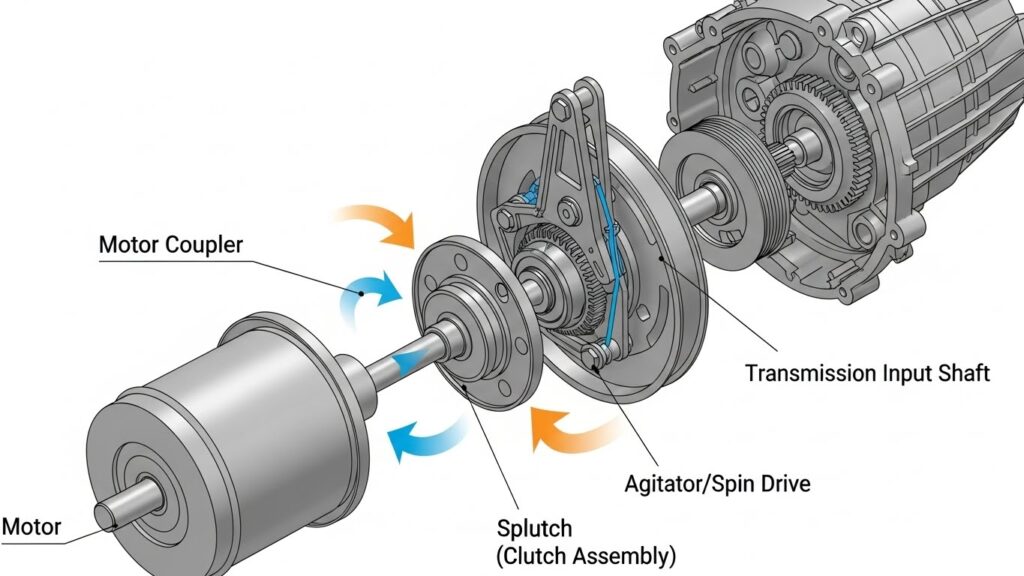
Most top-load washers use the motor to do two jobs: agitate (move clothes back-and-forth) and spin (rotate the basket fast). The machine has to “shift” between those modes. Depending on the model, that shift can involve a shift actuator, a splutch/clutch, a motor coupler, a belt, and/or internal engagement parts in the agitator.
This one split prevents a lot of wasted time. You’re not fixing “a washer.” You’re isolating a subsystem.
The Spin Test split (your fastest shortcut)
| What you observe | What it usually means | Best next move |
|---|---|---|
| Spin works, agitation never starts | Agitate mode isn’t engaging (shift/drive/agitator parts) | Focus on actuator/splutch/coupler + agitator dogs checks |
| Spin does NOT work either | Lid lock/safety, control, motor/capacitor, or major drive failure | Check lid lock behavior + reset + stop line for burning/heat |
| Motor hums/clicks but tub won’t move | Power-transfer slip/jam or protection shutdown | Stop forcing starts; inspect for jams, slipping coupler/belt symptoms |
| Works sometimes, fails more over time | Wear/engagement slipping (clutch/splutch/coupler/actuator) | Track when it fails (wash vs transition vs spin) and match to noise |
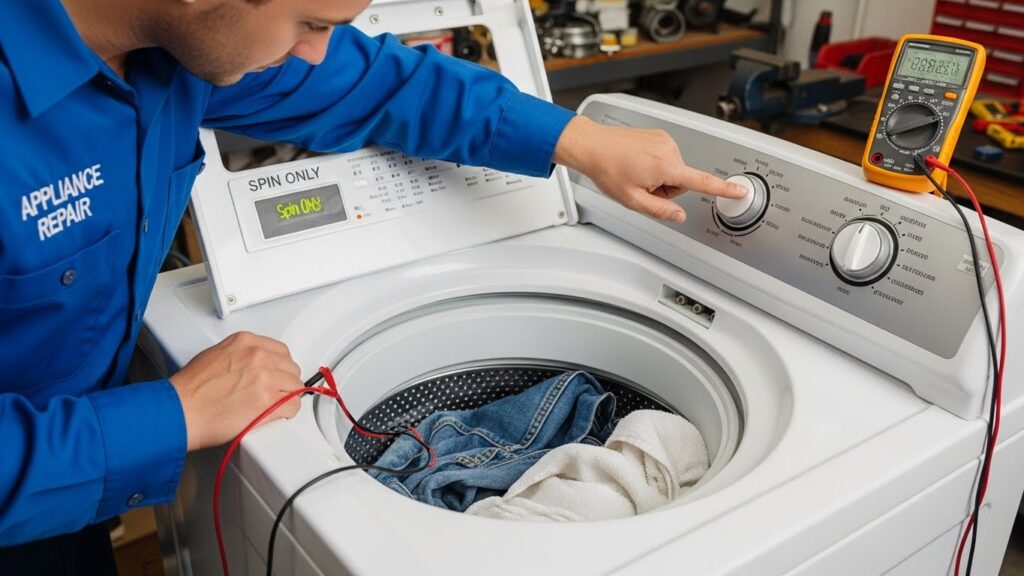
Priority Fix Protocol (safe step-by-step sequence)
- Confirm the behavior with a clean test (3–7 minutes):
Run a short cycle and watch: fill → pause → (should) agitate. Then run Spin Only and confirm whether the basket truly spins.
Write down what you saw. That timeline is more valuable than guessing a part. - Do a “load reality check” (3 minutes):
A single heavy item or lopsided load can trigger imbalance logic that prevents motion (it can look like a failure).
For testing, use a small balanced load or test with an empty tub if your model allows it safely. - Check lid lock/safety signals (2 minutes):
If the lid lock light is blinking or you can’t get a solid lock confirmation, the washer may refuse agitation/spin for safety.
Clean the latch area (detergent buildup matters), fully close the lid, and avoid any bypass attempts. - Agitator “hand spin” check (power OFF) (1 minute):
If your washer has a two-piece agitator, try rotating the upper section by hand. It should have one-direction catch/resistance.
If it spins freely both ways, suspect worn agitator dogs (a common, inexpensive mechanical failure). - Listen for the shift moment (1–2 minutes):
When the washer changes modes (wash → spin), you’ll often hear a brief click/clunk/hum as the machine attempts to engage the mechanism.
Repeated clicking, weak engagement sounds, or “tries then stops” behavior often points to the shift/drive path. - Know your stop line (smart boundary):
Burning smell, hot outlet/cord, sparks/arcing, repeated breaker trips, or loud grinding = unplug and stop.
Forcing repeated restarts can escalate damage and hide the original clue.
Pro insight: why “it fills” doesn’t prove the motor is healthy
Filling only proves the inlet side and valves are working. Agitation/spin requires the lid-safe signal plus a successful power-transfer engagement. That’s why the Spin Test is so powerful—it tests the entire drive path under real load conditions.
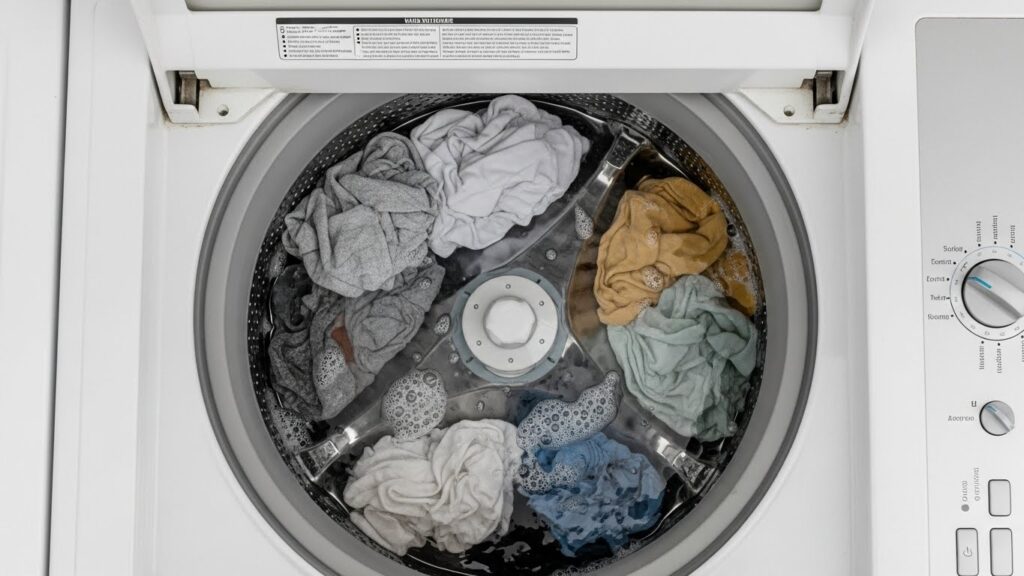
Diagnostic matrix (symptoms → safest next move)
| Symptom | Most likely bucket | Best first check | Avoid |
|---|---|---|---|
| Spin works; agitation never starts | Mode engagement / shift path | Listen for shift + check agitator dogs + track transition noises | Replacing the motor first |
| Neither spin nor agitation works (but it fills) | Lid lock/safety or control/motor path | Lid lock behavior + power reset + stop line checks | Bypassing lid switch |
| Hums/clicks, then stops | Jam, slipping engagement, or protection shutdown | Stop forcing starts; inspect for obvious obstructions and abnormal heat | Repeated restart attempts |
| Intermittent: works sometimes | Wear slipping (clutch/splutch/coupler/actuator) | Document “when it fails” (wash vs transition vs spin) + noise pattern | Assuming it will self-fix |
15-minute timeline (quick checks first, deeper checks later)
| Test | Time | What you learn |
|---|---|---|
| Spin Only confirmation | 3–7 min | Separates agitation-only issues from drive/control path failures. |
| Balanced test load | 5–10 min | Rules out imbalance logic that can mimic failures. |
| Lid lock + latch cleaning | 2–3 min | Eliminates a common safety signal problem that blocks motion. |
Common mistakes (that waste time and money)
- Replacing the motor first: motors are expensive and often not the cause. Use the Spin Test split.
- Skipping lid lock clues: a blinking/unstable lid signal can block agitation/spin by design.
- Testing with a single heavy item: imbalance sensing can prevent movement and mimic a failure.
- Forcing repeated restarts when it hums/clicks: this can increase wear and blur the original diagnostic signal.
Stop DIY and get service if you notice:
Burning electrical smell, sparks/arcing, hot cord/outlet, repeated breaker/GFCI trips, smoke, “tingle” sensation on the cabinet, or loud metal-on-metal grinding during mode changes. Unplug and do not run further test cycles.
FAQ
Why does my top-load washer fill but won’t start washing?
Filling proves the inlet system is working. No washing motion usually means the washer can’t engage agitation. Run Spin Only. If it spins, focus on engagement/shift parts (actuator/splutch/coupler/agitator components). If it won’t spin either, check lid lock/safety signals and the control/motor path.
If it spins but won’t agitate, what direction is most likely?
That pattern usually points away from a “dead motor” and toward the system that engages wash motion. The most productive next step is to document the transition sounds and run the agitator hand-check with power off.
Can a lid switch/lock cause “won’t agitate” even if the washer fills?
Yes. Some models allow filling but restrict agitation/spin if the lid signal isn’t confirmed. Clean the latch area and make sure the lid closes firmly. Avoid bypassing—use manufacturer-safe steps or service support.
Why does it hum, then stop without moving?
Humming can mean the motor is trying to move but the drive system can’t engage (slip, jam, binding) or protection shuts it down. Don’t keep forcing starts. Stop, unplug, and inspect for obvious obstructions and safety red flags.
What are agitator dogs, and how do I know they’re worn?
On many agitator designs, “dogs” are small directional teeth that let the agitator catch one way and slip the other. If the upper agitator section free-spins both directions with no resistance (power off), worn dogs are a common cause.
When is it smarter to stop DIY and call service?
If you get burning smell, sparks/arcing, hot outlet/cord, repeated breaker trips, shock/tingle, smoke, or loud grinding during mode changes, it’s safer to unplug and get professional inspection.
Internal Links
- Washer Not Draining — separates “standing water” causes fast
- Washer Shaking or Vibrating — leveling, off-balance loads, and spin stability checks
- Washer Leaves Detergent Residue — rinse problems, water temperature, and detergent buildup
References
- Whirlpool Product Help: Washer won’t agitate or tumble
- GE Appliances Support: Laundry (washer troubleshooting hub)
Professional disclaimer
This guide is informational and focuses on safe, non-invasive checks. Appliance designs vary by brand and model. If you see safety red flags (burning smell, sparks/arcing, hot outlet/cord, repeated breaker trips, shock/tingle, smoke, or loud grinding), unplug the washer and consult a qualified technician.
Update log
- 2026-01-18 — Consolidated Spin Test split, improved protocol order, expanded safety stop line and matrix clarity.

I publish step-by-step troubleshooting guides for common home appliance issues (washer, dryer, refrigerator, HVAC basics).
Content is written for everyday homeowners and cross-checked with manufacturer manuals, safety guidance, and trusted public resources.
Posts include practical checks, clear stop-signs for safety, and guidance on when it’s better to call a qualified technician. Updates are logged whenever steps or recommendations change.
Safety note: If you smell gas, see burning, or suspect electrical hazards—stop immediately and contact a qualified professional.