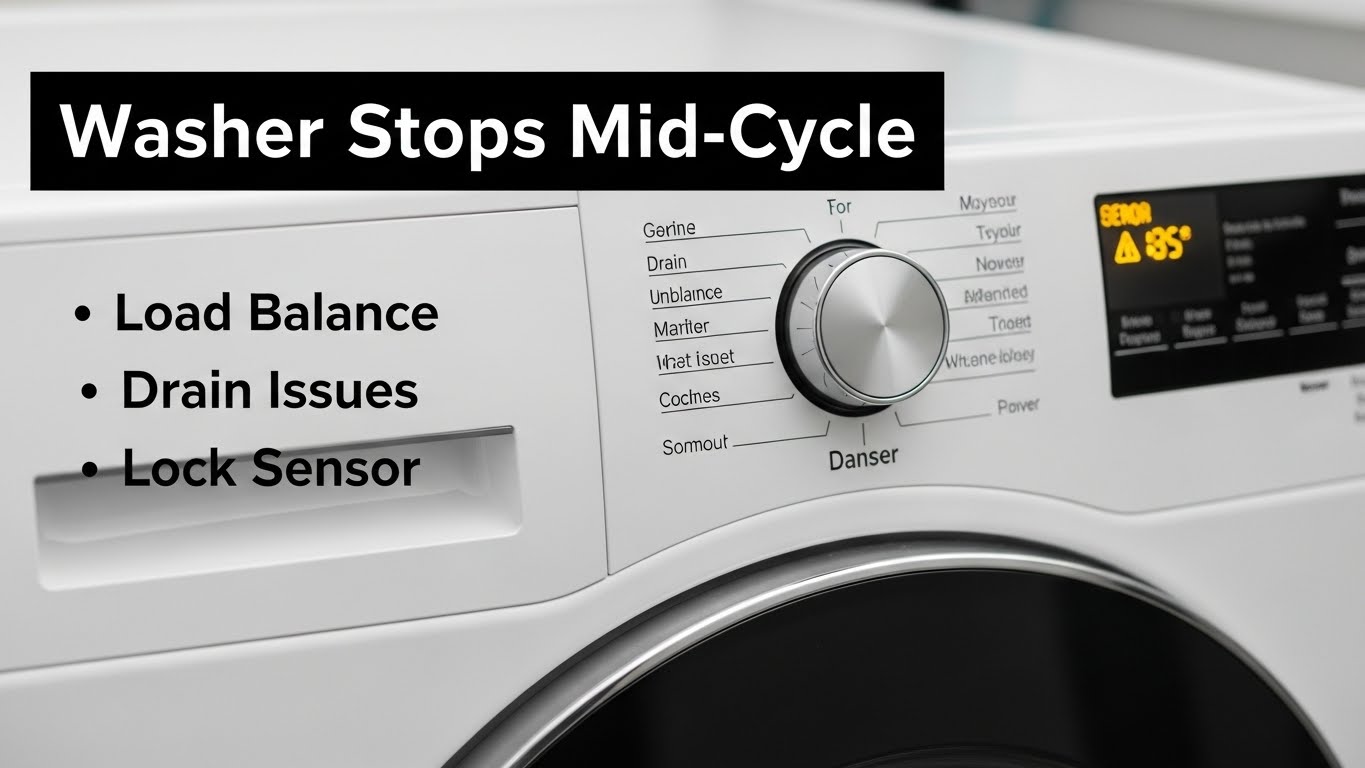
Washer stops mid-cycle? Treat it like a “stage failure,” not a mystery.
A washer that stops mid-cycle is usually doing one of two things: (1) it detected a condition it can’t safely continue with (most often a severe off-balance spin), or (2) it can’t complete a required stage (fill, drain, or lock) within its time/safety window. Your fastest win is to identify which stage it fails on—then you stop guessing.
Fast path (60 seconds, no tools)
- Redistribute the load (one heavy item alone is a classic trigger).
- Peek behind the washer (drain hose pinched/kinked against the wall).
- Run “Drain & Spin” or “Rinse & Spin” to see whether it fails at drain or spin ramp.
Quick read: If it fails only at high-speed spin, think balance / vibration / lock signal. If it stops with water left in the tub, think drain path first.
⚠️ Essential Safety (YMYL-safe)
- Unplug first before touching hoses, moving the machine, or opening any access door/panel.
- Stop immediately if you smell burning, see smoke/sparks/arcing, or notice a hot plug/outlet.
- Flood risk: if water is on the floor, don’t step in it until power is disconnected at the breaker.
- Breaker trips or shock/tingle = unplug and arrange inspection (do not “test again”).
Updated: 2026-01-16 • Plain-English troubleshooting • Non-invasive checks first • References verified at the end
When you walk in and find a tub full of cold, soapy water, the brain jumps straight to “control board.” I get it—mid-cycle stops feel random. But in practice, they’re usually repeatable: the washer is either protecting itself from violent vibration during spin, or waiting on a stage that never completes (fill/drain/lock).
The trick is simple: make the failure show itself on command. Once you can say “it stops during drain” or “it stops right when spin ramps up,” you’ve already eliminated most expensive guesses.
Why off-balance loads trigger a pause or stop (simple physics, real behavior)
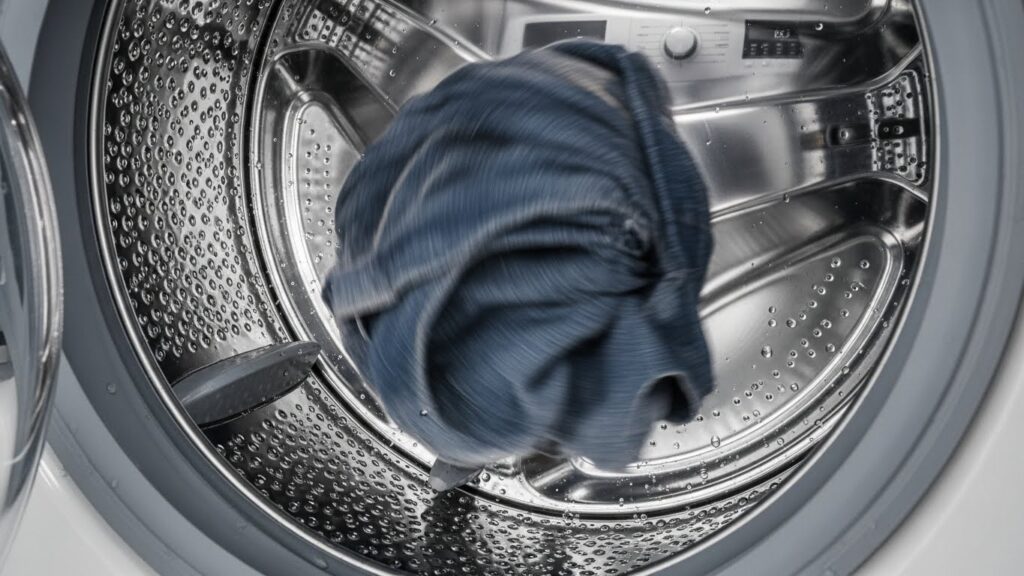
During spin, the washer needs the wet laundry mass to sit evenly around the drum. If one heavy item (bath mat, blanket, jeans) pins to one side, the drum becomes an unbalanced rotating weight. Force rises fast as speed rises—so modern washers slow down, re-tumble, add a bit of water, or halt to prevent damage.
Plain English: A small wobble at low speed can become a big problem at high speed. That’s why “it looks fine” early in the cycle—but fails right when spin ramps up.
| Where it stops | What that often means | Best first test |
|---|---|---|
| During spin / right before spin | Severe imbalance, vibration threshold, lock signal instability | Redistribute load → “Rinse & Spin” |
| During drain | Drain path restricted (hose kink, height issue, filter/pump restriction) | Inspect drain hose path and standpipe height |
| During fill | Slow/no fill (valves not open, inlet screen restricted) | Confirm both supply valves fully open |
Master Fix Protocol (5 steps that mirror real diagnostics)
- Isolate the fail stage (1 minute):
Run Drain & Spin (or Rinse & Spin) and watch when it pauses. Your goal is a clear answer: drain vs spin ramp vs fill. - Rebalance the load (spin fix #1):
Break up “one giant item” loads. Add two or three towels as counterweight. Then re-run Rinse & Spin and listen: banging usually means imbalance, not electronics. - Do the corner-push stability test (spin fix #2):
Push down on diagonal corners. If it rocks, it will hit vibration thresholds sooner. Leveling looks boring, but it’s a top cause of repeated spin interruptions. - Drain path reality check (drain fix):
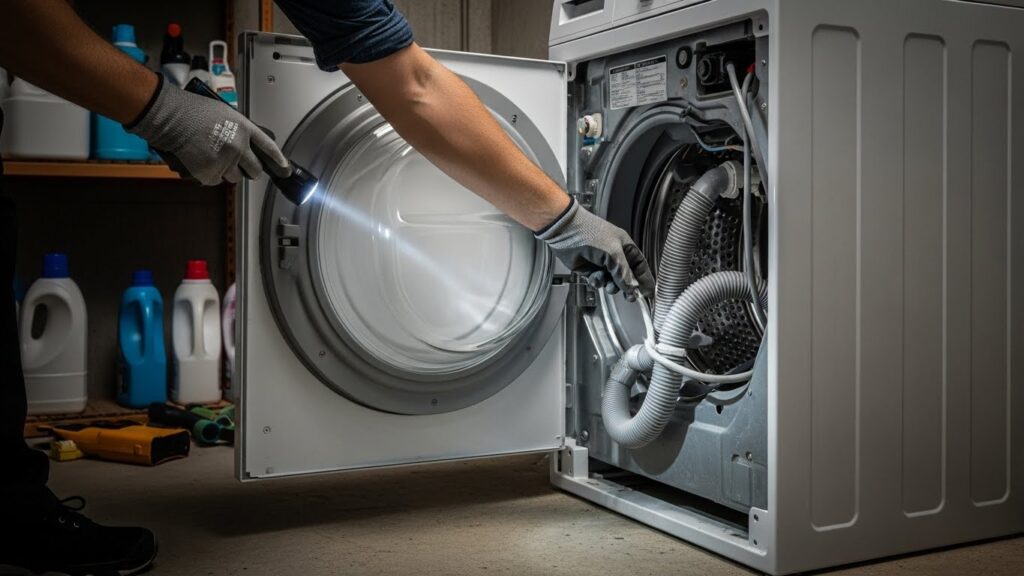
Behind the washer: no hard kinks, no crushing, no “S-bend” trap. If the tub is still full, the washer may refuse to spin for safety until draining is complete. - Door/lid lock behavior check (lock/sensor stage):
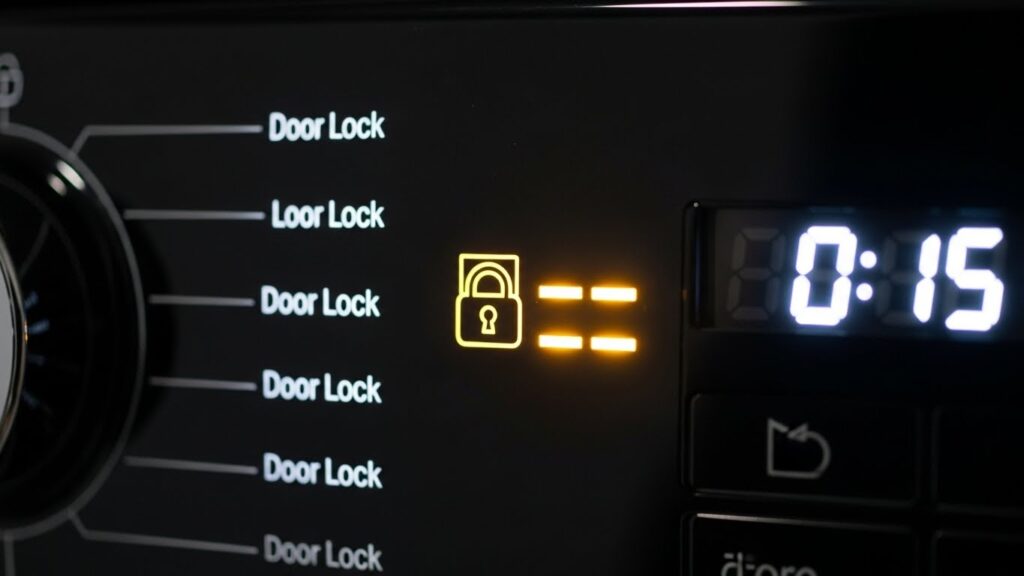
If the lock indicator blinks or won’t stay “solid,” the machine may pause for safety—especially before high-speed spin. Re-close firmly. If lock behavior persists across loads, treat it as service-safe territory.
Pro rule (saves money)
If it stops at the same moment every time (for example, right as spin begins), you’re not dealing with “random.” You’re hitting a repeatable threshold (balance, vibration, drain completion, or lock signal).
Diagnostic matrix (symptom → most likely bucket → safest next action)
| Symptom | Most likely bucket | Safe next action | What to avoid |
|---|---|---|---|
| Stops during spin / loud banging | Severe imbalance / vibration limit | Redistribute + add small items + re-test | Repeated restarts without changing the load |
| Stops with water still in tub | Drain step not completing | Check hose path/height → drain-focused troubleshooting | Forcing spin while water remains |
| Pauses, then resumes | Self-correction / sensing behavior | Wait a few minutes; reduce load size next run | Overpacking bulky items in HE washers |
| Trips breaker / hot plug / sparks | Electrical fault risk | Stop, unplug, inspection recommended | “One more try” cycling |
Testing timeline (what to run first, and what it proves)
| Test | Time | If it fails here… |
|---|---|---|
| Drain-only / cancel-drain | 1–5 min | Think drain path restriction or pump/filter issue. |
| Rinse & Spin | 5–15 min | Fails at ramp/high speed? Think balance/vibration/lock threshold. |
| Small test load | 10–20 min | Overload/bulk distribution was your root cause. |
Common mistakes (that turn a small issue into a big one)
- Restarting the same overloaded load repeatedly: you keep failing at the same spin threshold.
- Assuming “pause = broken”: many HE washers pause while attempting re-balance.
- Ignoring rocking/leveling: a slightly unlevel washer hits vibration limits early.
- Forcing the door/lid: forcing can worsen latch alignment and doesn’t fix the lock signal.
- Parts guessing: avoid buying boards/locks until you’ve isolated drain vs spin vs fill.
When to stop DIY and call for help
Unplug and seek professional inspection if you notice burning smell, smoke/sparks/arcing, a hot plug/outlet, repeated breaker trips, shock/tingle sensations, or loud grinding/metal-on-metal sounds. Those are safety or mechanical failure signals—not “try harder” moments.
FAQ
Why does my washer stop exactly when the spin starts?
That’s the high-torque transition. The washer checks vibration and lock status as it ramps speed. If the load is off-balance or the lock signal isn’t stable, it aborts for safety.
Is it normal for a washer to pause and tumble again?
Yes. Many HE washers pause to redistribute an off-balance load. A short pause followed by tumbling can be normal “self-correction,” especially with bulky items.
My washer stops mid-cycle with water still inside—what should I check first?
Start with the drain hose behind the washer: kinks, crushing, awkward bends, or incorrect standpipe height. If the drain stage can’t finish, the washer may stop and refuse to spin.
Can one blanket or rug really cause a stop?
Absolutely. A single heavy item often pins to one side. Add a few towels as counterweight or wash bulky items in smaller, balanced loads.
The door/lid lock light blinks—does that matter?
It can. A blinking or unstable lock signal may pause the cycle for safety, especially before high-speed spin. Re-close firmly and re-test. Persistent blinking across loads can require service.
Will a power surge or brownout cause a mid-cycle stop?
It can. If you suspect a glitch, do a safe reset: unplug for about 10 minutes, then run a drain-only or rinse-and-spin test to see if the failure repeats at the same stage.
Internal Links
https://homefixatlas.com/best-filters-for-portable-ac-and-heater-efficiency/
https://homefixatlas.com/humidifier-mold-prevention/
https://homefixatlas.com/dehumidifier-not-collecting-water/
References
Safety notice
This guide is informational and focuses on safe, non-invasive checks. If you see electrical symptoms (sparks, burning smell, hot outlet), repeated breaker trips, or any shock/tingle, unplug the washer and consult a qualified technician.
Update log: 2026-01-16 — consolidated both drafts, removed redundancy, strengthened stage-based diagnostics, and expanded FAQ for SERP coverage.

I publish step-by-step troubleshooting guides for common home appliance issues (washer, dryer, refrigerator, HVAC basics).
Content is written for everyday homeowners and cross-checked with manufacturer manuals, safety guidance, and trusted public resources.
Posts include practical checks, clear stop-signs for safety, and guidance on when it’s better to call a qualified technician. Updates are logged whenever steps or recommendations change.
Safety note: If you smell gas, see burning, or suspect electrical hazards—stop immediately and contact a qualified professional.