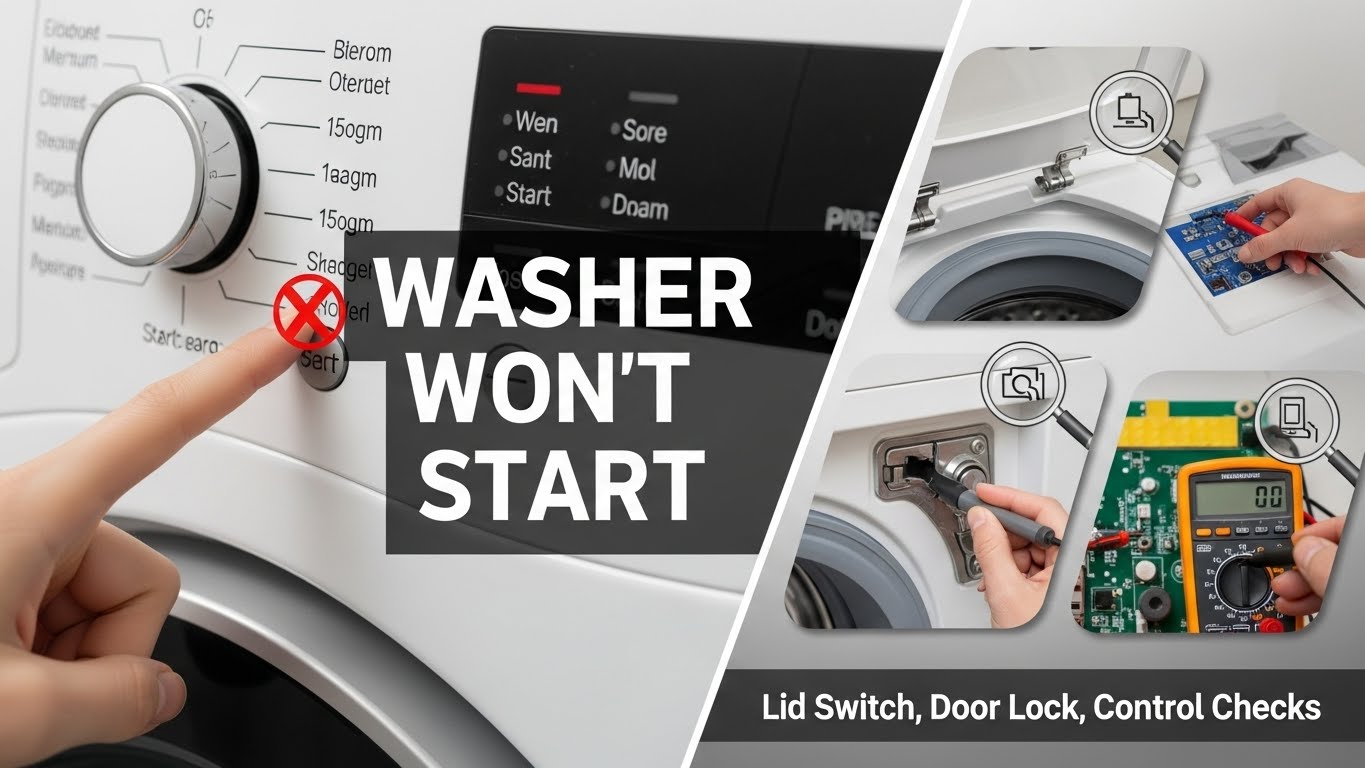
Washer won’t start (but it has power)? Do these 3 checks in order.
In most “won’t start” cases, the washer is blocking the cycle because it doesn’t think the lid/door is safely closed, or the control didn’t accept the Start command. The fastest path is: firm close → hold Start → power reset.
Quick answer (no tools)
- Close the lid/door firmly (don’t gentle-close).
- Press and hold Start for up to 3 seconds (some models require a hold).
- Unplug for 5 minutes, then try again (simple control reset).
Those two timing checks (Start hold + 5-minute reset) are straight out of manufacturer troubleshooting guidance.
⚠️ Safety box (don’t skip this)
- Unplug before any internal checks (switches, wiring, control housing).
- Stop immediately if you smell burning, see sparks, or hear repeated buzzing/arcing.
- If it trips a breaker repeatedly or you feel any shock, unplug it and have it inspected.
Updated: 2026-01-16 • Plain-English diagnostics • References verified at the end
This problem is sneaky because it feels like “the washer is dead,” even though the lights work. Most of the time, it’s not the motor. It’s the washer refusing to start because one safety signal isn’t being “seen.” The goal here is to catch that fast—without guessing, and without taking unsafe shortcuts.
How a washer decides it’s “allowed” to start (simple logic)
Think of your washer like a bouncer at a club. It won’t let the cycle begin unless it gets a few “yes” signals: the lid/door is closed, the latch/lock is engaged (many front-loaders), and the control accepted your Start command.
| Signal | What it means | What you’ll see when it fails |
|---|---|---|
| Lid/door closed | Washer believes it’s safe to run. | Beeps, “won’t start,” or nothing happens after Start. |
| Lock engaged (many front-load) | Door is physically locked for operation. | Cycle won’t begin; lock indicator may blink or never turns solid. |
| Start accepted | Some models need a short hold to confirm Start. | Quick tap fails; holding Start works. |
Priority Fix Protocol (5 steps, fast to slower)
- Firm-close test (30 seconds):
Close the lid/door firmly. If it’s a front-load, check for a sock edge or gasket fold blocking a full close.
Then try Start again. - Start-hold test (10 seconds):
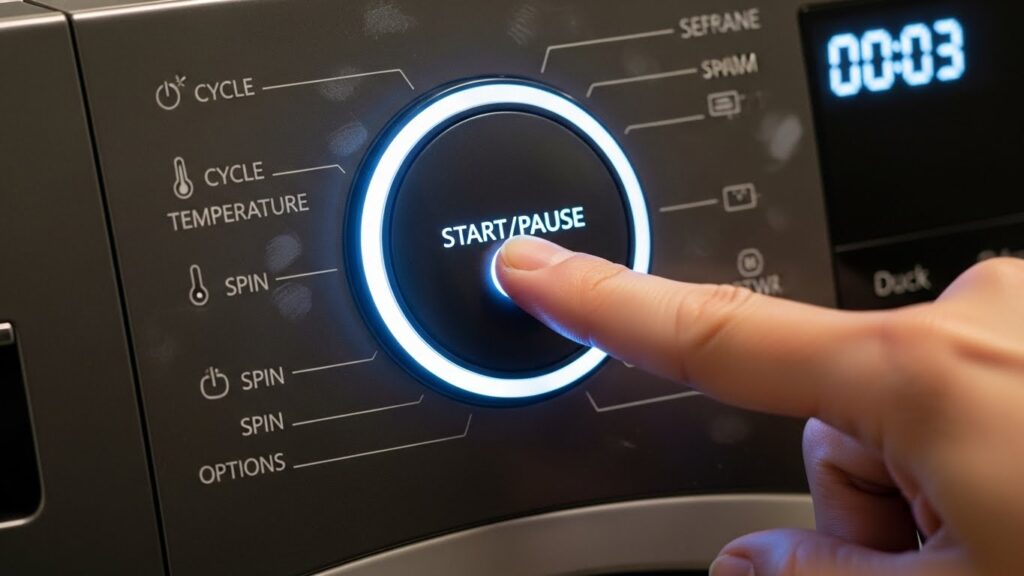
Press and hold Start for up to 3 seconds (count it out).
If holding works, you’ve likely found a “command acceptance” quirk—not a major failure. - Control reset (simple reboot):
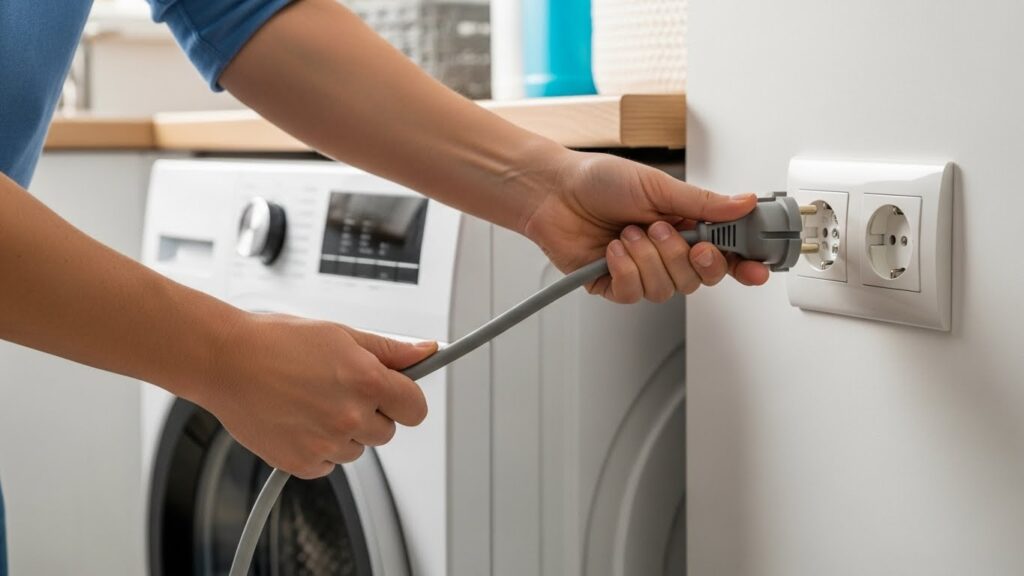
Unplug the washer for 5 minutes, then plug it back in.
This clears stuck states the same way rebooting a device often does. - Lid/door signal reality-check (no disassembly):
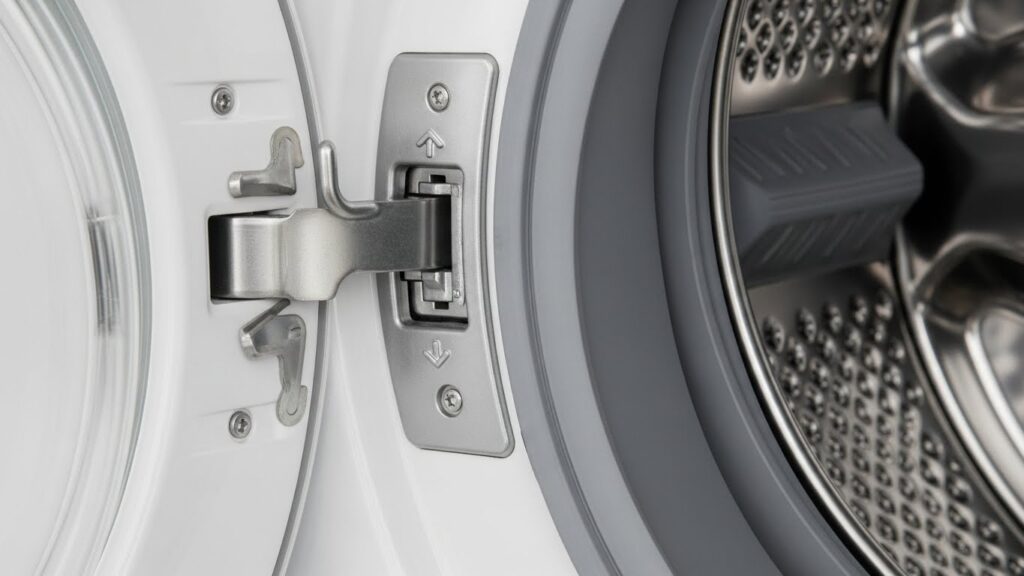
If it beeps or refuses, open and close again with a firmer push at the latch area (not the glass).
If the feel is “mushy” or misaligned, you may have a latch/lock alignment problem. - Power sanity check (safety-first):
Plug directly into a wall outlet (no power strip). If the breaker trips or you feel a tingle, stop.
That’s not a “keep trying” problem—unplug and get it inspected.
Pro tip (tiny detail that matters)
If your model has a “Control Lock / Child Lock” feature, double-check it isn’t enabled. A locked panel can feel exactly like a broken washer—buttons light up, but Start does nothing.
Quick symptom matrix (pick the most accurate row)
| What you see | Most likely bucket | Best first move | If it still fails |
|---|---|---|---|
| Lights on, Start does nothing | Start not accepted / control state | Hold Start up to 3 seconds | Unplug 5 minutes, retry |
| Beeps and refuses to run | Door/lid not “seen” as closed | Firm close at latch area | Check latch alignment; consider service |
| Starts then immediately stops | Lock signal unstable | Reset + re-close firmly | Persistent issue = service timing |
| Breaker trips when you try | Electrical fault / unsafe condition | Stop and unplug | Inspection recommended |
Timing table (what to try, and how long)
| Action | How long | Why it helps |
|---|---|---|
| Hold Start | Up to 3 seconds | Some controls require a hold to accept the command. |
| Unplug reset | 5 minutes | Clears stuck logic states (like rebooting a device). |
| Re-close and retry | 2–3 attempts | Confirms whether the latch is borderline/intermittent. |
Common mistakes (I see these all the time)
- Quick-tapping Start: you’d be surprised how many models need a short hold.
- Closing the door softly: gentle-close can fail to fully seat the latch signal.
- Skipping the reset: unplugging 5 minutes is faster than chasing random “codes.”
- Retrying after a breaker trip: that’s a safety signal, not a “try again” moment.
I’ve seen people order parts first because it “felt electrical,” then later realize the door was just barely not seating the latch. The boring checks are boring for a reason—they catch a lot.
Serious cases (call a pro)
If the washer repeatedly trips a breaker, gives any shock/tingle sensation, smells like burning, or shows sparking/arcing: unplug it and have it inspected. Don’t keep testing “one more time.”
FAQ
Why does my washer have power but won’t start?
Usually it’s a “permission” issue: the washer doesn’t think the lid/door is safely closed, or it didn’t accept the Start command. Do the firm-close test, then hold Start up to 3 seconds, then reset power.
Do I really have to hold the Start button?
On some models, yes. Manufacturer troubleshooting guidance notes that Start may need to be held for up to 3 seconds to engage a cycle.
What if it beeps but still won’t begin?
Beeping often points to a door/lid signal problem—something isn’t being sensed as “fully closed.” Re-close firmly at the latch area and check for gasket folds or clothing caught near the door.
Will unplugging actually reset the washer?
It can. A 5-minute unplug is a common manufacturer-recommended way to cycle power and reset the control.
Why does it start only sometimes?
Intermittent starts usually happen when the latch is borderline: it closes “enough” sometimes, and not enough other times. Firm-close consistency is the easiest way to test that without opening the machine.
Should I bypass the lid/door switch to test it?
No. Safety interlocks exist to prevent injury. If the washer continues to refuse starting after the safe checks, service is the safer next step.
Related HomeFix Atlas guides
Washer Not Draining — Complete Troubleshooting Guide
Washer Shaking or Vibrating — Leveling & Stability Fixes
Washer Smells Bad — Mold & Odor Deep Cleaning
References
- Whirlpool Product Help: Not Starting or Not Operating (Front Load) — Start button hold (up to 3 seconds) and power cycle (unplug 5 minutes).
- U.S. CPSC: Electrical Safety (appliance trips breaker / shock) — Unplug and have it repaired/replaced if it repeatedly trips a breaker or shocks you.
Safety notice
This guide covers safe, surface-level troubleshooting. If you notice burning smells, sparks, water near outlets, repeated breaker trips, or any shock/tingle sensation, unplug the washer and contact a qualified technician. Never bypass safety interlocks.

I publish step-by-step troubleshooting guides for common home appliance issues (washer, dryer, refrigerator, HVAC basics).
Content is written for everyday homeowners and cross-checked with manufacturer manuals, safety guidance, and trusted public resources.
Posts include practical checks, clear stop-signs for safety, and guidance on when it’s better to call a qualified technician. Updates are logged whenever steps or recommendations change.
Safety note: If you smell gas, see burning, or suspect electrical hazards—stop immediately and contact a qualified professional.