
Why does my washer leave detergent residue on clothes?
A washer leaves detergent residue when soap doesn’t fully dissolve or doesn’t rinse out. The usual triggers are too much detergent, cold cycles, overloading, and (often overlooked) hard water. Start with the fastest fix: cut detergent, switch to warm, and turn on Extra Rinse. The step-by-step diagnosis below helps you lock the exact cause.
Last updated: January 4, 2026
Safety First: Do not change settings while a cycle is running. If you remove the detergent drawer or wipe inside the dispenser area, power the washer off (and unplug if your hands will be near water or internal edges). Always follow your washer’s user manual for temperature, rinse options, and cleaning cycles.
Quick triage: what you’re seeing → what it usually means
- White streaks on dark clothes: detergent didn’t dissolve (cold cycle / overdosing / too little water movement).
- Crunchy or stiff fabric: soap + minerals stuck in fibers (often hard water + too much detergent).
- Musty smell after washing: residue feeding buildup inside the tub (needs rinse changes + a maintenance clean).
- Residue happens “only sometimes”: load type (towels/jeans) + water temp + dose changed without you noticing.
Tools Needed
| Item | Purpose |
|---|---|
| HE detergent (liquid or powder) | Reduces oversudsing in modern low-water washers |
| Measuring spoon or small cup | Stops “cap line” overdosing (the most common cause) |
| Soft cloth + warm water | Cleaning detergent drawer/dispenser film safely |
| Owner’s manual | Confirms “Extra Rinse,” “Deep Fill,” and “Clean Washer” options |
Table of Contents
- 1) The “Residue Map” (symptom → cause → first fix)
- 2) Why detergent residue happens in modern washers
- 3) Fast Fix Protocol (10 minutes to change the outcome)
- 4) Hard water check (the silent reason it keeps coming back)
- 5) Dispenser & tub buildup (when settings aren’t enough)
- 6) Prevention rules that actually stick
- 7) FAQ
- 8) How this guide was prepared
- 9) Important safety & information notice
- 10) References
- Related Guides on This Site
1) The “Residue Map” (symptom → cause → first fix)
People think residue is “a detergent problem.” Most of the time it’s a settings + load movement problem. Use this table like a quick diagnosis so you don’t randomly change five things and still feel stuck.
| What you notice | Most likely cause | First fix to try |
|---|---|---|
| White streaks on dark shirts | Cold cycle + too much detergent OR overloaded drum | Warm wash + cut dose + Extra Rinse |
| Stiff, “crunchy” towels | Hard water minerals binding to soap | Reduce detergent + add Extra Rinse + run a maintenance clean |
| Soapy feel even after drying | Insufficient rinsing in HE spray rinses | Extra Rinse (or Deep Fill if available) |
| Residue “sometimes,” not always | Bulky loads (jeans/bedding) trapping detergent | Smaller load + Extra Rinse + warm |

2) Why detergent residue happens in modern washers
Older washers used a lot of water, so they “forgave” overdosing. Modern HE washers clean efficiently, but they’re less forgiving: less water means the dose and rinse choices matter more.
- Overdosing: more detergent creates more suds—suds don’t rinse cleanly in low-water cycles.
- Cold cycles: some detergents struggle to dissolve in very cold water (especially powder).
- Overloading: clothes can’t move freely, so rinse water can’t penetrate the layers.
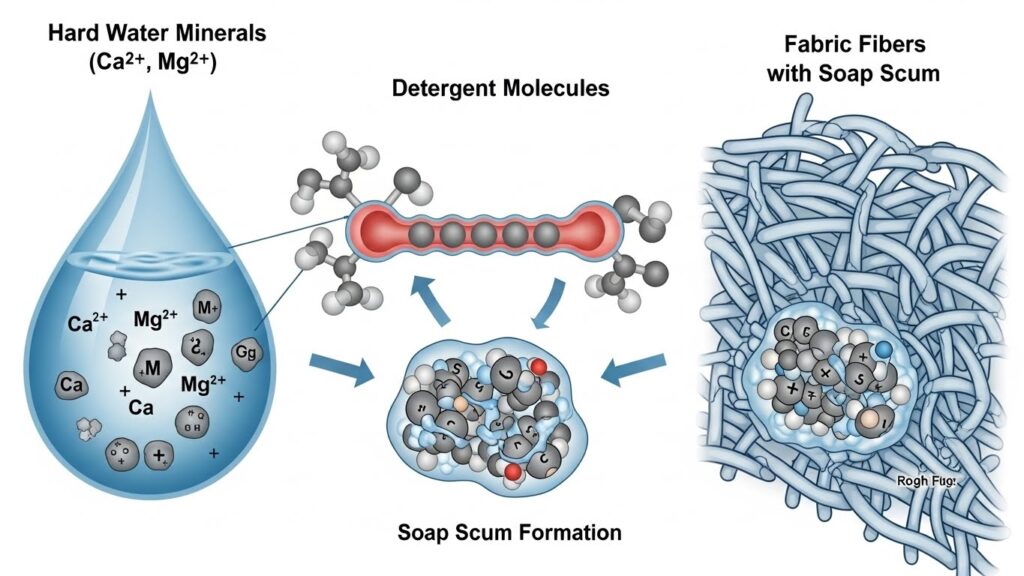
- Hard water: minerals bind to detergent and fabrics, leaving a film or flakes.
- Dispenser/tub buildup: sticky detergent film delays release or re-deposits onto clothes.
Reality check: If residue improves when you use less detergent, your washer wasn’t “weak” — it was simply being overwhelmed by soap in a low-water environment.
3) Fast Fix Protocol (10 minutes to change the outcome)
This is the order that solves the majority of cases without tools, without drama. Try it for 2–3 loads before concluding it “didn’t work.”
Step 1 — Cut detergent (yes, really)
Ignore big cap lines. For a normal load in an HE washer, start by using about half of what you’ve been using. If your clothes are lightly worn (not heavily soiled), use even less.
Step 2 — Switch cold → warm (for everyday loads)
Warm water improves detergent dissolving and rinse-out for many households. Save cold cycles for delicates or lightly soiled items, and if you use cold often, prefer liquid or “cold-water” detergent.
Step 3 — Turn on Extra Rinse (or Deep Fill if your washer has it)
Extra Rinse is the easiest way to stop detergent from staying trapped in thick fabrics. It matters most for towels, jeans, hoodies, bedding, and athletic wear.
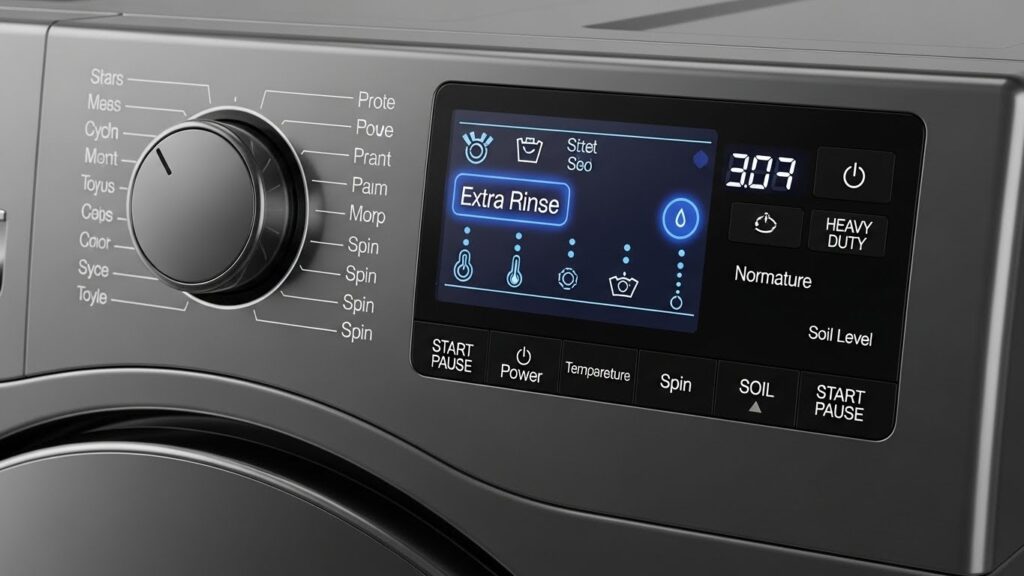
Step 4 — Rewash affected clothes the smart way (no more detergent)
If residue is already on clothes, don’t add more soap to “fix” it. Run Rinse & Spin (or a short cycle) with no detergent. If your washer allows it, add Extra Rinse.
Stop point: If you’ve reduced detergent + moved to warm + used Extra Rinse for 2–3 loads and residue still returns, jump to the hard water check and dispenser/tub buildup sections.
4) Hard water check (the silent reason it keeps coming back)
Hard water is the sneaky one because your washer can look “fine” and still leave residue. Minerals can bind with detergent and stick to fabric—especially towels.
Fast hard-water clues (no lab test needed)
- You often see spots on glassware or scale around faucets/shower heads.
- Soap/shampoo feels like it takes “forever” to rinse off.
- Towels feel stiff even when you’re not overdosing detergent.
If these clues match your home, the best move is still the boring one: use less detergent, rinse better, and keep the washer clean. In hard water, “more soap” backfires faster.
5) Dispenser & tub buildup (when settings aren’t enough)
Detergent residue doesn’t only stay on clothes—it can build up inside the detergent drawer, dispenser channel, and even the tub area. That buildup can release at the wrong time and re-coat fabrics.
Dispenser check (5 minutes)
- Pull the detergent drawer out (if your model allows).
- Rinse with warm water and wipe away any sticky film.
- Check the housing where the drawer slides in—wipe visible residue.
Run a maintenance clean cycle
Use your washer’s “Clean Washer” or maintenance cycle on the schedule recommended in your manual. If your brand recommends a specific washer cleaner, follow that guidance. (This is one of those spots where “do what the manual says” genuinely matters.)
Important: Avoid mixing cleaning chemicals. If you use any cleaning product, follow label instructions and your washer manual. When in doubt, use the washer’s official maintenance routine.
6) Prevention rules that actually stick
- Measure detergent: small dose beats “cap line guessing.”
- Match detergent to temperature: liquid works better for cold; warm helps most detergents rinse cleaner.
- Don’t pack the drum: clothes need room to move so rinse water can pass through layers.
- Use Extra Rinse for bulky loads: towels/jeans/bedding trap soap.
- Run a maintenance clean: keeps residue from building in hidden spaces.
- Leave the door open after washing (when possible): helps the tub dry and reduces sticky film + odor risk.
7) FAQ
Is detergent residue harmful?
It can be irritating—especially for sensitive skin—because detergent left in fibers may contact skin for hours. If anyone in the household reacts, prioritize Extra Rinse and avoid overdosing.
Does liquid detergent leave less residue than powder?
Often, yes—especially in cold water. Powder can struggle to dissolve in very cold cycles. In warm water, both can work well if the dose is correct.
Why does residue show up only on some loads?
Bulky items (towels, jeans, bedding) trap detergent in layers. If you used the same dose you use for smaller loads, residue becomes more likely.
How do I remove residue that’s already on dried clothes?
Rewash using Rinse & Spin (or a short cycle) with no detergent. Add Extra Rinse if available. This clears detergent without adding new soap to the fabric.
When should I stop DIY and call a technician?
If residue persists after multiple loads with correct dosing + warm water + Extra Rinse, and you’ve cleaned the dispenser and run a maintenance cycle, it may be a water supply issue, a drainage/rinse performance problem, or internal buildup that needs professional service.
8) How this guide was prepared
This guide is built around common HE washer behavior (low-water washing and spray rinsing), plus manufacturer-style best practices: correct dosing, temperature matching, rinse optimization, and routine maintenance. The goal is a safe, user-level diagnosis that avoids unnecessary disassembly.
9) Important safety & information notice
This article is for general informational purposes only and does not replace your washer’s user manual or professional service advice. Improper settings, incorrect cleaners, or unsafe handling can affect performance, warranty, or safety. If you are unsure, follow the manufacturer’s instructions or consult a qualified technician.
10) References
- Consumer Reports — How Much Laundry Detergent to Use
- Energy.gov — Washing Machines (efficiency & operation basics)
Related Guides on This Site
- Washer Not Draining: Quick Checks That Fix Most Cases
- Washer Smells Bad: Why Odors Return (and How to Stop Them)
- Washer Shaking or Vibrating: Balance, Load, and Floor Fixes

I publish step-by-step troubleshooting guides for common home appliance issues (washer, dryer, refrigerator, HVAC basics).
Content is written for everyday homeowners and cross-checked with manufacturer manuals, safety guidance, and trusted public resources.
Posts include practical checks, clear stop-signs for safety, and guidance on when it’s better to call a qualified technician. Updates are logged whenever steps or recommendations change.
Safety note: If you smell gas, see burning, or suspect electrical hazards—stop immediately and contact a qualified professional.