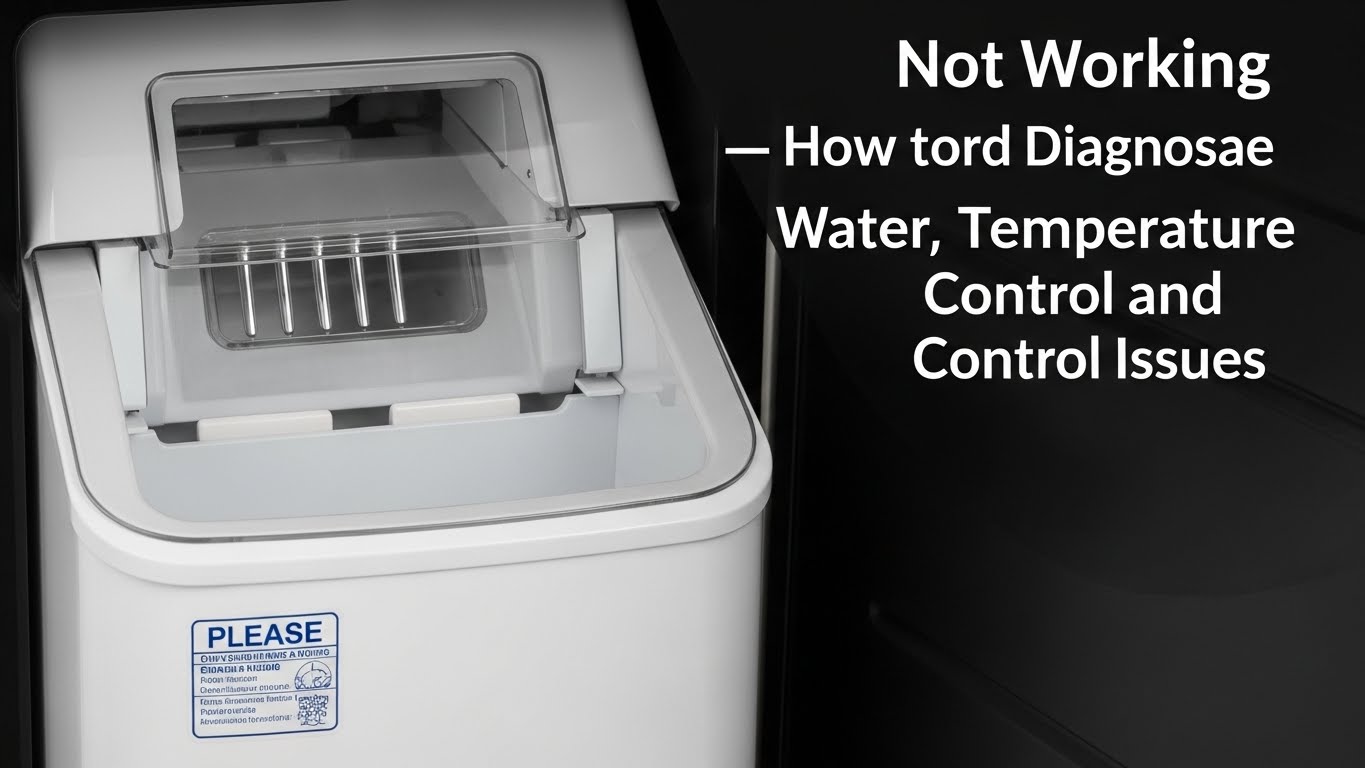
Why is my ice maker not working?
An ice maker not working is most often caused by water supply problems, freezer temperature above 0°F (-18°C), or a clogged filter or inlet valve. Many issues can be identified safely without tools. Step-by-step checks with photos are explained below.
Safety First: Unplug the refrigerator or turn off power at the breaker before inspecting wiring or removing panels. Shut off the household water supply before disconnecting any water lines.
Tools Needed
| Tool | Purpose |
|---|---|
| Freezer thermometer | Confirming ice-making temperature |
| Flashlight | Inspecting fill tube and bin area |
| Towels | Catching water during checks |
How Ice Maker Failures Usually Start
Last updated: December 26, 2025
When an ice maker is not working, the root cause is often upstream—water flow, temperature, or simple mechanical blockage—rather than a failed ice maker module. Most manufacturer troubleshooting sequences start with water supply and freezer temperature before any part replacement.
Quick triage:
- No ice at all: check water supply and filter first
- Small or hollow cubes: low water pressure or restricted flow
- Ice clumped together: temperature or fill-tube freezing
Table of Contents
- 1) Basic Checks That Fix Many Ice Makers
- 2) Most Common Reasons an Ice Maker Stops Working
- 3) Step-by-Step Fix Protocol
- 4) Preventing Future Ice Maker Problems
- 5) FAQ
- 6) How This Guide Was Prepared
- 7) Important Safety Notice
- 8) References
1) Basic Checks That Fix Many Ice Makers
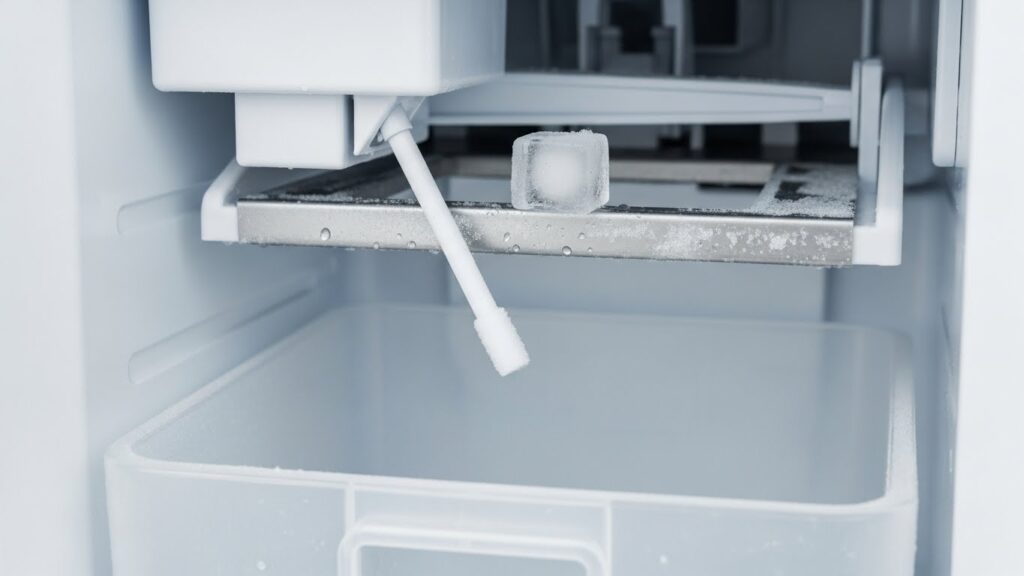
Before assuming a failed ice maker, confirm these basics:
- Freezer temperature: near 0°F (-18°C)
- Water supply valve: fully open
- Ice maker switch: turned on
- Ice bin: seated correctly
2) Most Common Reasons an Ice Maker Stops Working
- Restricted water flow: clogged filter or kinked supply line
- Warm freezer: ice maker won’t cycle if temperature is too high
- Frozen fill tube: prevents water from entering the mold
- Faulty inlet valve: valve doesn’t open or opens partially
- Control or sensor issues: less common, usually after basics fail
Reality check: Replacing the ice maker without fixing water or temperature issues often leads to repeat failures.
3) Step-by-Step Fix Protocol
Step 1 — Verify freezer temperature
Place a thermometer in the freezer for 24 hours. If temperatures stay above 10°F (-12°C), ice production may slow or stop completely.
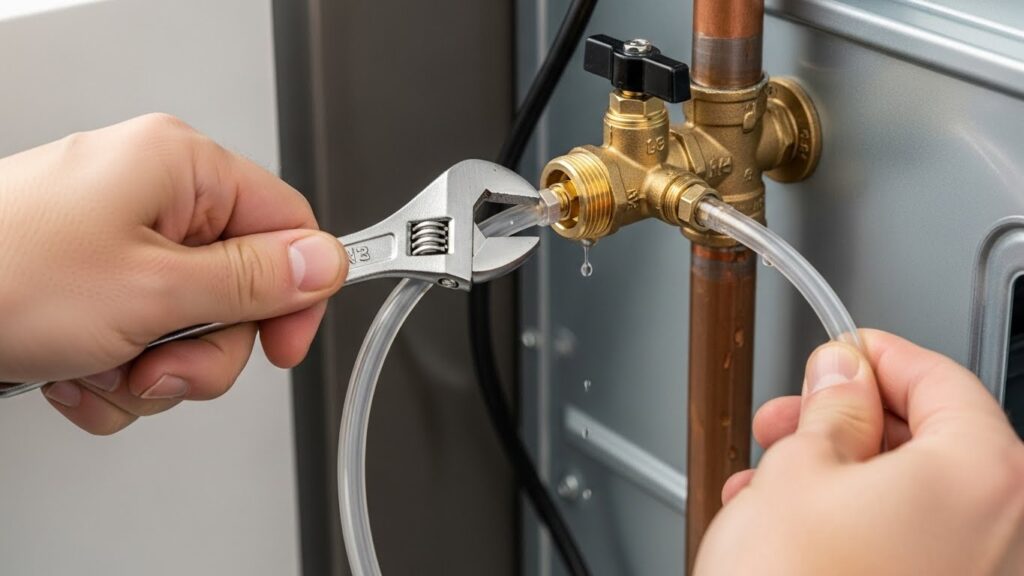
Step 2 — Inspect the water supply line
Check behind the refrigerator for kinks or pinched tubing. Confirm the shutoff valve is fully open.
Step 3 — Replace or bypass the water filter
A clogged filter can restrict flow. If the filter is overdue, replace it. Some models allow temporary bypass testing (refer to your manual).
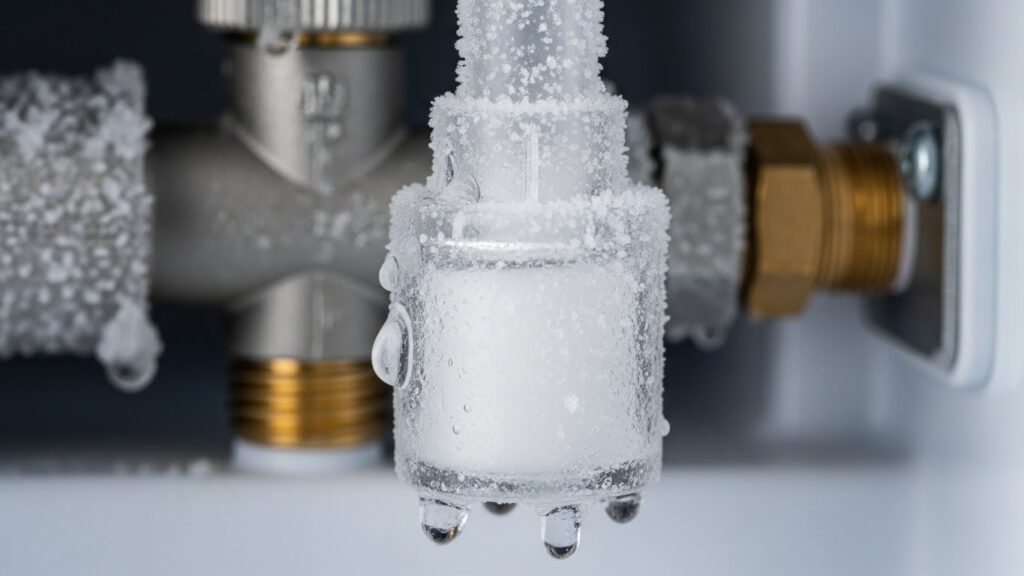
Step 4 — Check for a frozen fill tube
If the fill tube is iced over, gently thaw it using warm air. Do not use sharp tools or excessive heat.
Step 5 — Consider the inlet valve
If water supply and temperature are correct but no water enters the ice maker, the inlet valve may not be opening fully. This step often requires professional testing.
Stop point: Electrical testing or valve replacement is best handled by a qualified technician.
4) Preventing Future Ice Maker Problems
- Replace water filters on schedule
- Keep freezer temperature stable
- Inspect supply lines annually
- Avoid frequent long freezer door openings
5) FAQ
Why did my ice maker stop working suddenly?
Sudden failures are often caused by frozen fill tubes or water supply interruptions.
Can a dirty water filter stop ice production?
Yes. Reduced water flow is one of the most common causes.
How long does it take for ice to return after fixing the issue?
Most ice makers need 12–24 hours to resume normal production.
When should I replace the ice maker itself?
Only after water, temperature, and valve issues have been ruled out.
6) How This Guide Was Prepared
This guide follows troubleshooting priorities emphasized in manufacturer support documentation and appliance service training materials, starting with user-safe inspections.
7) Important Safety & Information Notice
This article is provided for general informational purposes only. Ice maker servicing involves electrical components and pressurized water connections. If you are unsure or uncomfortable performing these checks, contact a qualified appliance technician.
8) References
Related Guides on This Site

I publish step-by-step troubleshooting guides for common home appliance issues (washer, dryer, refrigerator, HVAC basics).
Content is written for everyday homeowners and cross-checked with manufacturer manuals, safety guidance, and trusted public resources.
Posts include practical checks, clear stop-signs for safety, and guidance on when it’s better to call a qualified technician. Updates are logged whenever steps or recommendations change.
Safety note: If you smell gas, see burning, or suspect electrical hazards—stop immediately and contact a qualified professional.