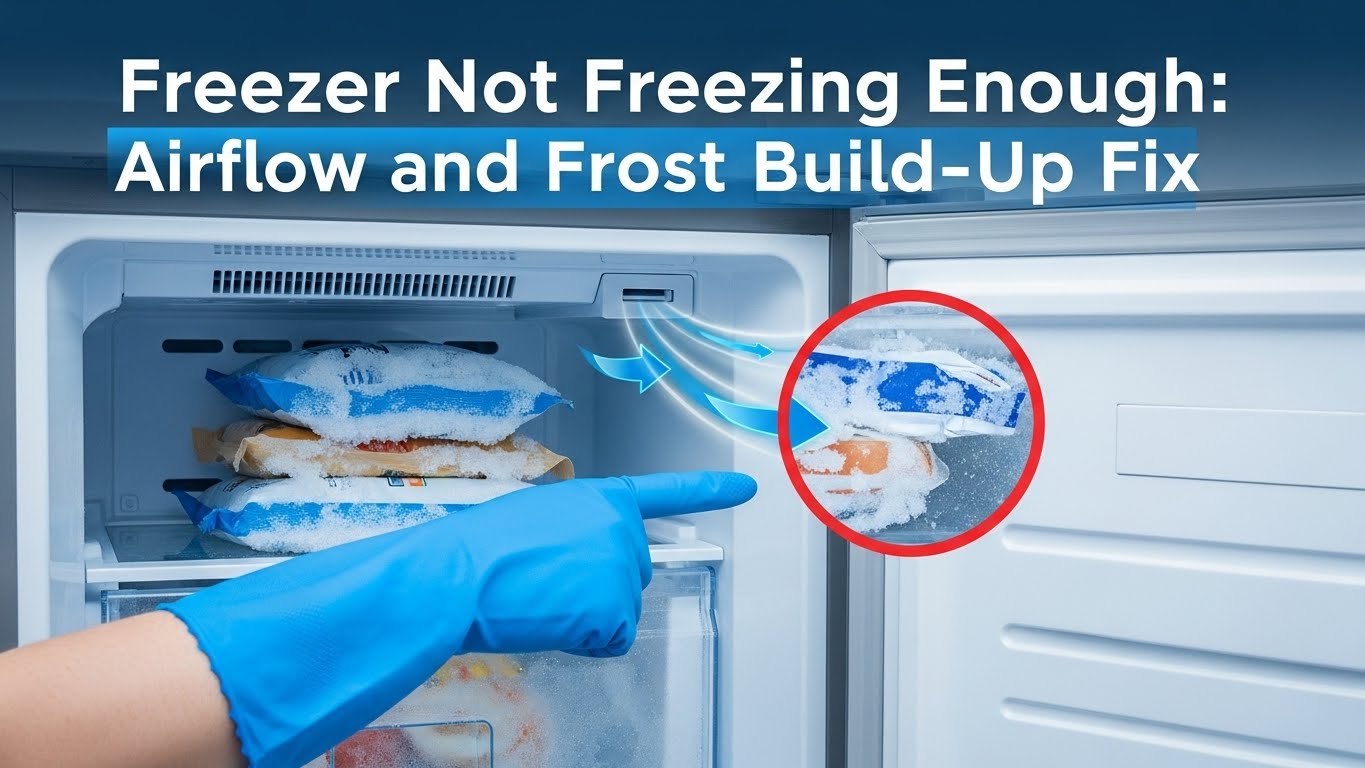
Freezer Not Freezing Enough: Airflow and Frost Build-Up Fix
Last updated: December 14, 2025
If your freezer is running but ice cream turns soft, frozen food partially thaws, or ice takes forever to form, you’re dealing with a classic freezer not freezing enough problem. The key is to troubleshoot in a sequence that matches real-world service logic: airflow first, then frost/defrost clues, then heat release (condenser), and only after that consider sealed-system or compressor issues.
Fast answer: Most “not freezing enough” complaints are caused by blocked vents, heavy frost restricting airflow, or dirty condenser coils—not an instant “dead freezer.”
Table of Contents
- 1) What “Not Freezing Enough” Usually Means
- 2) Quick Checks (2 Minutes)
- 3) Step-by-Step Fix Protocol
- 4) Common Scenarios (Real Search Phrases)
- 5) Prevention Routine
- 6) FAQ
- 7) Safety Disclaimer
- 8) References
1) What “Not Freezing Enough” Usually Means
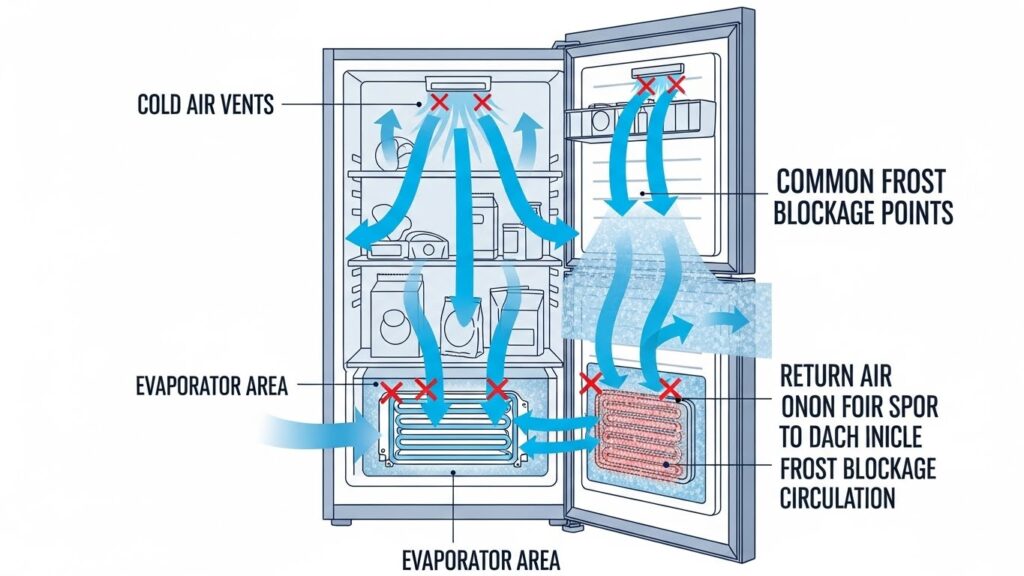
A freezer can feel “kind of cold” while still failing to freeze properly. The most common pattern is temperature + airflow imbalance:
- Cold air isn’t circulating (vents blocked by food or ice).
- Frost buildup is choking the evaporator area.
- Heat can’t escape (dirty condenser coils, poor ventilation around the unit).
- Warm air leaks in through a weak door seal.
2) Quick Checks (2 Minutes)
- Settings: confirm the freezer wasn’t accidentally set warmer.
- Overpacking: pull items away from the back wall and vent openings.
- Door closure: make sure the door fully shuts and doesn’t bounce open.
- Frost clues: look for heavy frost on the back panel or around vent covers.
One easy test: Close the door on a thin piece of paper. If it slides out with almost no resistance in multiple spots, the door seal may be leaking warm air in.
3) Step-by-Step Fix Protocol
Safety note: Unplug the unit before cleaning coils or doing a manual defrost. Avoid sharp tools on ice—puncturing coils can permanently damage cooling.
Step 1 — Clear vents and reset airflow
Air circulation is the freezer’s “hidden engine.” Do this first:
- Remove items blocking vent openings.
- Leave a small gap behind packages—especially near the back wall.
- Don’t press food directly against the vent covers.
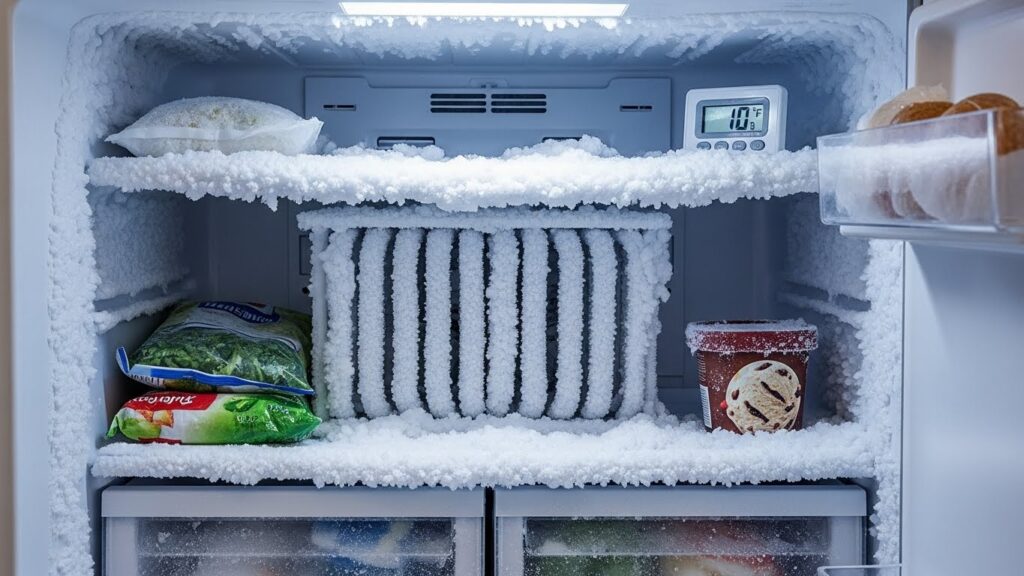
Step 2 — Check for frost buildup (the biggest airflow killer)
If you see a thick layer of frost on the back freezer panel or vents, airflow may be restricted. A full manual defrost can restore performance temporarily and also helps you confirm whether a deeper defrost issue exists.
- Move food to a cooler.
- Unplug the freezer/refrigerator.
- Leave doors open and let ice melt naturally.
- Dry everything thoroughly before restarting.
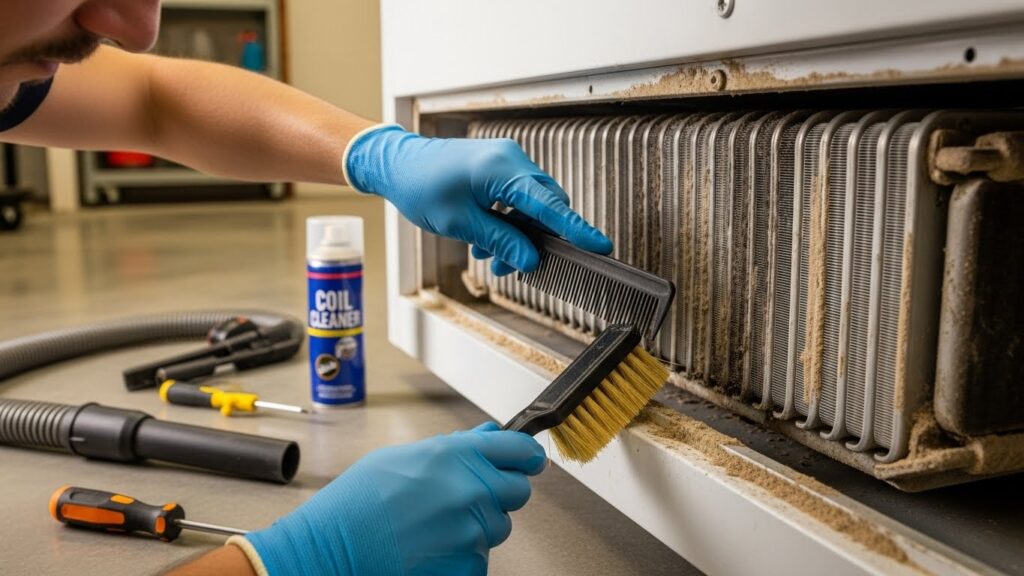
Step 3 — Clean condenser coils (helps both freezers and fridge/freezer combos)
Dirty condenser coils reduce heat release. When the system can’t dump heat efficiently, freezing performance drops. Coils are usually behind a toe-kick grille or on the back of the unit.
- Unplug the unit.
- Use a coil brush or vacuum attachment to remove dust.
- Restore airflow around the unit (don’t push it hard against the wall).
Step 4 — Watch what happens over the next 6–12 hours
After airflow, frost, and coils are addressed, give the unit time to stabilize. If freezing improves and stays stable, the root cause was likely airflow/maintenance-related. If the problem returns quickly—especially with rapid frost buildup—professional diagnosis may be needed.
Practical indicator: If frost rebuilds fast after a full defrost, the issue may be tied to the defrost system or airflow components (not a simple “settings” mistake).
4) Common Scenarios (Real Search Phrases)
“Freezer not freezing but fridge works”
This often points to freezer-side airflow restriction, frost blocking vents, or a freezer fan/airflow issue. Start with vent clearance and frost inspection.
“Freezer cold but food still soft”
Overpacking and blocked vents can create cold spots near the back while the shelves stay too warm. Rebuild airflow gaps and recheck after several hours.
“Freezer frosting up and not freezing enough”
Heavy frost can choke airflow. A full defrost helps confirm the pattern. If frost returns quickly, consider professional evaluation.
5) Prevention Routine
- Keep vents clear and avoid packing food tightly against the back wall.
- Clean condenser coils every 3–6 months (more often with pets).
- Wipe door gaskets and keep them clean so they seal properly.
- Don’t leave the freezer door open longer than necessary in humid rooms.
6) FAQ
How cold should a freezer be?
Many food-safety guidelines reference freezer temperatures around 0°F (-18°C). If your unit can’t stay near that range, troubleshooting airflow and maintenance is the first step.
Why is my freezer running but not freezing?
The most common causes are restricted airflow (blocked vents), heavy frost buildup, and dirty condenser coils. These can reduce freezing even when the unit sounds normal.
Is it okay to chip ice off with a knife?
No. Sharp tools can puncture coils or liners. Use safe defrost methods to avoid permanent damage.
How long should it take for a freezer to get cold again after defrosting?
It can take several hours to stabilize. If you see improvement that holds, the issue was likely airflow or frost restriction.
When should I call a technician?
If freezing doesn’t improve after airflow/coil cleaning and a proper defrost—or if heavy frost returns quickly—professional diagnosis is recommended.
7) Safety Disclaimer
This guide is for general informational purposes only. If you are not comfortable working with electrical appliances, moving heavy equipment, or performing a manual defrost, contact a qualified technician. Always unplug the unit before cleaning or inspection and follow your manufacturer’s safety instructions.
8) References
- Energy.gov — Consumer energy guidance for appliances
- USDA FSIS — Cold storage and food safety guidance
- Consumer Reports — Refrigerator and freezer maintenance topics
Related Guides on This Site
- Refrigerator Not Cooling: Step-by-Step Diagnostic Guide
- Washer Not Draining: Causes and Step-by-Step Fix
- Dishwasher Not Draining: Filter and Pump Troubleshooting Guide

I publish step-by-step troubleshooting guides for common home appliance issues (washer, dryer, refrigerator, HVAC basics).
Content is written for everyday homeowners and cross-checked with manufacturer manuals, safety guidance, and trusted public resources.
Posts include practical checks, clear stop-signs for safety, and guidance on when it’s better to call a qualified technician. Updates are logged whenever steps or recommendations change.
Safety note: If you smell gas, see burning, or suspect electrical hazards—stop immediately and contact a qualified professional.