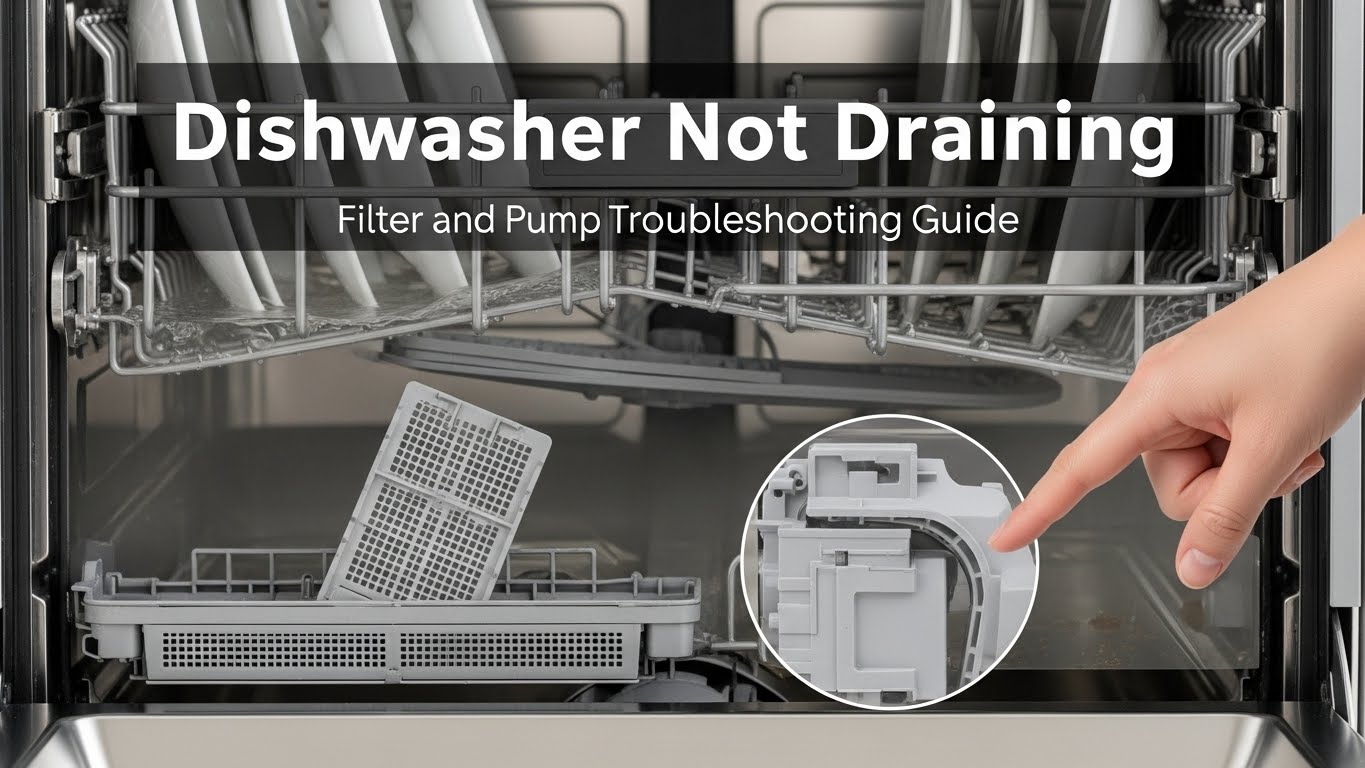
Dishwasher Not Draining: Filter and Pump Troubleshooting Guide
Last updated: 2025 12 14
If your dishwasher finishes a cycle but leaves standing water at the bottom, you’re dealing with one of the most common kitchen appliance problems: dishwasher not draining. In most U.S. households, this issue is caused by filter blockages, drain hose restrictions, or pump-area obstructions—not a failed machine.
Quick overview: Manufacturer troubleshooting guides almost always start with the filter → drain path → pump area. Checking these in order prevents unnecessary part replacement.
Common signs a dishwasher is not draining
- Water pooling at the bottom after the cycle ends
- Dishes feel gritty or smell bad
- Gurgling sounds during drain
- Cycle stops early or shows a drain-related error
Why dishwashers fail to drain
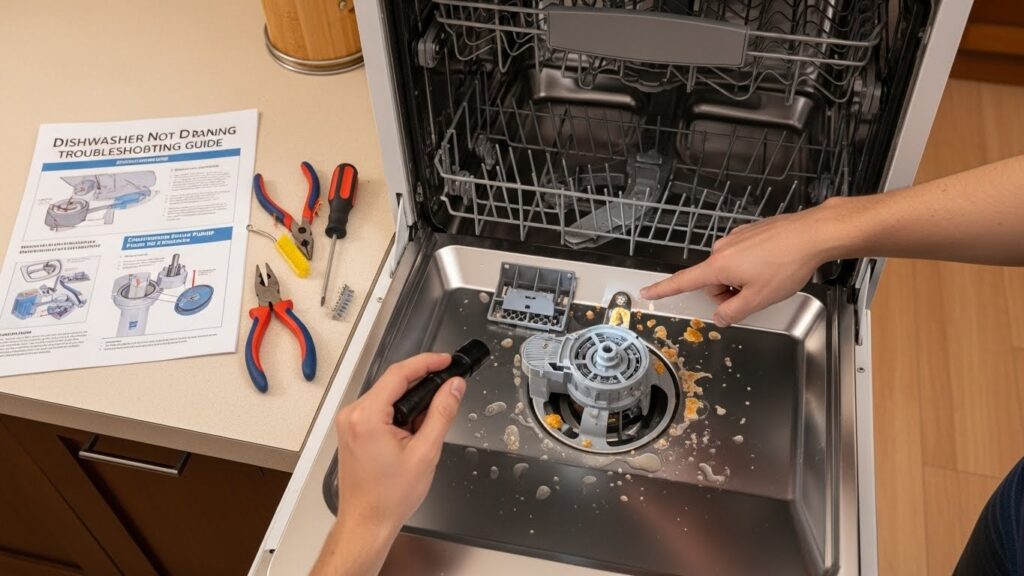
Across brands like Bosch, Whirlpool, GE, LG, Samsung, and KitchenAid, the same causes appear repeatedly:
- Clogged filter from food particles and grease
- Blocked drain hose (kinks, grease buildup, or air-gap issues)
- Drain pump obstruction caused by glass shards or labels
- Garbage disposal connection blockage (new installs especially)
- Oversudsing from non-dishwasher detergent
Important: If a new dishwasher was recently installed, the drain plug inside the garbage disposal may still be intact—this is a very common cause of immediate drain failure.
Step-by-step fix protocol (Homeowner-safe first)
⚠️ Safety first: Turn off power to the dishwasher at the breaker before inspecting internal components or the pump area.
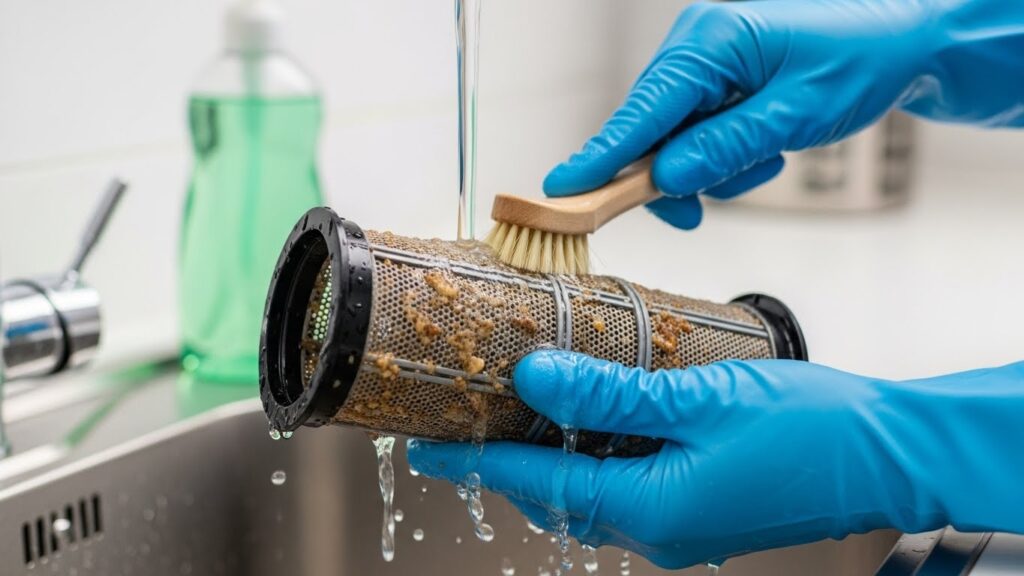
Step 1 — Remove and clean the dishwasher filter
Most modern dishwashers have a removable filter at the bottom of the tub.
- Twist and lift the filter assembly
- Rinse under warm water
- Use a soft brush to remove grease and debris
Step 2 — Check the drain hose and air gap
Follow the hose from the dishwasher to the sink drain or garbage disposal.
- Look for sharp bends or sagging
- Inspect the air gap (if installed) for clogs
- Confirm the hose loops high under the counter
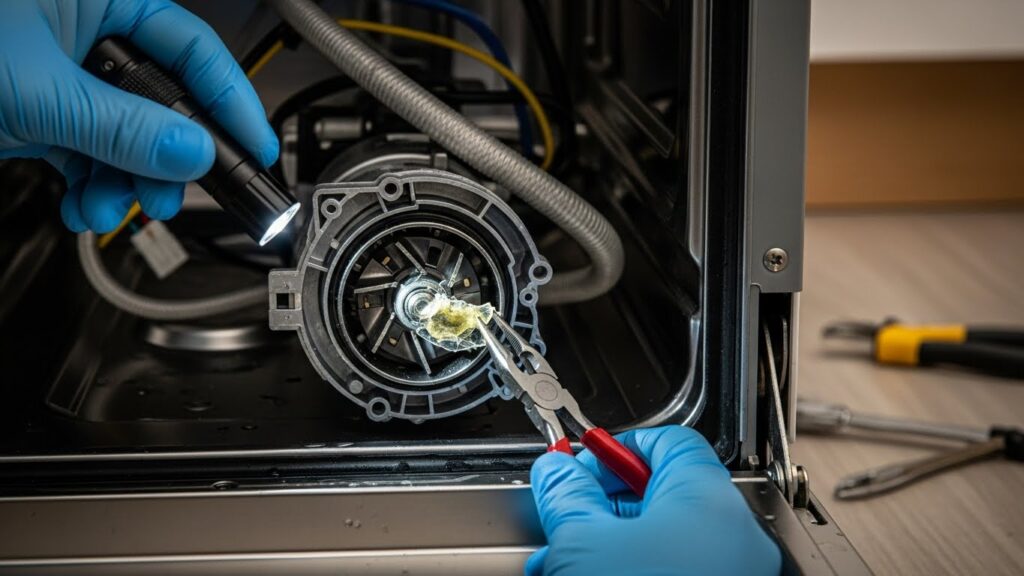
Step 3 — Inspect the drain pump area
If water remains after filter cleaning, check for debris around the pump inlet. Small items like glass fragments or food labels can stop the impeller.
Step 4 — Check garbage disposal connection
If the dishwasher drains into a garbage disposal, ensure the knockout plug was removed. A blocked plug will cause immediate drain failure.
Real search scenarios explained
“Dishwasher not draining but cycle completes”
Often caused by a partially clogged filter or restricted hose.
“Dishwasher standing water at bottom”
Commonly filter debris or pump inlet obstruction.
“New dishwasher not draining”
Check the garbage disposal knockout plug first.
When to call a technician
- Filter and hose are clear but water still won’t drain
- Drain pump makes loud or abnormal noises
- Electrical smell or repeated cycle shutdowns
Related guides on this site (Internal links)
- Washer Not Draining: Causes and Step-by-Step Fix
- Refrigerator Not Cooling: Airflow and Coil Checks
- Dryer Not Heating: Heating Element, Fuse, and Vent Cleaning
Safety disclaimer
This guide is for general informational purposes only. If you are not comfortable working with electrical appliances or plumbing connections, contact a qualified technician. Always turn off power before inspecting internal components.
References
- Consumer Reports – Dishwasher troubleshooting
- Energy.gov – Dishwasher efficiency
- OSHA – Electrical safety basics

I publish step-by-step troubleshooting guides for common home appliance issues (washer, dryer, refrigerator, HVAC basics).
Content is written for everyday homeowners and cross-checked with manufacturer manuals, safety guidance, and trusted public resources.
Posts include practical checks, clear stop-signs for safety, and guidance on when it’s better to call a qualified technician. Updates are logged whenever steps or recommendations change.
Safety note: If you smell gas, see burning, or suspect electrical hazards—stop immediately and contact a qualified professional.