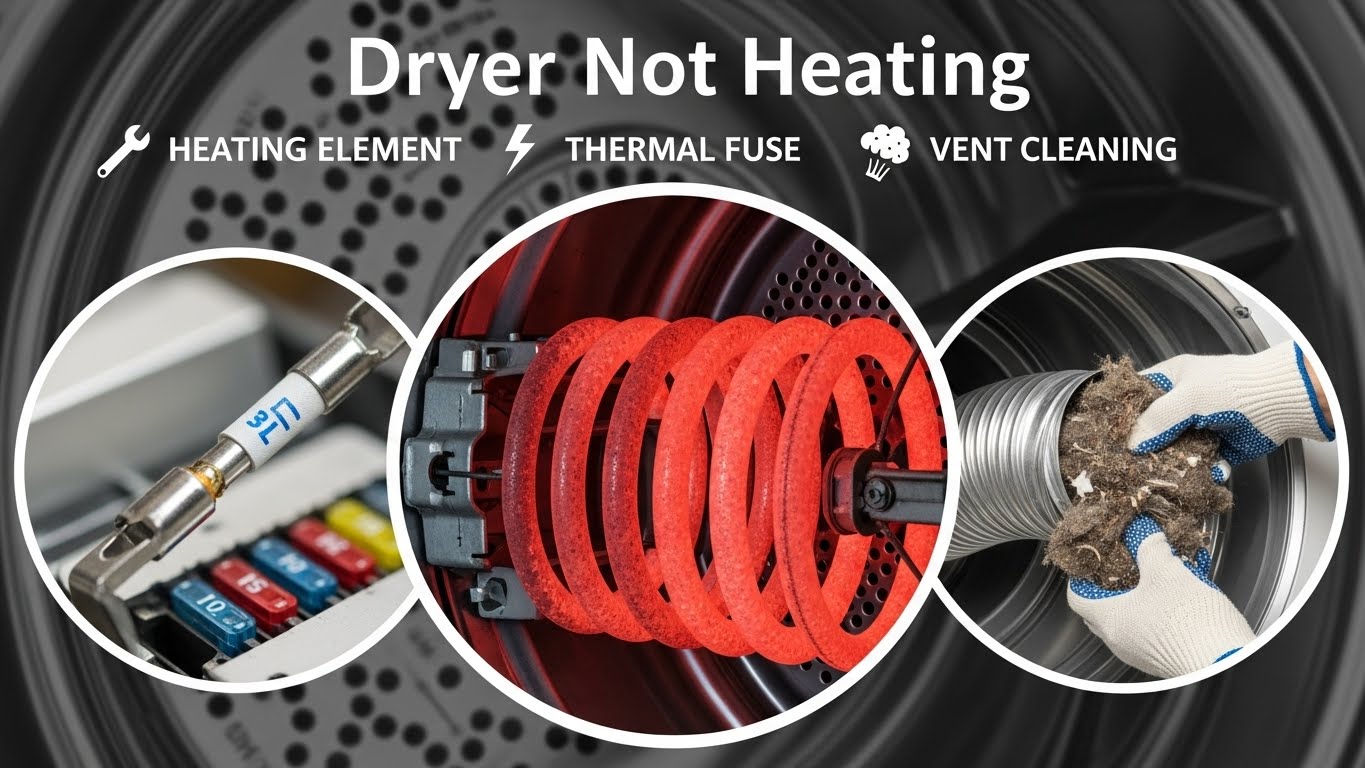
Dryer Not Heating: Heating Element, Fuse, and Vent Cleaning (Complete Fix Guide)
Last updated: 2025-12-14
If your dryer runs but there’s no heat, you’re not alone—this is one of the most common “laundry stops working” problems in U.S. homes. The good news is that many dryer not heating cases trace back to predictable causes: restricted airflow (venting), a blown thermal fuse, or a failed heating element. This guide walks you through safe, high-impact checks first, then moves to technician-level diagnostics only when needed.
Quick take: If your dryer takes too long to dry or produces no heat, start with lint screen + vent airflow. A clogged vent can trigger overheating and blow a thermal fuse, which then causes “dryer runs but no heat.”
Symptoms that match “Dryer Not Heating” (Real search intent)
- Dryer runs but no heat (drum spins, clothes stay damp)
- Dryer takes too long to dry (heat is weak, airflow is poor)
- Electric dryer not heating (often heating element / fuse / power supply)
- Gas dryer not heating (often igniter / gas valve coils / airflow)
Step-by-step troubleshooting (Safe checks first)
⚠️ Safety: Unplug the dryer before removing panels or inspecting internal parts. For gas dryers, shut off the gas supply if you’re accessing the burner area. If you’re not comfortable, stop and contact a qualified technician.
Step 1 — Clean the lint screen (and check the slot)
Clean the lint screen thoroughly. Then use a flashlight to look down into the lint screen slot. It’s common for lint to build up inside the slot where you can’t see it from the top.
Quick win: If the lint screen has a “waxy film” (from fabric softener sheets), airflow drops. Wash the screen with warm water + a small amount of dish soap, then fully dry it.
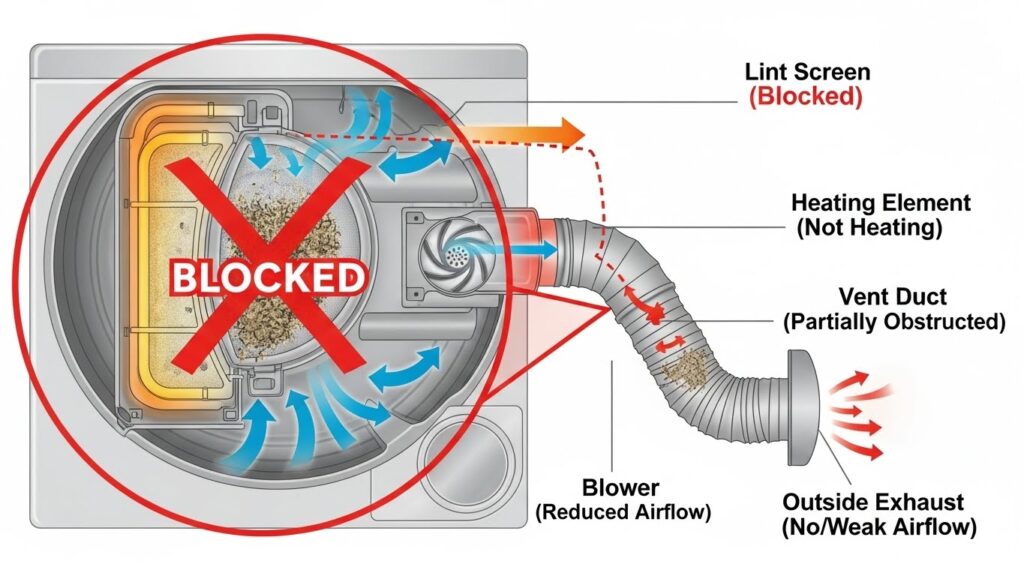
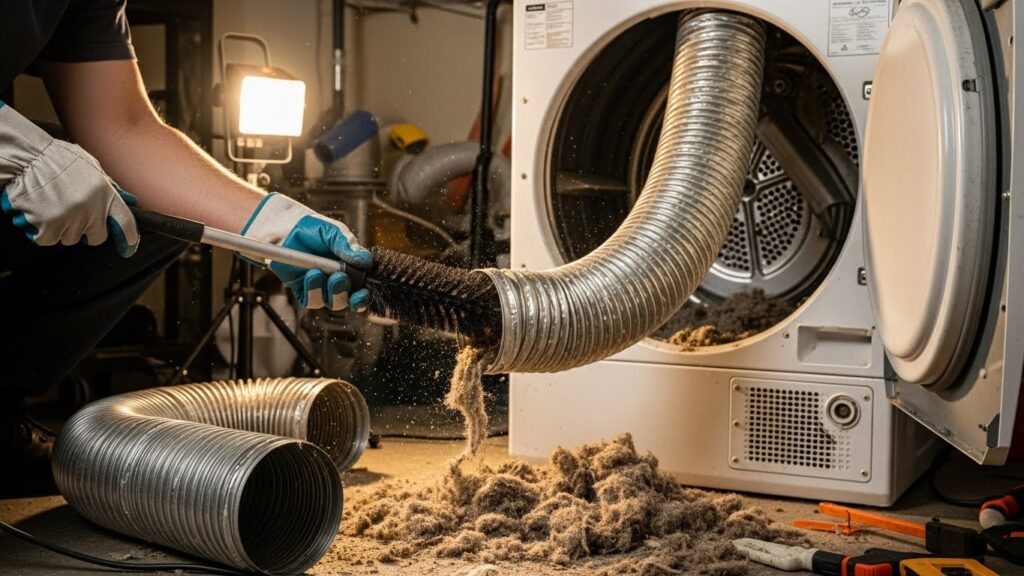
Step 2 — Check the dryer vent (most common performance killer)
A restricted vent is one of the biggest reasons a dryer takes too long to dry and can also cause overheating that blows the thermal fuse. Check these in order:
- Is the dryer pushed too close to the wall, crushing the vent hose?
- Is the vent hose long, sagging, or full of bends?
- Is the outside exhaust hood blocked by lint or a stuck flap?
Step 3 — Confirm power supply (electric dryers)
Electric dryers can spin normally even if heating power is incomplete. If the breaker is partially tripped or one leg is out, you may get drum movement with no heat. Reset the dryer breaker fully (OFF → ON) and re-test.
Step 4 — Thermal fuse (common “no heat” culprit)
Many dryers use a thermal fuse or thermal cutoff as a safety device. If it blows, the dryer may run but won’t heat. A blown fuse often follows overheating from poor venting.
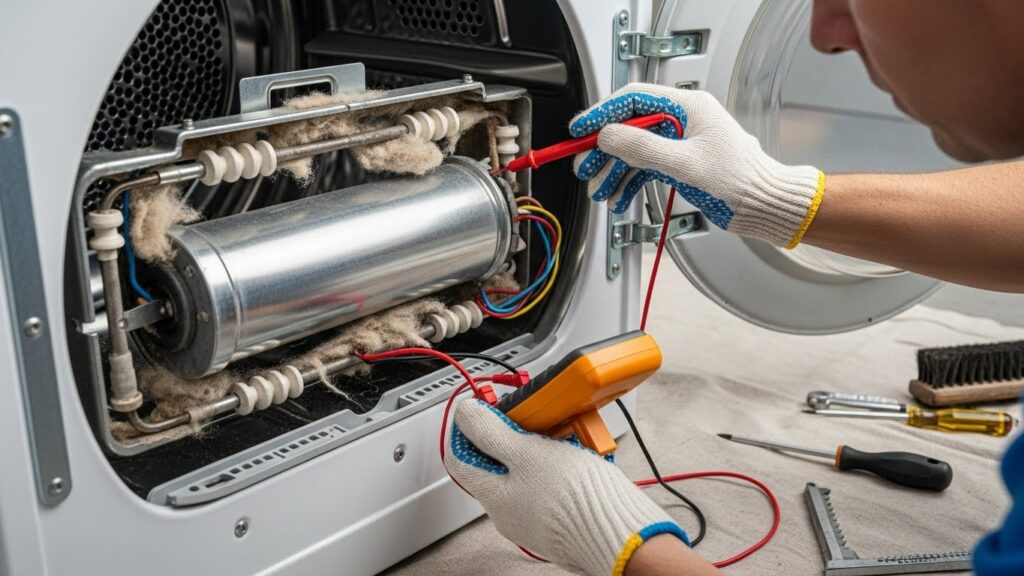
Technician boundary: Testing a thermal fuse typically requires a multimeter and panel access. If you don’t have basic electrical comfort, this is a good point to call a pro.
Step 5 — Heating element (electric dryers)
If airflow is good and the fuse tests okay, the next suspect is the heating element. Elements can break over time, especially in older dryers or units that have been run with restricted airflow.
Step 6 — Gas dryer heating checks (igniter and valve coils)
For a gas dryer not heating, common causes include a failed igniter, faulty gas valve coils, or airflow restrictions that cause safety shutdown. If you smell gas or suspect a leak, stop immediately and contact a qualified technician.
Common scenarios (written exactly like people search)
“Dryer runs but no heat”
Start with vent airflow and lint path checks. Then move to thermal fuse/heating element (electric) or igniter/valve coils (gas).
“Dryer takes too long to dry”
This is frequently airflow-related: vent duct length, bends, crushed hose, or a blocked outside exhaust hood.
“Electric dryer not heating”
After vent checks: confirm breaker/power supply, then suspect thermal fuse or heating element.
“Gas dryer not heating”
After vent checks: igniter and gas valve coils are common failure points, but gas diagnostics should be handled carefully.
When to call a technician (and why it’s worth it)
- You’ve cleaned the vent and lint path, but the dryer still produces no heat
- You suspect thermal fuse/heating element issues and don’t have testing tools
- Gas dryer: you suspect burner/valve/ignition problems
- There’s a burning smell, repeated shutdowns, or unusual electrical behavior
Related guides on this site (Internal links)
- Washer Not Draining: Causes and Step-by-Step Fix
- Refrigerator Not Cooling: Step-by-Step Diagnostic Guide
Safety disclaimer
This guide is for general informational purposes only. If you are not comfortable working with electrical appliances or gas connections, contact a qualified technician. Always unplug the dryer before inspection and follow the manufacturer’s safety instructions.
References
- Energy.gov — Home appliance energy guidance
- OSHA — Safety basics for electrical hazards
- Consumer Reports — Dryer maintenance and troubleshooting topics

I publish step-by-step troubleshooting guides for common home appliance issues (washer, dryer, refrigerator, HVAC basics).
Content is written for everyday homeowners and cross-checked with manufacturer manuals, safety guidance, and trusted public resources.
Posts include practical checks, clear stop-signs for safety, and guidance on when it’s better to call a qualified technician. Updates are logged whenever steps or recommendations change.
Safety note: If you smell gas, see burning, or suspect electrical hazards—stop immediately and contact a qualified professional.