Refrigerator Not Cooling — Complete Troubleshooting Guide (Safe, Step-by-Step)
Last updated: December 2025
You open the fridge and everything feels… lukewarm. Milk is questionable, leftovers smell off, and the freezer might still be “kind of” working. A refrigerator not cooling problem usually comes from airflow restrictions, dirty coils, door seal leaks, or temperature control issues — and many of the first checks are safe for homeowners.
Quick summary: Most troubleshooting sequences start with airflow + condenser coils + door seals. If you fix airflow and heat-release first, you often avoid misdiagnosing a bigger part failure.
Table of Contents
- 1. What “Not Cooling” Usually Means
- 2. Before You Touch Anything (Fast Checks)
- 3. Step-by-Step Fix Protocol
- 4. Common Scenarios (Real Search Queries)
- 5. When to Call a Technician
- 6. Prevention Routine
- 7. FAQ
- 8. Safety Disclaimer
- 9. References
1. What “Refrigerator Not Cooling” Usually Means
“Not cooling” can show up in a few different ways, and the right fix depends on which one you have:
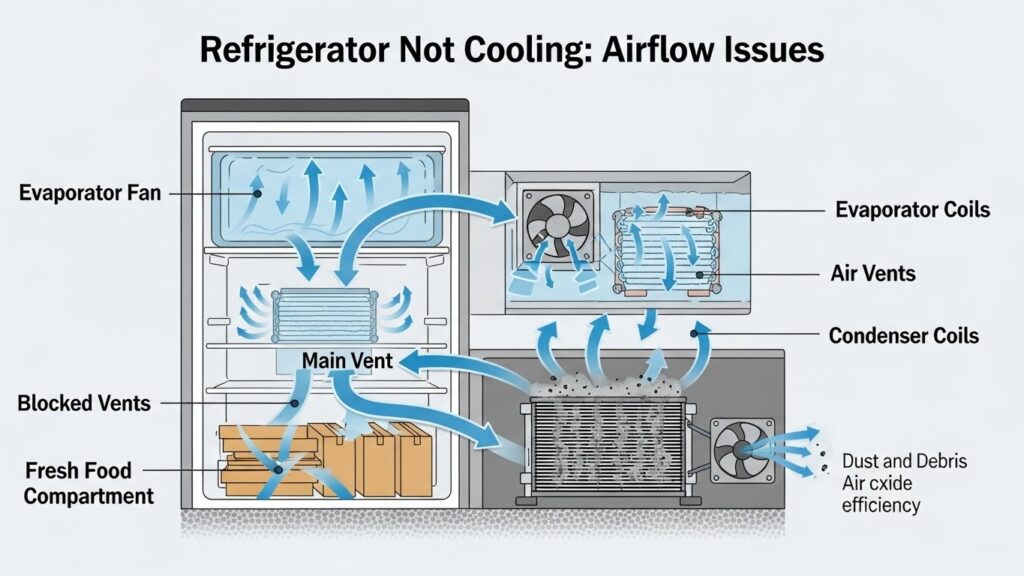
- Fridge warm, freezer cold → airflow problem (vents, fan, frost buildup) is common.
- Fridge and freezer both warm → coils dirty, compressor not running, or power/thermostat issues.
- Cooling is weak / inconsistent → door seal leaks, overloaded shelves, or blocked vents.
- Everything is cold but food still spoils fast → temps set wrong or temperature fluctuating.
2. Before You Touch Anything (Fast Checks)
⚠️ Food safety note: If perishables have been above safe temperatures for too long, discard them. When in doubt, prioritize safety.
- Check the temperature settings: Many fridges drift after power outages or accidental dial bumps.
- Listen for fans: You should typically hear a gentle fan sound when the fridge is running.
- Check door closure: A door that doesn’t fully seal can kill cooling fast.
- Look for blocked vents: Food pushed against vents can stop cold-air circulation.
Quick tip: Take a photo of your current settings before changing anything. It saves time if you need to revert during troubleshooting.
3. Step-by-Step Fix Protocol (Homeowner-Safe First)
Step 1 — Confirm the basics (power + settings + airflow)
- Make sure the fridge is plugged in firmly.
- Check the breaker if the unit appears dead.
- Set the fridge to a normal range (avoid extreme “coldest” until airflow is verified).
- Clear items away from interior vents.
Step 2 — Clean the condenser coils (high impact)
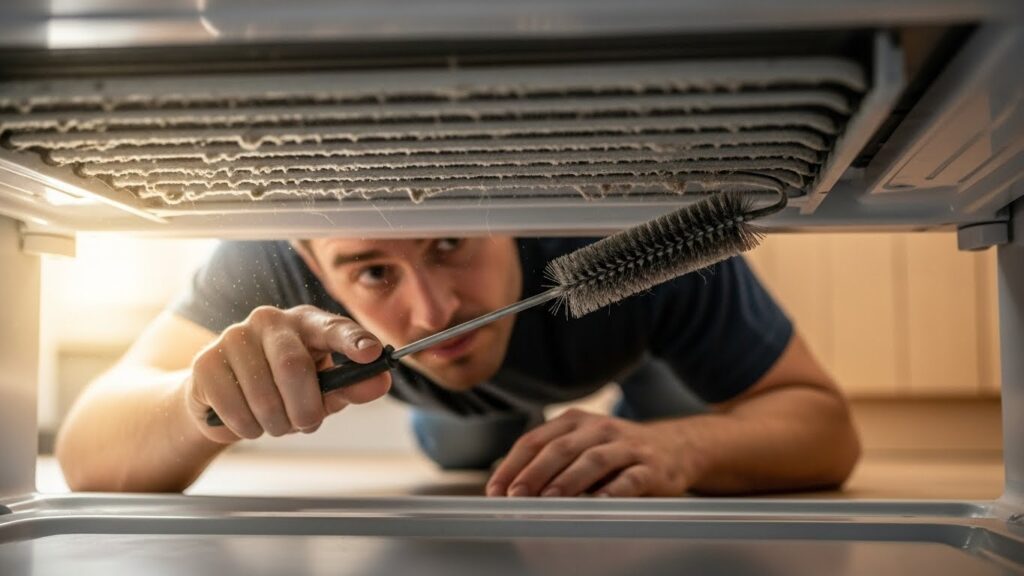
Dirty coils make the fridge work harder and cool worse — especially in homes with pets or dusty floors. Most models have coils behind a kick plate in front or on the back.
- Unplug the refrigerator.
- Remove the front toe grille (if applicable).
- Use a coil brush or vacuum attachment to remove dust buildup.
- Restore airflow around the fridge (don’t push it hard against the wall).
Helpful items (optional):
* Condenser coil brush
* Vacuum crevice tool attachment
* Flashlight for under-fridge inspection
Step 3 — Check the door gasket (seal test)
A leaking door seal lets warm air in nonstop. Here’s a simple check:
- Close the door on a thin piece of paper.
- Gently pull. If it slides out easily, the seal may be weak in that area.
- Wipe the gasket clean (grease and crumbs can prevent sealing).
Common gotcha: A slightly sagging door or overloaded door bins can break the seal even if the gasket looks “fine.”
Step 4 — Look for frost buildup blocking airflow
If you see heavy frost on the back wall inside the freezer, airflow can be restricted to the fridge compartment. This often explains “freezer cold but fridge warm”.
- Check if vents are iced over.
- Confirm the evaporator fan is running (you may hear it when the door switch is pressed).
- If frost is heavy, a full defrost may restore airflow temporarily.
⚠️ Safety: Avoid sharp tools to chip ice — you can puncture coils. If you defrost, use safe methods and keep water away from electrical parts.
Step 5 — Ventilation around the fridge (often overlooked)
Even a perfectly working fridge struggles if it can’t dump heat. Check:
- Is the fridge jammed tight between cabinets?
- Is the back pressed against the wall?
- Is the toe-kick area blocked by dust?
Step 6 — If it still won’t cool: document symptoms before escalating
Before calling a technician, note:
- Is the compressor running?
- Are any fans running?
- Is one section colder than the other?
- Any clicking, buzzing, or repeated start/stop sounds?
4. Common Scenarios (Real Search Queries)
“Refrigerator not cooling but freezer works”
This commonly points to blocked airflow between freezer and fridge, a stopped evaporator fan, or frost restricting vents. Start with vent clearance, frost checks, and listening for the fan.
“Fridge warm after power outage”
Double-check settings, give it time to stabilize, then clean coils and verify airflow. Power events sometimes reset controls or trigger temporary behavior changes.
“Refrigerator not cooling enough (temp fluctuates)”
Look for door seal leaks, overloaded shelves blocking vents, and coil dust. Also confirm the fridge isn’t placed in a tight, hot corner.
5. When to Call a Technician
Technician recommended if:
* You hear repeated clicking/start attempts
* The compressor is extremely hot to the touch (do not touch longer than a second)
* Both fridge and freezer are warm after coils/airflow checks
* You suspect sealed-system issues (refrigerant/compressor) — not a DIY area
6. Prevention Routine (Keeps Cooling Stable)
- Clean condenser coils every 3–6 months (more often with pets).
- Keep interior vents clear (don’t pack food tight against the back wall).
- Wipe door gaskets monthly and check for cracks.
- Leave ventilation space around the fridge whenever possible.
7. FAQ
What’s the first thing to check when a refrigerator is not cooling?
Start with settings + vent blockage + coil cleanliness. These are the most common high-impact fixes and safe for most homeowners.
How long should I wait after cleaning coils to see improvement?
Cooling can stabilize gradually. If coils were severely clogged, you may notice improvement after the unit cycles normally for a while.
Can a bad door seal really make the fridge warm?
Yes. Warm air infiltration forces the system to run longer and can still fail to maintain stable temps, especially in humid kitchens.
If the freezer is cold but the fridge is warm, is it always the fan?
Not always. It can also be frost buildup blocking airflow, blocked vents, or an airflow damper issue depending on model.
8. Safety Disclaimer
This guide is for general informational purposes only. If you are not comfortable working around electrical appliances or moving heavy equipment, contact a qualified technician. Always unplug the refrigerator before cleaning coils or accessing panels, and follow the manufacturer’s safety instructions.
9. References
- Energy.gov — Appliance energy and efficiency basics
- OSHA — Electrical safety fundamentals
- Consumer Reports — Refrigerator reliability & maintenance topics
Related Guides on This Site

I publish step-by-step troubleshooting guides for common home appliance issues (washer, dryer, refrigerator, HVAC basics).
Content is written for everyday homeowners and cross-checked with manufacturer manuals, safety guidance, and trusted public resources.
Posts include practical checks, clear stop-signs for safety, and guidance on when it’s better to call a qualified technician. Updates are logged whenever steps or recommendations change.
Safety note: If you smell gas, see burning, or suspect electrical hazards—stop immediately and contact a qualified professional.